
Used Items Near Me: Photos, Details, and Pickup That Sell
Nearby buyers are ready to drive over today — if your listing gives them enough to act on. Here are the photos, details, and pickup info that turn a 'used items near me' search into a completed sale.
ARTICLE LANGUAGE
Showing original language
When someone searches "used items near me," they are close, motivated, and ready to drive over today — but only if your listing gives them enough to act on. Nearby buyers do not want to ship, wait, or gamble. They want to see the thing clearly, know exactly what it is, and figure out how to grab it. Three parts of your listing decide whether that happens: the photos, the details, and the pickup info. Get all three right and a stranger a few miles away messages you ready to buy. Miss one and your item sits, no matter how good it actually is.
This guide is for the seller with real stuff to move — a dresser, a stroller, a monitor, a set of tools — who is tired of "is this still available?" messages that go nowhere. We will walk through the exact photos to take, the detail fields that stop the back-and-forth, and the pickup wording that gets buyers to actually show up. Every example is copy you can reuse today, plus a details-by-category table and a photo checklist you can run through in five minutes.
Why "used items near me" listings get ignored
A local buyer is scrolling a grid of thumbnails, deciding in half a second which listings to tap. Then, inside the listing, they decide in about ten seconds whether to message. Most used-item posts lose them twice: a dark, cluttered photo loses the tap, and a three-word description loses the message. The item never had a chance, because the listing gave the buyer nothing to trust and no reason to move.
The fix is not lowering your price. It is completeness. A buyer who can see the item honestly, read the specs they care about, and understand how to pick it up has no open questions left — so instead of typing "still available?" and disappearing, they type "I can come Saturday at 2." Completeness is what separates a listing that closes from one that collects tire-kickers. Browse the used items marketplace and notice which posts you would actually message: it is always the complete ones.
Photos: the five shots every used item needs
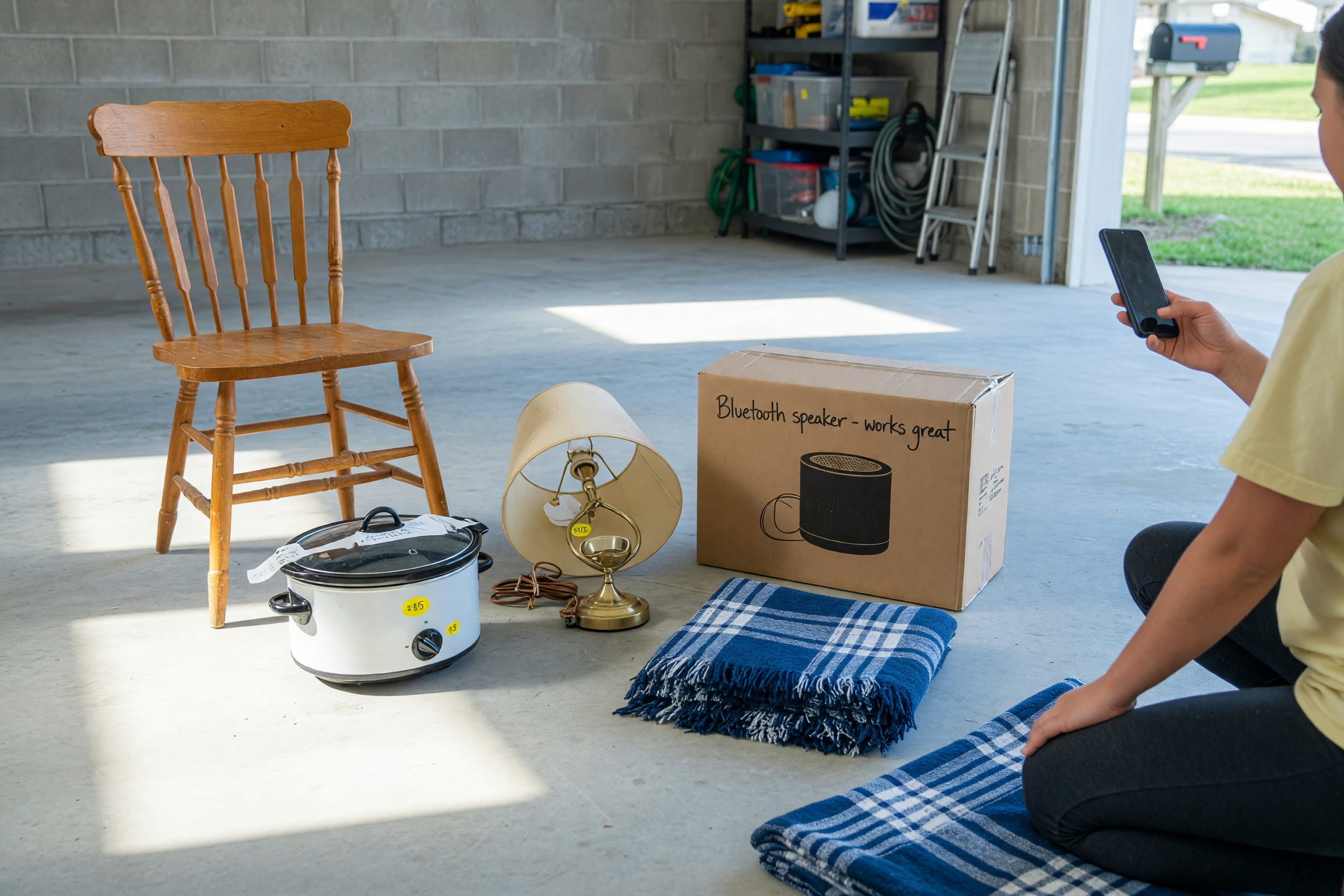
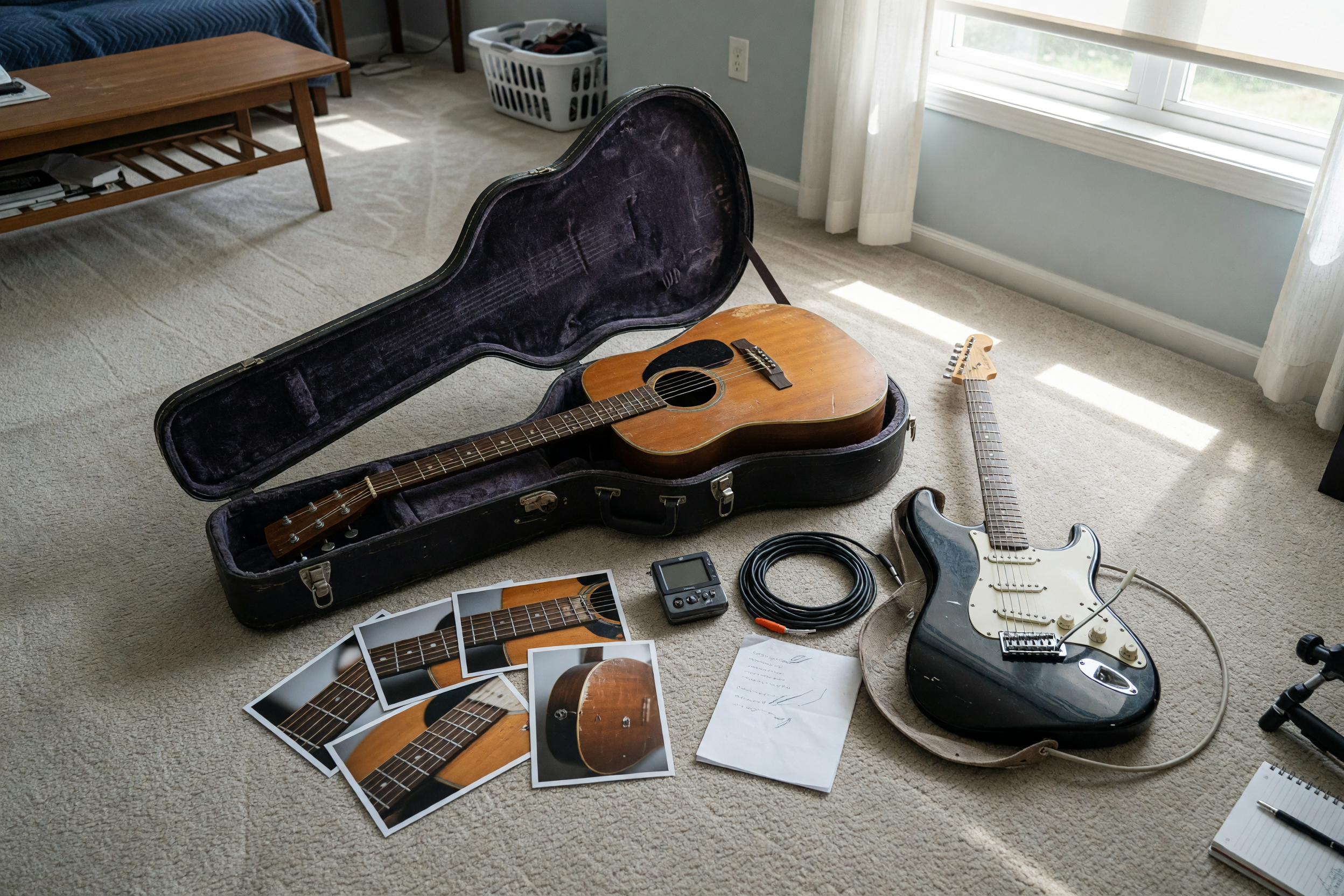
Photos do two jobs: they win the tap in the grid, and they answer the silent question every used-item buyer is asking — "what condition is this really in?" One dim photo reads as a gamble. Five honest, well-lit shots read as a deal from someone with nothing to hide. Buyers reward the second every single time, and it costs you nothing but three minutes.
Run this checklist before you post anything:
- Shoot in daylight. Near a window or outside, never under one yellow bulb. Natural light shows true color and real wear.
- Lead with the full item against a clean, uncluttered background so the buyer sees exactly what they are getting.
- Add angles — front, side, back, and a close-up of any brand label, model number, or serial tag.
- Photograph the flaws. The scratch, the stain, the chipped corner. Showing damage builds more trust than hiding it and kills the "you didn't mention this" cancellation at pickup.
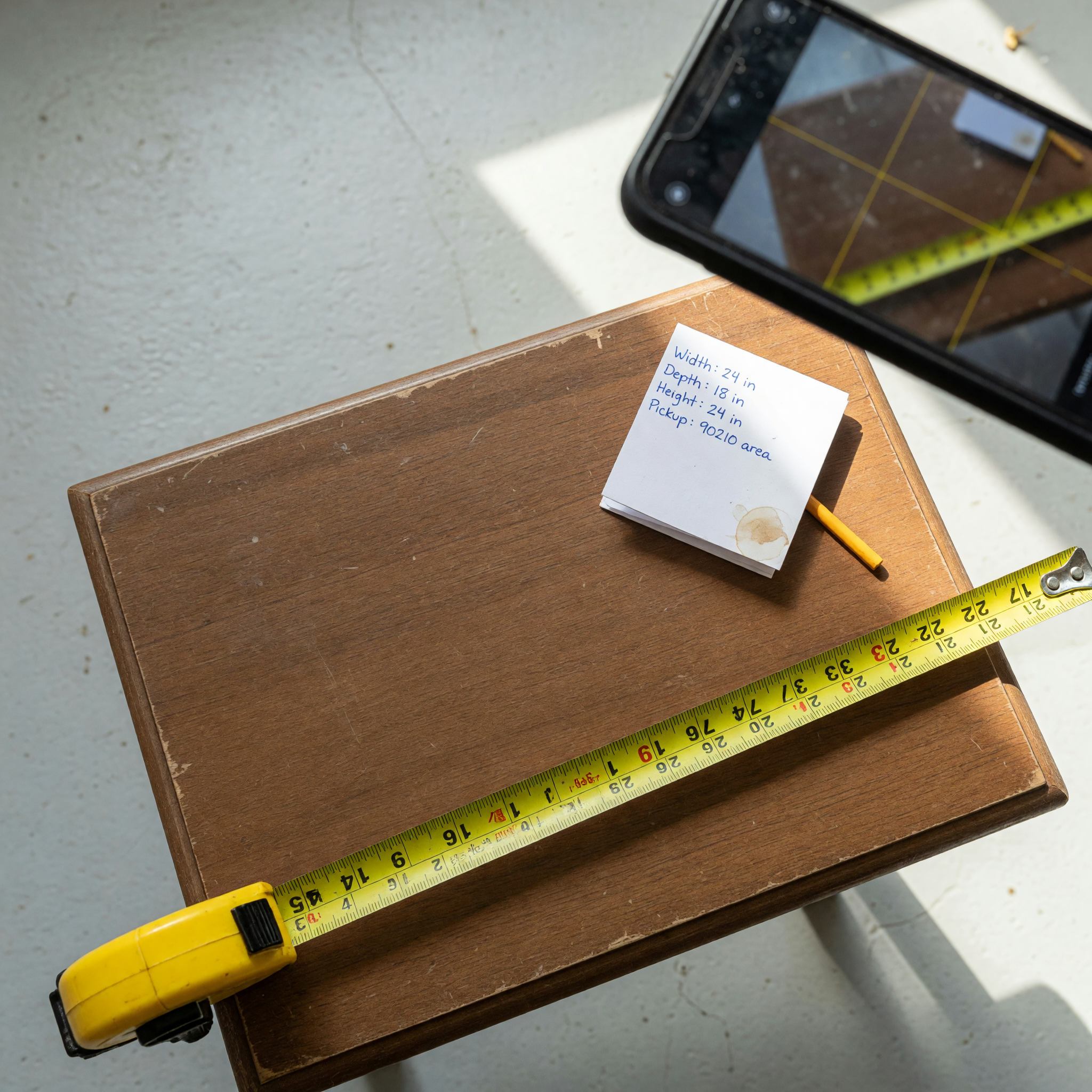
- Show scale. A hand or phone next to a small item, a full-room shot for furniture, so nobody guesses wrong on size.
More good photos raise your reply rate more reliably than a twenty-dollar price cut, because they close the condition question before the buyer even has to ask it.
Details: the fields that stop the back-and-forth
Every message that says "what are the dimensions?" or "does it still work?" is a detail you left out. Those questions feel harmless, but each one adds a delay where the buyer cools off, finds another listing, or ghosts. The goal of your description is to pre-answer every question a serious buyer would ask, so the only message you get is one arranging pickup.
Which details matter depends on what you are selling. Use this as your fill-in-the-blank guide:
| Item type | Details buyers need before they message |
|---|---|
| Furniture | Exact dimensions (W x D x H), material, brand, any stains or wear, smoke/pet-free, does it come apart for transport |
| Electronics | Brand, model, storage/specs, tested working, what is included (charger, cables, box), battery health, any cracks |
| Appliances | Brand, model, dimensions, cooling/heating tested, age, cord length, why you are selling |
| Baby & kids gear | Brand, model, age range, expiration (car seats), any recalls checked, cleaned, missing parts |
| Tools & equipment | Brand, corded/cordless, batteries included, tested working, blade/bit condition, original case |
Here is the difference in practice. Weak: "Dresser for sale, good condition." Better: "IKEA Malm 6-drawer dresser, white, 63 x 31 in, smoke-free home, one small scuff on top drawer shown in photo 4, comes apart for easy loading." The second one answers size, brand, condition, and transport in a single line — the buyer has nothing left to ask except when to come. If writing that out feels like a chore, the listing assistant can help you turn a few facts into a clean, complete description.
Pickup info: tell buyers exactly how to grab it
The last mile of a local sale is logistics, and vague logistics kill deals that were otherwise done. A buyer who cannot tell where you are, when they can come, or whether they can move a heavy item simply scrolls to the next listing. Spell it out in one tidy block, and you signal that you are organized, real, and easy to buy from.
A strong pickup block covers four things: the general area, the timing, who handles the lifting, and the item's transport size. For example: "Pickup in the 78704 area (South Austin). Available evenings and weekends. Item is heavy — bring a friend and an SUV or small truck; I can help carry it to your vehicle." That single paragraph answers the three questions that otherwise turn into a five-message thread. Put your general area or ZIP in the listing, never your exact door — save the precise address for the direct message once a real buyer has committed to a time.
Price it so nearby buyers don't scroll past
Even a perfect listing stalls if the number is off. Overprice and you get silence; underprice and you leave money on the table and attract resellers who lowball anyway. Anchor to what similar used items near you are actually listed at — not what you paid new. Search your own item first, filter for the same brand and condition, and see the real local range.
If you want a faster read than manual scrolling, the listing price checker gives you a starting range so you are not guessing. Then price a notch below the average to sell this week, or at the average if you can wait. Whatever you decide, put a real number in the listing — "make me an offer" with no price just filters out the serious buyers who assume you will be difficult to deal with. And if your real goal is clearing space rather than cash, listing a working item in the free section often moves it the same day.
The Brixaz edge: direct contact rewards complete listings
On Brixaz, buyers message you directly through the listing — no middle layer holding your contact hostage, no platform deciding who reaches you. That makes local deals fast, but it also means the trust your post earns is doing the work a big brand name would otherwise do. When a stranger is deciding whether to drive to your neighborhood, your photos, your honest flaw note, your real ZIP, and your firm price are the whole pitch.
That is why the three-part formula — photos, details, pickup — matters more here than anywhere: a complete listing converts a direct message into a completed sale with almost no back-and-forth. Already have the item posted somewhere else? You can import an existing listing and keep the photos and details you already wrote, then add the pickup block. For safety, meet in a public spot or your driveway for smaller items, keep the conversation in the message thread, take cash or an instant transfer at handoff, and never share bank login details or ship an item you posted for local pickup.
Before you hand off an item, review a safe local pickup checklist for marketplace meetups
For a complete classified-ad structure, use this next: free classified ads post checklist
If the used item is a power tool: sell used power tools with model and battery details
If your used-item listing needs stronger proof before buyers message, items for sale near me buyers can trust
Related local listing checklist: sell used pet supplies locally
For sellers handling bulky pickup items, this mattress checklist adds the trust details that matter: used mattress listing checklist
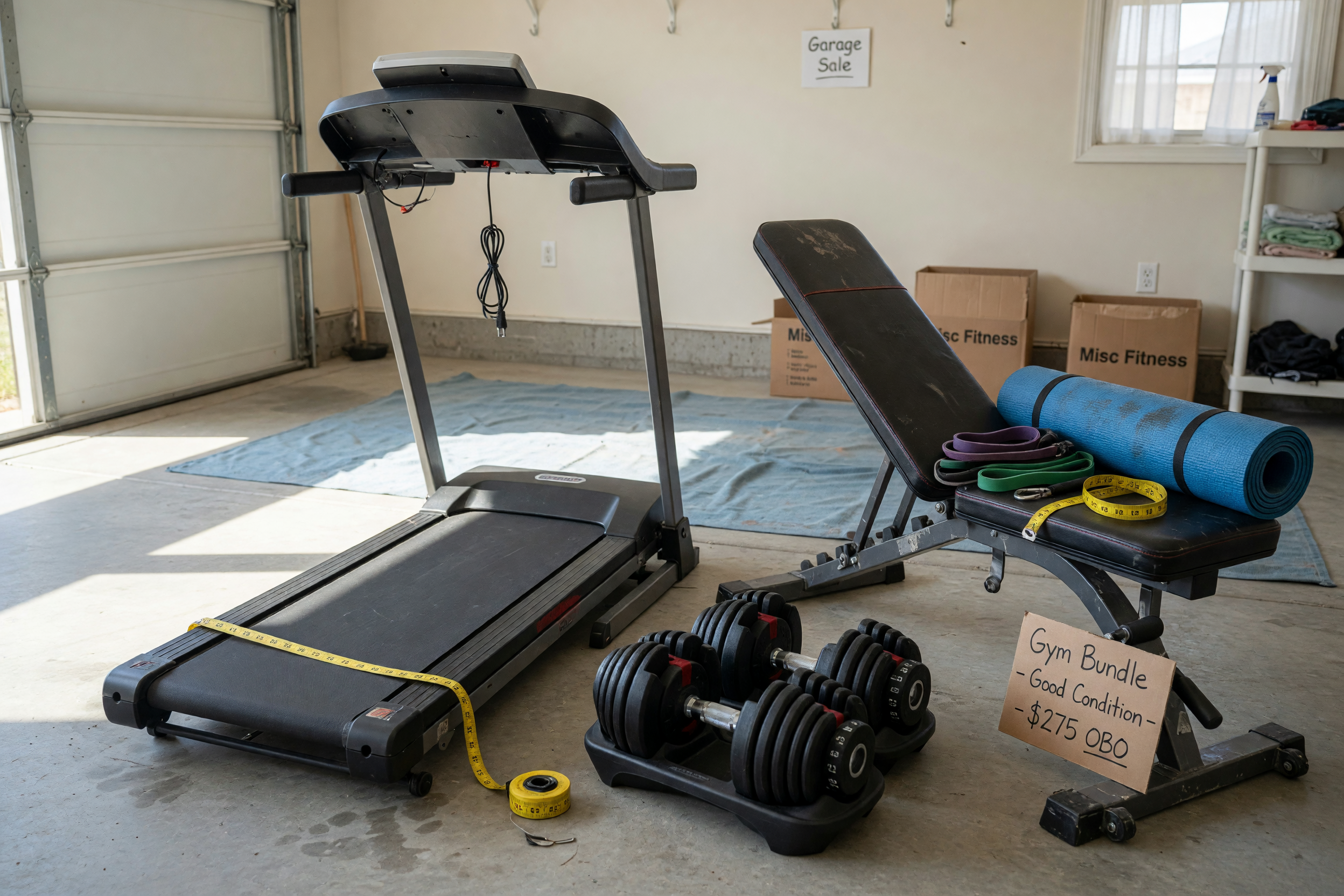
For sport-specific used gear: sell used sports equipment with size and pickup details
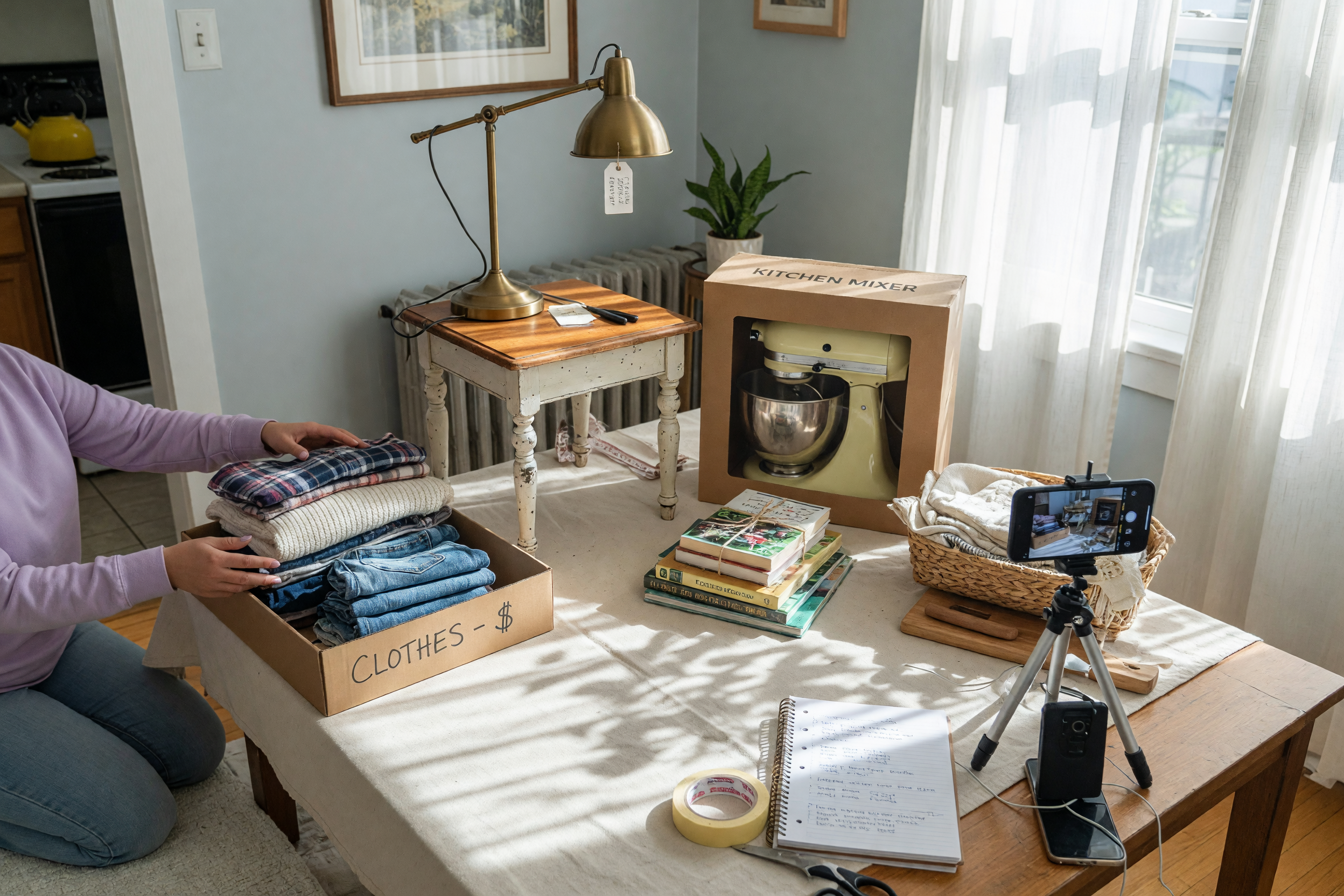
For sellers sorting closets instead of single items, this related guide covers how to sell clothing bundles
Frequently asked questions
How many photos should a used item listing have?
Aim for five clear, daylight photos: the full item, two or three angles, a close-up of any label or model tag, and an honest shot of any flaw. More good photos raise your reply rate more reliably than a small price cut, because they answer the condition question that makes a nearby buyer message instead of scroll past.
What details should I include when selling a used item?
Cover the fields a buyer would otherwise have to message you to learn: exact dimensions, brand and model, whether it is tested and working, what is included, age, why you are selling, and any flaws. Matching the details to the item type — dimensions for furniture, specs and battery health for electronics — pre-answers the questions that otherwise stall the sale.
Should I put my exact address in the listing?
No. Put the general area or ZIP and a pickup window so buyers can judge distance and timing, then share the exact address in the direct message once you have agreed on a time. That gives buyers enough to plan around while keeping your door private until a committed buyer is actually coming over.
How do I write pickup info that gets buyers to show up?
Use a short block that answers four things: your general area or ZIP, when you are available, who handles the lifting, and how big the item is to transport. "Pickup in the 30307 area, evenings and weekends, heavy item so bring a truck and a friend" removes the guesswork and cuts a five-message thread down to one.
How should I price a used item to sell locally?
Anchor to what similar used items near you are actually listed at, not what you paid new. Search your item on the marketplace or run it through the price checker to get a real range, then price a notch below average to sell this week or at average if you can wait. Always show a number — a listing with no price scares off serious buyers.
How do I stay safe selling to a local stranger?
Meet in a public place or your driveway for smaller items, keep all messages in the listing thread, and take cash or an instant transfer at handoff. Never share bank login details, and don't ship an item you posted for local pickup — that pattern is a common scam. Trust your read on anyone who dodges basic questions or pushes to move off-platform.



Comments
Loading comments...
Checking sign-in status...