
Secondhand Marketplace: Sell Used Goods With Less Back-and-Forth
Tired of answering the same questions on every used listing? Here are the five facts to add so secondhand buyers stop asking and show up ready to buy — with copy you can paste tonight.
ARTICLE LANGUAGE
Showing original language
You listed the blender, the bookshelf, and a box of kids' clothes, and now your phone won't stop: "Is this still available?" "Will you take half?" "What are the dimensions?" "Can you drop it off?" A secondhand marketplace should turn extra stuff into cash, not into a part-time job answering the same five questions all day. The good news is that almost all of that back-and-forth is avoidable, and it comes down to how the listing is written — not the buyers.
This guide is for anyone with a closet, garage, or spare room full of used goods they'd rather sell than store: furniture, small appliances, electronics, tools, clothing, kids' gear, and the miscellaneous stuff that piles up. You'll get the exact facts to put in a listing so buyers stop asking and start showing up, plus copy you can paste tonight. The goal is simple — post once, answer almost nothing, hand it off, done.
What a secondhand marketplace does that a driveway sale can't
A garage sale reaches whoever drives past your signs on one Saturday. A secondhand marketplace puts each item in front of every nearby person who is actively searching for it — someone typing "used dresser," "second-hand stroller," or "cheap desk near me" any day of the week. You post once, and buyers who already want the thing come to you.
The second difference is that a marketplace lets buyers pre-qualify themselves. When your listing answers size, condition, price, and pickup up front, the only people who message you are the ones ready to buy on your terms. That's the whole trick to cutting the noise. Start by browsing the used items marketplace to see how nearby listings are written, then model your own after the clearest ones.
The back-and-forth is a listing problem, not a buyer problem
Here's the pattern almost every overwhelmed seller shares: a short description, one dark photo, and a price. That listing forces the buyer to interview you. Each missing fact becomes a message, and each message is a chance for the buyer to lose interest or ghost. The fix isn't to answer faster — it's to make the questions unnecessary.
Think of your listing as a vending machine, not a conversation starter. When someone reads it, they should be able to decide "yes, I want this, at this price, and I can get it" without typing a word to you except to lock in a time. On Brixaz that matters even more because buyers contact you directly — there's no middle layer, so a clear listing is what keeps your inbox to real, ready buyers instead of a dozen "just wondering" messages.
The five facts that end the questions before they start
Nearly every buyer message is one of five questions in disguise. Put all five answers in the listing and the interrogation stops. Run this table against anything you post:
| Buyer's real question | What to put in the listing |
|---|---|
| "Is it still available?" | Keep it live only while it's for sale; mark it sold or delete it the moment it goes |
| "What's the condition?" | Honest wording plus photos of any flaw: "works perfectly, small scratch on lid shown in photo 3" |
| "Will it fit / how big is it?" | Width, depth, height for furniture; model or capacity for appliances and electronics |
| "What's your lowest price?" | A firm number plus terms: "$40, firm" or "$40 OBO, you pick up" |
| "When and where can I get it?" | Neighborhood or ZIP, plus two or three pickup windows |
Answer these five and you've removed roughly ninety percent of the messages a bare listing invites. Everything below is just how to write each one so it reads clean.
Write descriptions that pre-answer the top buyer questions
A buyer decides in about ten seconds whether to message you. What loses them is a listing that makes them work. Compare these two for the same item:
Weak: "Blender for sale, good condition, $25."
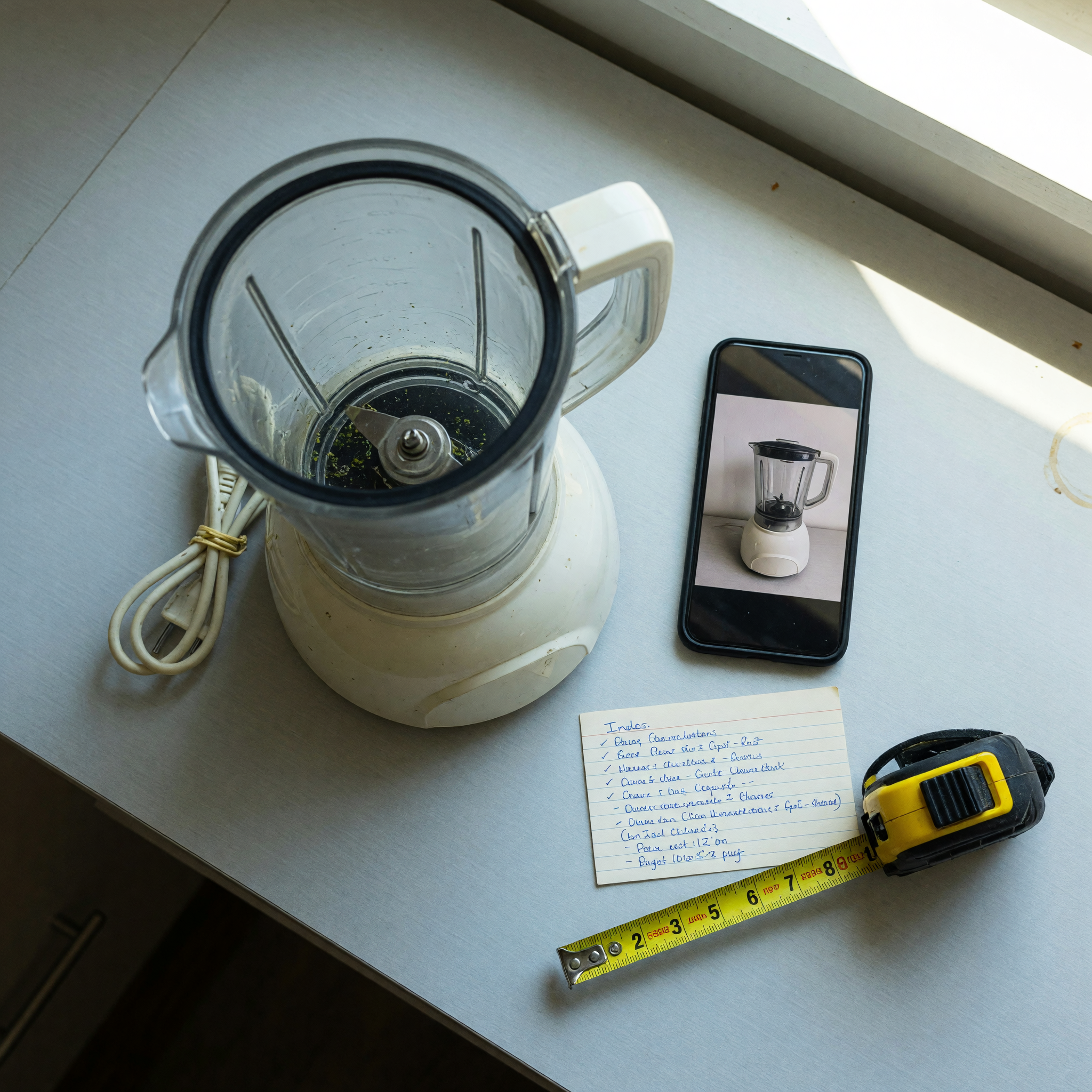
Better: "Ninja 1000W blender, 72 oz pitcher, works perfectly, cleaned and tested — small cosmetic scuff on the base shown in photo 3. Comes with the tamper and original lid. $25 firm, cash on pickup. Available in the 30306 area, evenings this week."
The second version answers brand, power, size, working status, flaws, what's included, price, payment, location, and timing — the buyer has nothing left to ask except "6pm work?" Use this field checklist for every used item you list:
- What it is — brand, model, and size or capacity, not just "blender" or "table."
- Condition — honest, with every flaw named and photographed. Naming a flaw builds trust; hiding it kills the sale at the door.
- What's included — cords, remotes, extra parts, original box.
- Photos — four to six in good light: the full item, each side, any damage up close, and one shot showing scale.
- Price and terms — the number plus "firm," "OBO," or "you haul."
- Pickup area and windows — a ZIP or neighborhood and when you're available.
Posting goes faster when the form already knows what you're selling. This prefilled listing form starts you in the right flow so you can drop in the facts and move to the next item instead of rebuilding the layout each time.
Price it once so you're not negotiating twice
Most of the "what's your lowest?" messages come from listings that look negotiable — no terms, a round number that screams "I made this up." You can shut that down by pricing with intent and saying so. If you want it gone fast, price it low and write "firm." If you have room to haggle, write "OBO" and set your number a little above your floor so the haggle lands where you actually want it.
The mistake that costs you a week is guessing high. Buyers scroll past overpriced used goods without a word, so you never even learn the price was wrong. Check what comparable items nearby are actually selling for first — the listing price checker helps you land on a number nearby buyers will pay so you're not stuck relisting the same item three times. And for anything not worth the negotiation at all — a worn but working lamp, leftover hangers, a spare cable box — skip the haggling entirely and post it in the free stuff section, where items often clear the same day.
Set pickup so the last message is "on my way"
The final round of back-and-forth is scheduling. "When can you do it?" "What's your address?" "Can you do tomorrow instead?" You cut all of it by offering the windows in the listing itself. Good pickup wording: "Available for pickup Tue–Thu 5–8pm and Saturday 10am–2pm in the 30306 area. First to confirm a time gets it. I'll share the exact cross street once we lock a slot."
That tells the buyer when to come, how the handoff works, and keeps you in control of your schedule and your privacy. Hold a few safety boundaries every time: meet at your door or driveway or a public spot, keep pickups in daylight when you can, confirm cash or an instant transfer before the item leaves your hands, and don't share your exact address until a time is locked in. For higher-value electronics, meeting in a busy public place — a store lot, a coffee shop — is normal and buyers won't blink at it.
Cannot find the item you want? post a wanted ad for exactly what you need
New to selling online and comparing sites? the best Craigslist alternative for local listings
When you want buyers to trust one specific used item quickly, for sale near me listing trust guide
For sellers with instruments or gear, this category needs more detail than a generic used-item post: sell a used musical instrument locally
For athletic gear and seasonal equipment: sell used sports equipment locally
If your next used-goods listing is a closet cleanout, see how to sell a clothing bundle locally
Another used-goods example: women's clothing lot listing
Frequently asked questions
Where can I sell used stuff locally without fees?
Post each item as a free local listing on a secondhand marketplace like Brixaz, where buyers contact you directly and there are no selling fees taking a cut. You keep the full price, meet nearby, and hand the item off in person — no shipping and no platform commission.
How do I stop buyers from asking so many questions?
Answer the five questions before they're asked: availability, condition, size, price with terms, and pickup windows. A listing that covers all five turns "is this available?" into "can I grab it at 6pm?" — the only message you actually want.
How many photos should a secondhand listing have?
Four to six is the sweet spot: the full item, each side, a close-up of any flaw, and one shot showing scale or the item in use. Good light and a clean background do more to build trust than any description, and showing flaws up front prevents cancellations at the door.
Should I price used items firm or negotiable?
Decide before you post and say so. If you want it gone fast, price low and write "firm" to stop haggling. If you have wiggle room, write "OBO" and set your number slightly above your real floor. Either way, check comparable local prices first so you don't scare buyers off with a high guess.
What should I do with items that aren't worth selling?
Don't waste a for-sale listing negotiating over a few dollars. Post low-value but working items — spare cables, hangers, a worn lamp, leftover boxes — in the free stuff section, where they usually find a taker the same day and buy back your time.
Is it safe to meet strangers for pickup?
Yes, with basic boundaries. Meet at your door, driveway, or a public spot; keep pickups in daylight; confirm cash or an instant transfer before the item leaves; and don't share your exact address until a time is set. For higher-value electronics, meeting in a busy public lot is standard and expected.



Comments
Loading comments...
Checking sign-in status...