
Sell a Used Guitar: Model, Setup, Demo, Pickup
A practical seller guide for listing an acoustic, electric, or bass guitar with the model, condition, setup notes, demo proof, photos, and pickup terms buyers need.
ARTICLE LANGUAGE
Showing original language
If you have an acoustic guitar, electric guitar, bass, beginner bundle, amp combo, or extra case sitting unused, the fastest useful move is to post the used guitar on Brixaz with the model, condition, setup notes, and pickup terms already clear. A local buyer does not need a sales pitch first. They need to know exactly what instrument it is, whether it plays cleanly, what is included, and how they can test or collect it.
This guide is for one specific seller: someone in the United States who owns a real guitar they can hand to a local buyer this week. The exact thing to post is one guitar or one honest guitar bundle, not a vague "music stuff" listing. Brixaz is still in founding-seller mode, so the audience is smaller than the biggest marketplaces; the trade-off is free posting, direct contact, less early category competition, and no fee taken from the sale.
Name the guitar before you describe it
The model is the anchor of a guitar listing. Buyers compare by brand, model, body style, pickup type, scale, handedness, and whether the instrument is acoustic, classical, electric, or bass. If you only write "nice guitar," you invite messages from people who are not the right buyer. If you write "Yamaha FG acoustic, right-handed, natural finish" or "Squier Strat-style electric with small practice amp," the buyer can decide faster.
Start the title with the buyer's search words: used guitar, acoustic guitar, electric guitar, bass guitar, beginner guitar, or guitar bundle. Then add the model or most specific identifier you can verify. Do not invent a model from memory. Look at the headstock, label inside the sound hole, neck plate, back of the headstock, receipt, case tag, or original listing if you still have it.
Bad title: "Guitar for sale, good condition." Better title: "Used Yamaha acoustic guitar with case, right-handed." Bad title: "Electric guitar bundle." Better title: "Squier electric guitar, 10W amp, cable, stand, pickup in Plano." The better versions are not longer for the sake of length. They answer the first questions a serious buyer would ask.
Describe condition like a player, not a warehouse
Condition for a guitar is more than scratches. A buyer wants to know whether the neck feels straight, the frets have major wear, the strings are old, the electronics crackle, the tuning machines hold, the bridge is lifting, the action is high, or the body has cracks. You do not need to be a guitar tech, but you should describe what you can see, hear, and test.
A useful condition paragraph can be short: "Right-handed acoustic guitar. Plays, but strings are older and should be replaced. Small ding on lower body, shown in photo. Neck looks straight to me. Comes with soft case and capo." That is stronger than "minor wear" because it separates cosmetic flaws from playability.
If the guitar has a real issue, say it plainly. "Needs setup," "buzz on low E string," "input jack cuts out," "bridge crack," or "for repair" may lower the price, but it protects trust. Brixaz relies on direct contact, so a clear listing should make the first message about pickup or a test time, not a dispute about what "good condition" meant.
List setup details buyers usually ask about
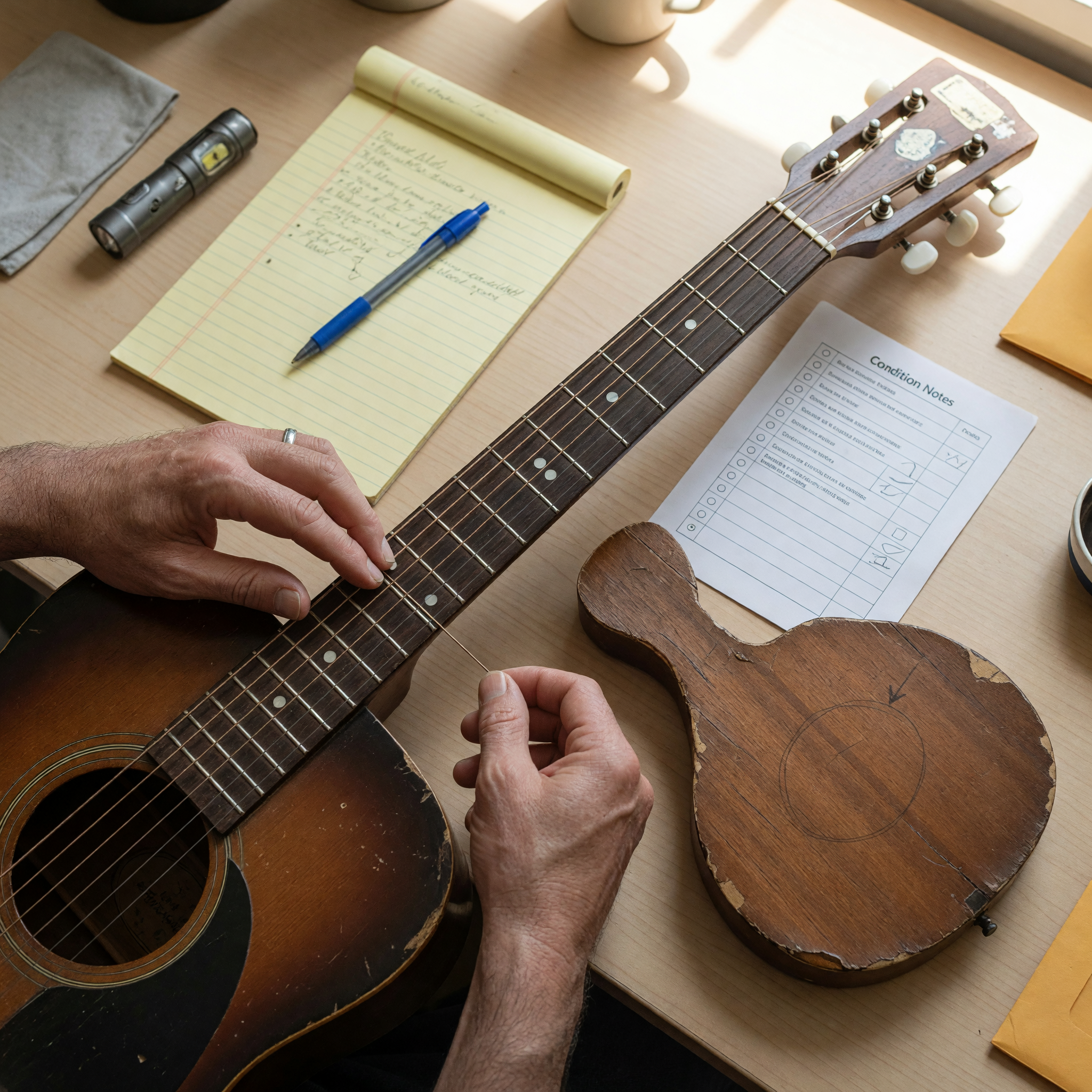
Setup details help both beginners and experienced players. For an acoustic guitar, include string age, action if you can describe it, whether the neck appears straight, whether the bridge looks secure, and whether the guitar stays in tune during a short test. For an electric guitar or bass, add pickup configuration, knob and switch behavior, jack condition, amp test, and whether any scratchy sound comes through when plugged in.
You do not need precise luthier measurements to publish a useful listing. Plain wording is enough when it is honest: "Action feels medium, playable for open chords," "strings are rusty and should be changed," "plugged into my amp and all pickups made sound," or "I hear crackle when turning the volume knob." Those details help the right buyer decide whether the guitar is ready to play or priced as a project.
If you have old listing text from another marketplace, use it as raw material but do not rebuild the whole ad from scratch. For a fresh draft, the Brixaz listing template generator can turn your notes into a cleaner guitar listing after you collect the model, condition, included items, and pickup window.
Use photos and a simple demo to prove the basics
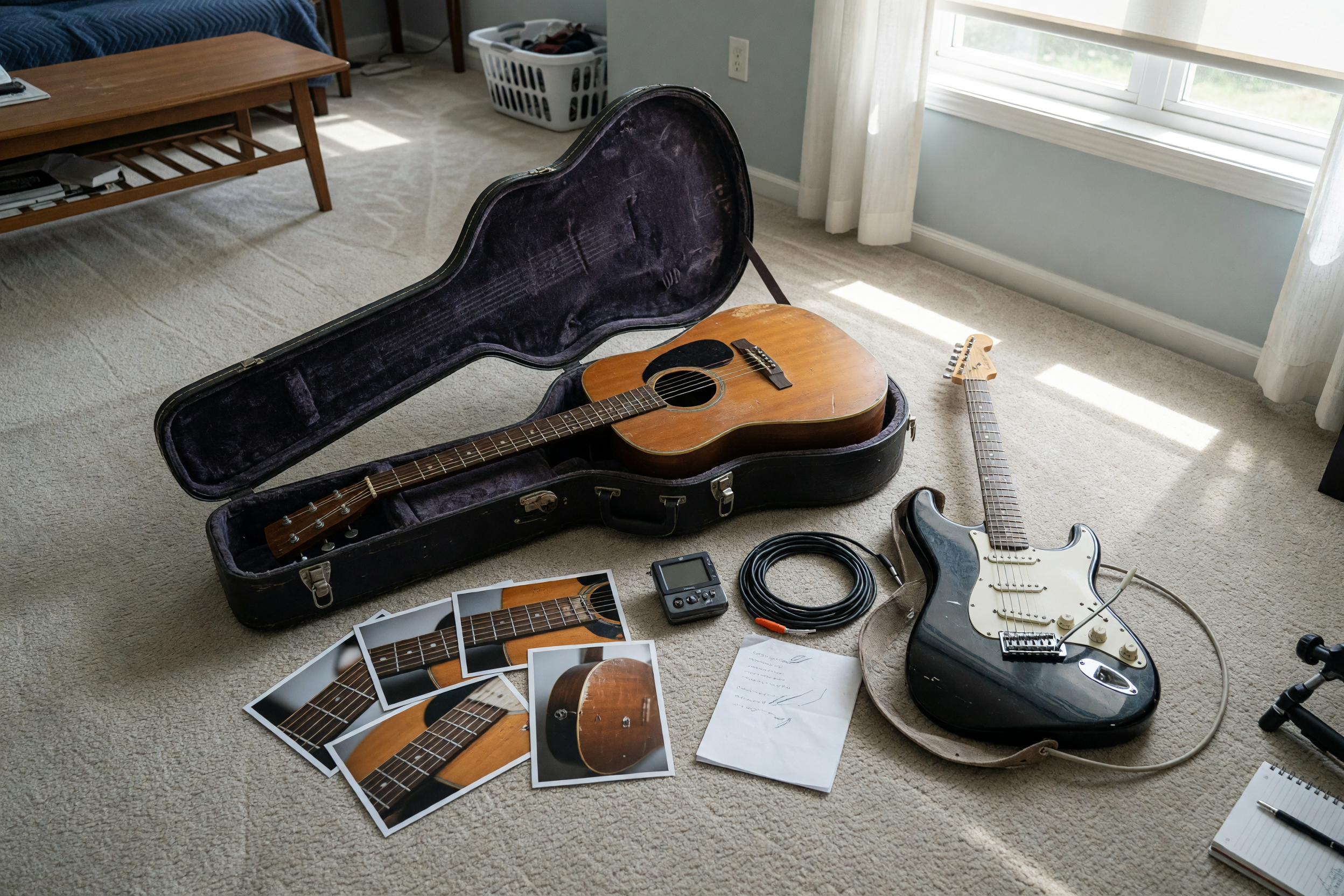
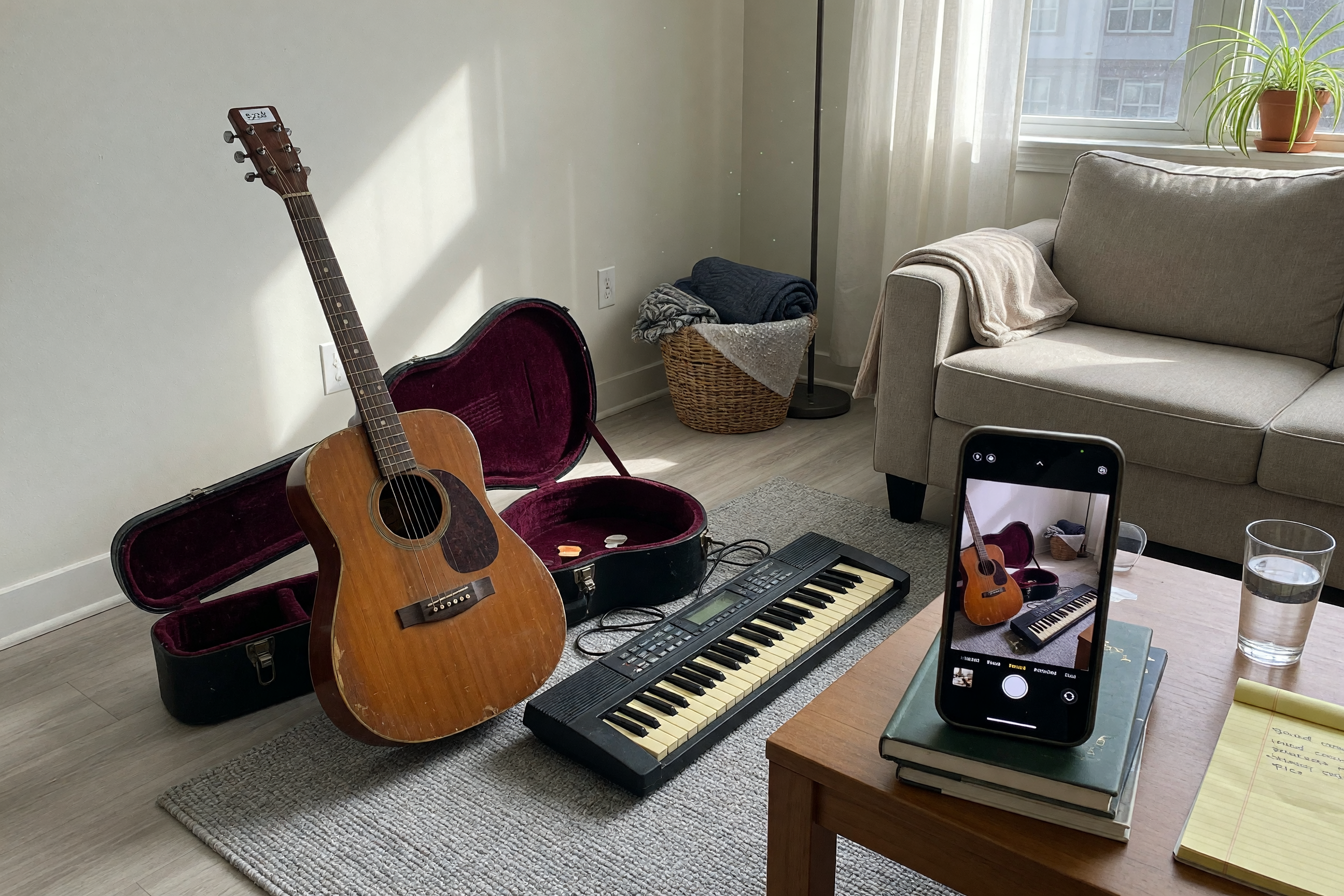
Photos should show the exact guitar, not a catalog image or cropped glam shot. Take one full front photo, one full back photo, headstock front and back, body label or model plate, bridge, frets, tuning machines, electronics, dings, cracks, case, amp, cables, or accessories. If you are selling a beginner bundle, take one photo with every included piece visible together.
A simple demo can be as basic as telling buyers what you tested. You do not have to upload a performance video to make a trustworthy listing. Write: "I tuned it and played open chords today," "tested through a small amp; all pickups produced sound," or "I do not play, so I can show it powers through an amp but cannot evaluate setup." That honesty is useful because some sellers are parents, roommates, or people clearing storage, not musicians.
For higher-priced instruments, offer a short public meet-up test or a porch pickup only after the buyer accepts the condition as described. Do not promise a long private audition at your home. Keep the listing focused on verifiable facts and clear boundaries.
Build a used guitar listing checklist
Use this checklist before you publish. It is designed to reduce repeated buyer questions and help the listing stand on its own.
| Listing field | What to include | Example |
|---|---|---|
| Title | Type, model, included item, and pickup clue | Used Yamaha acoustic guitar with soft case |
| Model proof | Headstock, label, serial plate, or honest uncertainty | Label says FG series; see sound hole photo |
| Condition | Scratches, cracks, fret wear, neck, bridge, tuning | Small body ding; bridge looks secure |
| Setup | Strings, action, buzzing, electronics, test result | Older strings; plays but could use setup |
| Included pieces | Case, strap, stand, capo, tuner, amp, cable, picks | Includes gig bag, strap, tuner, and stand |
| Pickup terms | City area, timing, public meet-up or buyer pickup | Pickup near Denver evenings after 6 pm |
Pricing should match the facts you can prove. A named model with a case, clean electronics, and clear photos can ask more than a mystery guitar with old strings and no test. If you are unsure whether your price is realistic, use the Brixaz listing price checker as a second pass after you write the condition notes.
Set pickup and buyer boundaries clearly
Guitars are personal enough that buyers may ask to test them, but your listing should set the rules. For a lower-priced beginner guitar, a simple pickup with clear photos may be enough. For an electric guitar, a buyer may reasonably want to confirm that it makes sound through an amp. If you can meet in a public place with a small battery amp, say that. If pickup is from your porch or garage, say that the buyer should review photos and condition first.
Good pickup wording: "Pickup near Austin. I can meet in a public parking lot for the guitar and case. If you want to test electronics, bring a small amp or I can show a short test before pickup." For an acoustic: "Pickup in Queens evenings. You can inspect body, neck, and case at pickup; exact address after confirmed time." That is much stronger than "serious buyers only."
Choose the musical instruments category instead of hiding the listing in a broad used-items bucket. Category clarity is a Brixaz-specific advantage for early supply: a clean guitar listing has more room to be found while the marketplace is still growing. If you are selling several unrelated used items, the broader sell used items path can help, but the guitar itself belongs in musical instruments.
If you are clearing several hobby items at once, you can also sell used exercise equipment on Brixaz
FAQ
What should I put in the title when selling a used guitar?
Put the type, model, and strongest buyer detail near the front. "Used Yamaha acoustic guitar with case" or "Squier electric guitar with amp and stand" is clearer than "guitar for sale."
Do I need to know the exact guitar model?
Use the exact model if you can verify it from the headstock, label, plate, receipt, or old listing. If you are not sure, say so and include clear photos of the markings so buyers can inspect them.
Should I mention that the guitar needs a setup?
Yes. "Could use setup," "older strings," "buzz on one string," or "action feels high" are useful details. Buyers may still be interested if the price and condition match the work needed.
How many photos should a used guitar listing include?
Include at least six: full front, full back, headstock, model label or plate, fret and bridge area, and any damage. Add accessories and electronics photos when they are included.
Can I sell a guitar if I do not play?
Yes, but be honest about what you tested. You can say it appears complete, show the model and condition, and explain that you cannot evaluate playability beyond a basic visual or amp power check.
What pickup details should I include?
Give the city area, pickup windows, whether a public meet-up is possible, and any test rules. Keep your exact address private until a buyer confirms a time.
A strong used guitar listing does not need hype. It needs the instrument name, honest condition, setup clues, real photos, included pieces, and pickup terms clear enough that the next message can move toward a real local handoff.



Comments
Loading comments...
Checking sign-in status...