
Online Yard Sale: Turn Extra Stuff Into Local Listings
Get the clear-out of a garage sale without the tables, signs, or weekend crowd. Here's how to sort, batch, price, and post an online yard sale that turns extra stuff into local listings buyers actually message.
ARTICLE LANGUAGE
Showing original language
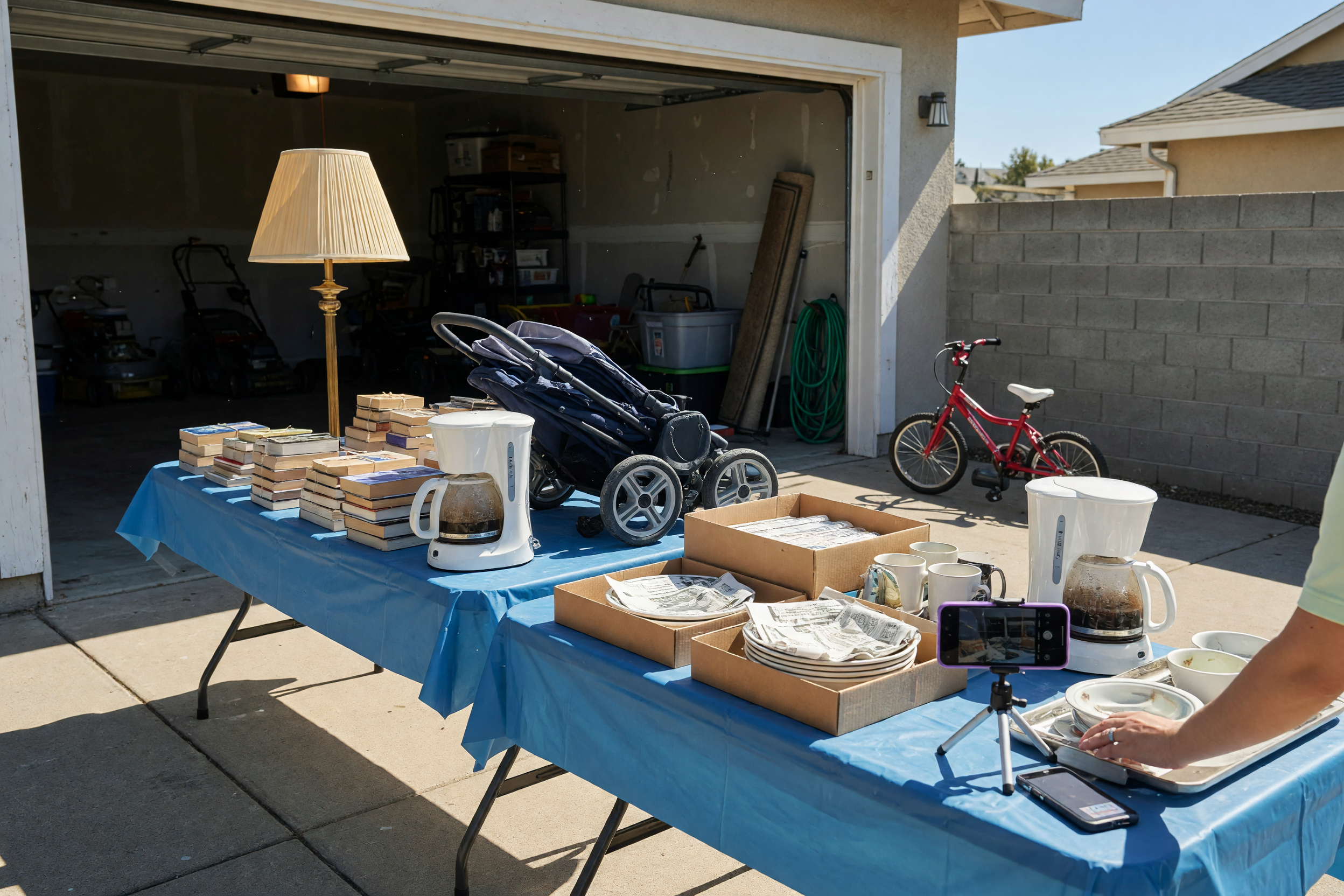
A real yard sale means picking a Saturday, hauling everything onto folding tables, taping up signs, and hoping the weather holds and enough strangers wander by before noon. An online yard sale gets you the same result — a garage full of extra stuff turned into cash — without the tables, the early morning, or the crowd of people haggling over a quarter. You photograph what you want gone, post it where nearby buyers are already looking, and they come to you one item at a time, on their schedule and yours.
This guide is for the person staring at a closet, garage, or spare room packed with things they no longer use: kitchen gadgets, kids' toys, a spare coffee maker, books, a stroller, a bike the kids outgrew. You do not need a business or a "store." You need a simple system to sort the pile, decide what to batch and what to list on its own, and write posts a local buyer will actually message. Everything below is copy and checklists you can run through this weekend.
What an online yard sale really is
An online yard sale is just a batch of individual local listings you post in one sitting instead of setting up a physical sale. Each thing you want gone becomes a post with photos, a plain description, a price, and a pickup area. Buyers nearby search for what they need — "used stroller," "coffee maker," "kids' bike" — find your listing, message you, and drive over. There is no shipping, no packing, and no waiting on a weekend crowd.
The advantage over the driveway version is reach and timing. A physical sale only reaches people who happen to drive past your signs during a four-hour window. An online listing sits in front of every buyer within a few miles who searches for that item, any day, until it sells. You can post a dozen things in an evening and let the marketplace do the walking. Start by browsing the used items marketplace to see how nearby listings look, then plan your own batch.
Sort your stuff into three piles before you post
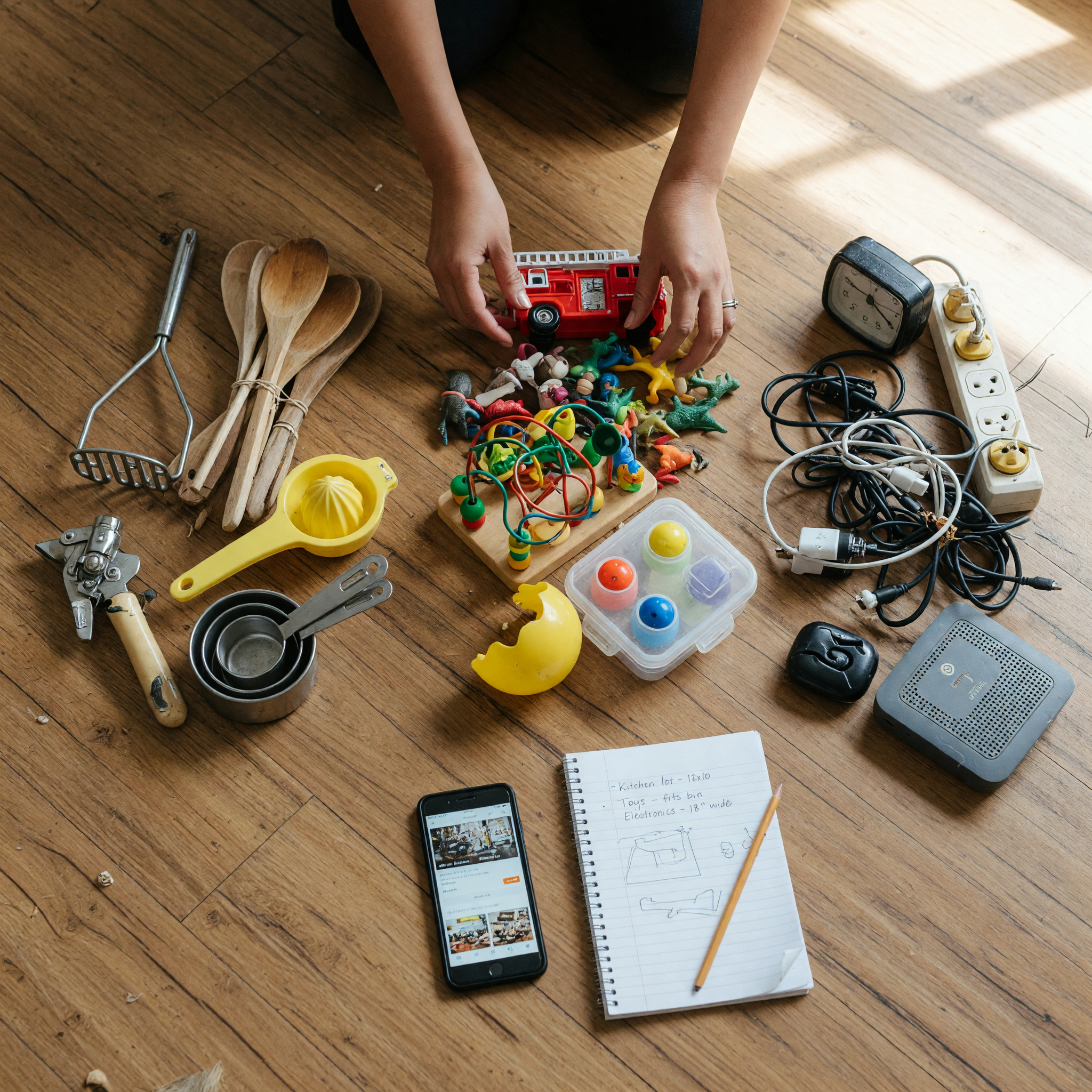
Before you write a single word, sort everything into three piles. This one step decides how much you post, what you price, and how fast the whole thing clears. It also stops you from wasting an hour writing a detailed listing for a $2 item that should have been given away.
- Sell on its own. Anything worth $15 or more, or that a buyer would search for by name: the stroller, the bike, a working microwave, a name-brand blender, a game console, power tools. These earn their own listing.
- Batch into a lot. Small, low-value items that are annoying to sell one by one: a box of kids' toys, a set of kitchen gadgets, a stack of paperbacks, a bin of cables and chargers. Bundle them into one "lot" listing.
- Give it away. Working items not worth the effort to price and negotiate — a mismatched set of mugs, an old but functional lamp, extra hangers. Post these in the free section; free items often move the same day and clear space fast.
Do the sorting physically, in one spot, before touching your phone. When the piles are made, you already know your posting plan: five single listings, three lot listings, and a handful of free giveaways instead of a vague "I should sell some stuff" that never happens.
Batch or single: how to group items into listings that sell
The most common online-yard-sale mistake is posting fifteen tiny listings that each take five minutes and sell for $3, then giving up halfway through. The fix is knowing what deserves its own post and what belongs in a bundle. Use this as your quick decision guide:
| What you have | Post it as | Title example |
|---|---|---|
| Stroller, bike, appliance, console, power tool | Single listing | "Graco double stroller, folds flat, clean" |
| Box of assorted kids' toys | One lot listing | "Kids' toy lot — cars, blocks, figures (25+ pieces)" |
| Kitchen gadgets, utensils, small tools | One lot listing | "Kitchen gadget bundle — masher, juicer, measuring set" |
| Cables, chargers, adapters | One lot listing | "Bin of cables & chargers — USB, HDMI, phone" |
| Books, DVDs, media | One lot listing by genre | "30+ paperback novels — mystery & thriller" |
| Mismatched mugs, worn but working lamp | Free listing | "Free: 6 coffee mugs + desk lamp, porch pickup" |
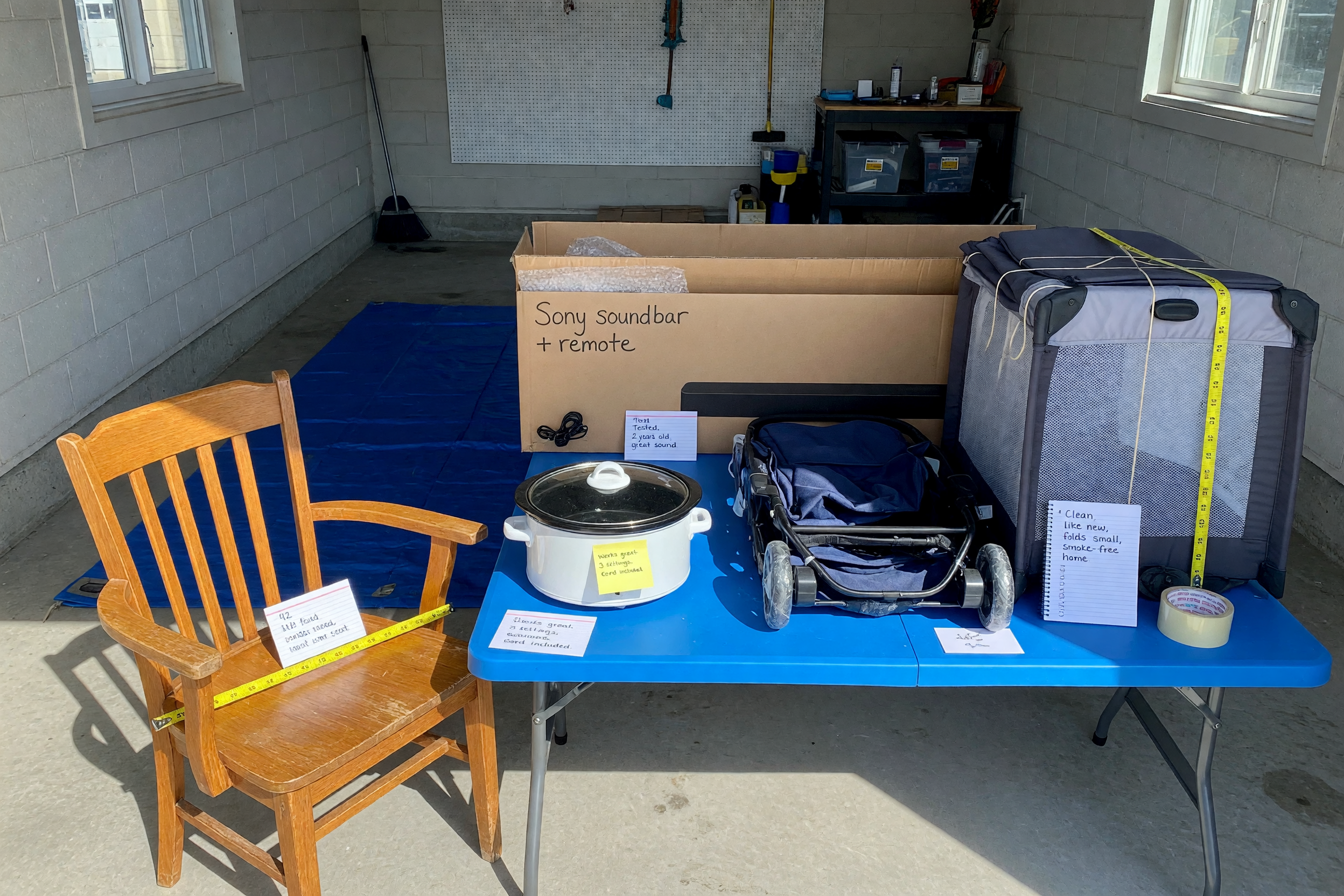
For a lot, take one clear photo of everything laid out together and a couple of close-ups of the better pieces, then list the count and the general size in the description. A buyer scanning "kids' toy lot, 25+ pieces, fits one bin" knows exactly what they are getting and how much car space it needs. If turning a pile into clean listing text feels slow, the listing assistant can help you draft a title and description from a few facts.
Write listings that answer the buyer's first question
A nearby buyer decides in about ten seconds whether to message you. What loses them is a listing that makes them work — a blurry photo, a three-word description, no price, no location. Every open question is a reason to scroll to the next post. Your job is to close those questions before they are asked.
Here is the difference in practice. Weak: "Coffee maker, works." Better: "Black & Decker 12-cup drip coffee maker, tested and working, carafe and filter basket included, minor scuff on base shown in photo 3, pickup in the 85032 area." The second one answers brand, capacity, condition, what's included, and location in one line — the buyer has nothing left to ask except when to come by. Apply the same to a lot: "Kitchen gadget bundle — 8 pieces: potato masher, wooden spoons, citrus juicer, stainless measuring cups, all clean and usable, fits a shopping bag."
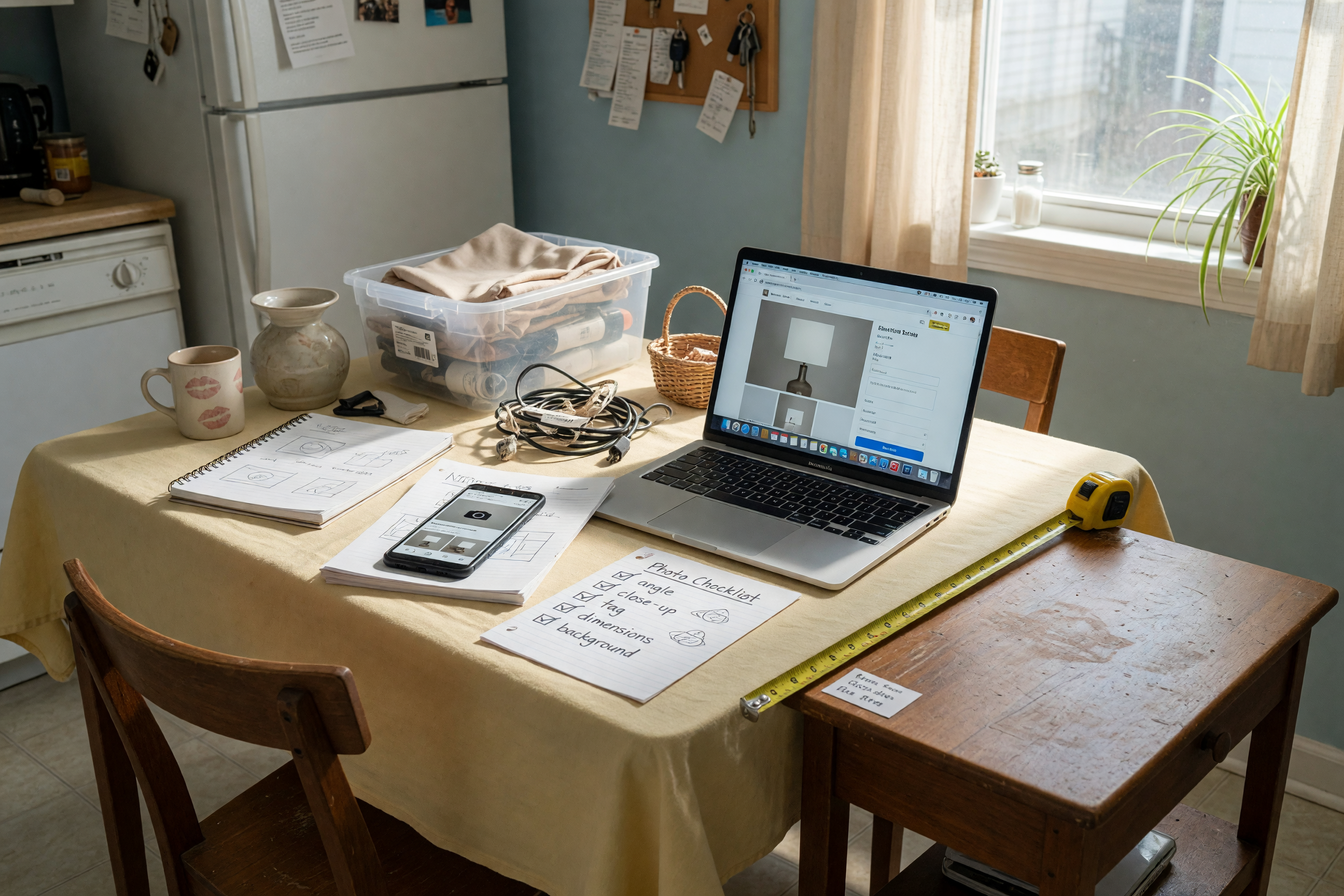
Photograph in daylight near a window or outside, lead with the full item against a clean background, add an angle or two, and show any flaw honestly. For a batch of small stuff, one well-lit overhead shot of everything grouped together does more than ten separate blurry photos. Honest photos of wear build more trust than hiding it, and they kill the "you didn't mention this" cancellation at pickup.
Price the pile without giving it away
The two ways an online yard sale stalls are overpricing single items to what you paid new, and pricing a lot so high that it loses the whole point of bundling. Anchor to what similar used items near you are actually listed at — not the sticker price you remember. Search your own item first, filter for the same brand and rough condition, and read the real local range.
For a faster read than manual scrolling, run the item through the listing price checker to get a starting range, then price a notch below average if you want it gone this week. For lots, price the bundle at what one buyer will happily pay to take the whole box off your hands — usually less than the sum of the parts, because convenience is the selling point. And always show a number. "Make an offer" with no price just filters out the serious buyers who assume you will be hard to deal with.
One planning tip: post your single high-value items first and your lots and free stuff a day later. The single items bring the most motivated buyers, and once someone is already driving to your place for the stroller, they will often grab the toy lot too. To start a batch right now, open a prefilled seller form and knock out your first listing while the pile is still sorted in front of you.
The Brixaz edge: direct contact and local discovery
On Brixaz, buyers message you directly through each listing — there is no middle layer holding your contact hostage and no algorithm deciding who gets to reach you. For an online yard sale that matters twice over. First, a buyer coming for one item can see your other active listings and grab three things in one trip, which is exactly the yard-sale effect you want. Second, because contact is direct, the trust your posts earn is doing the work a big brand name would otherwise do — so clear photos, honest flaw notes, a real ZIP, and firm prices are your whole pitch.
Local discovery is the other half. Your listings surface to buyers searching in your city and ZIP, so the person who drives over is genuinely nearby, not three states away asking you to ship a coffee maker. Keep your general area or ZIP in the listing and share the exact address only in the message once a buyer commits to a time. For safety, meet in your driveway or a public spot for smaller items, keep messages in the listing thread, take cash or an instant transfer at handoff, and never ship something you posted for local pickup.
Frequently asked questions
What is an online yard sale?
An online yard sale is a batch of individual local listings you post in one sitting instead of setting up a physical sale. Each item you want gone becomes a post with photos, a description, a price, and a pickup area, and nearby buyers message you and come pick it up. You get the clear-out effect of a garage sale without tables, signs, or a weekend crowd.
Should I sell items one by one or bundle them into lots?
Give anything worth about $15 or more, or that buyers search for by name, its own listing — a stroller, bike, appliance, or power tool. Bundle small, low-value items that are tedious to sell alone — kids' toys, kitchen gadgets, cables, paperbacks — into one "lot" listing with a photo of everything together and a piece count. Bundling clears the little stuff fast and saves you from writing fifteen tiny posts.
How do I price used household items to actually sell?
Anchor to what similar used items near you are currently listed at, not what you paid new. Search your item first or run it through the price checker to get a real local range, then price a notch below average to move it this week. For lots, price the whole bundle at what one buyer would happily pay to take the box off your hands, and always show a number rather than "make an offer."
How many photos does each listing need?
For a single item, aim for four or five daylight photos: the full item, a couple of angles, a close-up of any brand or model label, and an honest shot of any flaw. For a lot, one clear overhead photo of everything grouped together plus a close-up of the better pieces is enough. Good photos raise your reply rate more reliably than a small price cut because they answer the condition question before a buyer has to ask.
What should I do with stuff that isn't worth selling?
Post working items that aren't worth pricing and negotiating in the free section. Free listings often move the same day, clear space immediately, and bring buyers to your area who may also grab your for-sale items. It's faster than hauling everything to a donation center and it keeps usable things out of the landfill.
Is it safe to sell to local strangers this way?
Yes, with a few habits. Meet in your driveway or a public spot for smaller items, keep all messages in the listing thread, and take cash or an instant transfer at handoff. Put your general area or ZIP in the listing and share your exact address only after a buyer commits to a time. Never share bank login details and don't ship an item you posted for local pickup — that pattern is a common scam.




Comments
Loading comments...
Checking sign-in status...