
Marketplace Safety: How to Buy and Sell Safely Locally
Marketplace safety made simple: where to meet, a safe-pickup checklist, the payment rules that stop scams, and the message red flags to refuse — so you can sell used items locally without second-guessing the meetup.
ARTICLE LANGUAGE
Showing original language
Most people who search marketplace safety aren't scared of selling — they're scared of the meetup. You have a dresser, a phone, or a stroller worth real money, and the only thing standing between it and a buyer is one exchange with a stranger. Do it right and the whole thing takes four minutes in a parking lot. Do it wrong and you're out an item, out cash, or stuck with a scam text chain. This guide gives buyers and sellers the exact rules that make a local handoff boring in the best way, so you can list your used items and meet without second-guessing it.
The good news: safe local selling is almost entirely about a few habits you set before you ever leave the house — where you meet, how you take payment, and which messages you refuse to answer. None of it costs money, and none of it requires a background-check subscription. Here's the whole playbook.
Why marketplace safety is really a seller's advantage
Safety gets framed as something that slows you down. In practice, the sellers who meet safely close faster, because their rules quietly filter out the people who were never going to show. A buyer who happily agrees to meet at a public spot in daylight and confirm cash on pickup is a buyer who means it. The one who pushes back — insists on your home address, wants to "ship" a local item, or sends a payment "by mistake" — was going to waste your afternoon anyway.
So the same boundaries that protect you also pre-qualify your buyer. That's the reframe: a safe-meetup policy isn't friction, it's a screen. When you sell locally on a platform where buyers contact you directly about a real listing, you can read those signals before you ever agree on a time — and skip the ones that don't pass.
Where to meet: safe local pickup spots that work
The meeting spot decides most of your risk before anyone says a word. The goal is simple: somewhere public, well-lit, with people and cameras around, and never your front door for a first meeting with a stranger. Good options, roughly in order:
- A police station "safe exchange zone." Many US departments have a marked, camera-covered spot in the lot specifically for online-sale handoffs. It's free, it's obvious, and it ends scam intentions instantly.
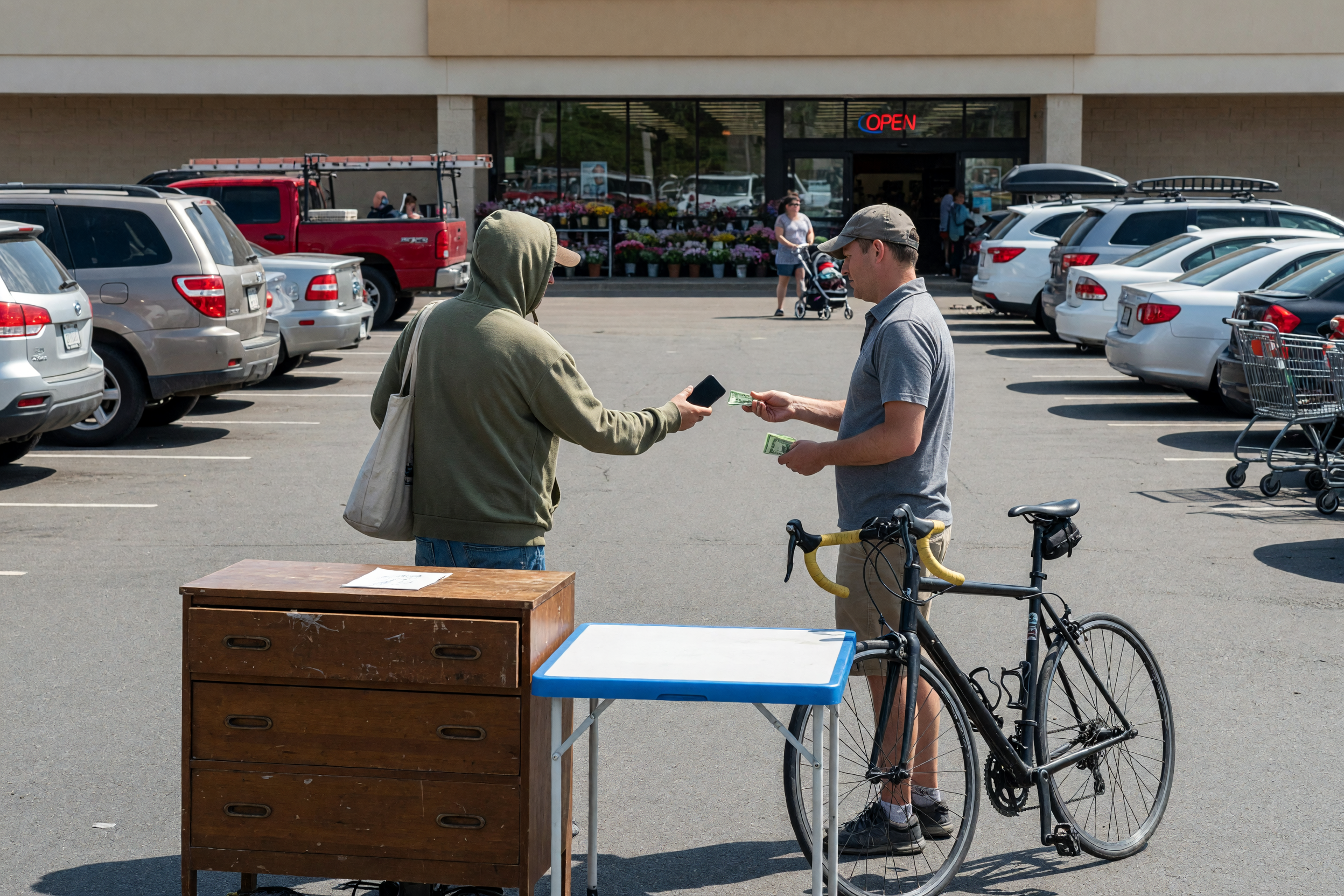
- A busy retail parking lot in daylight. A grocery store, home-improvement store, or bank lot has cameras, foot traffic, and easy directions.
- Inside a store or coffee shop for small electronics, where the buyer can test the item on the spot at a table.
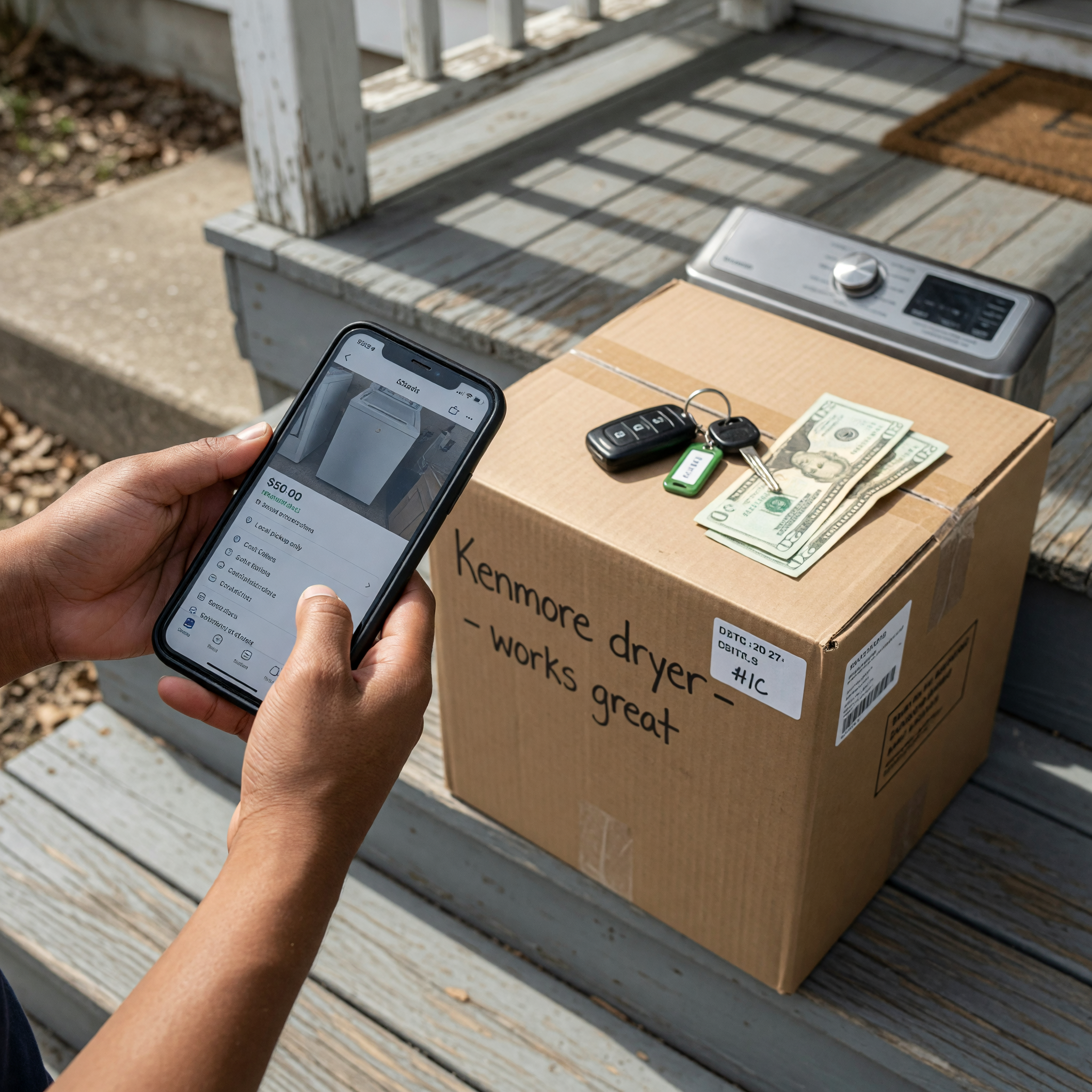
- Your driveway or porch — not inside — for large furniture that truly can't be moved, ideally with another adult home and the pickup set for daylight.
For big items where the buyer must come to you, keep your exact address out of the listing and the early messages. Share the cross-street or ZIP to help them plan, and give the full address only once a specific pickup time is set. If you'd rather scope where nearby buyers already are before you commit, you can browse local listings by city or ZIP to get a feel for the meetup norms in your area.
The safe-pickup checklist
Run this list every time, buyer or seller. It fits on a phone note and takes ten seconds to check before you head out.
| Step | Do this | Why it matters |
|---|---|---|
| Pick the spot | Public, lit, camera-covered; a police safe-exchange zone if available | Removes privacy that scams and theft rely on |
| Set daylight timing | Meet during the day, give a firm window, confirm the morning of | Weeds out no-shows and cuts risk |
| Bring a buddy | Tell someone where you're going; bring a second person for high-value items | Deters trouble and adds a witness |
| Confirm payment first | Cash counted in hand, or an instant transfer you see clear before handoff | No reversible or "pending" payments |
| Test the item | Buyer powers it on and inspects; seller lets them, no rush | Prevents "it didn't work" disputes later |
| Keep your address private | Cross-street or ZIP until a time is set; full address only then | You control who knows where you live |
If meeting a stranger still feels like a big first step, start low-stakes: give one thing away in the Free Stuff section. A no-money porch pickup for a box of books or a spare lamp lets you practice the whole routine — public spot, daylight, quick handoff — before you do it with a $300 item and cash on the line.
Payment safety: what to accept and what to refuse
Money is where local deals actually get stolen, and almost every scam here is a variation on the same trick: get you to hand over the item before the payment is really final. Hold one rule and most of them fail — the item does not move until the money is irreversibly yours.
- Cash is king for in-person deals. Count it in hand. For larger amounts, meet at a bank so you can deposit or verify on the spot.
- Instant transfers are fine once they clear. Wait until the money shows as received and settled in your account — not a "sent" screenshot the buyer holds up.
- Refuse checks, "extra payment" mistakes, and overpayment refunds. Any story where you send money back is a scam, full stop.
- Never accept "I'll pay when it ships" on a local item. If it's local, it's cash or cleared transfer on pickup. Shipping talk on a couch is a red flag by itself.
The screenshot trick is the one that catches honest sellers: a buyer shows a "payment sent" image and pressures you to hand over the item because "it's processing." A screenshot is not money. Open your own app, confirm the balance actually changed, and only then complete the handoff.
Scam red flags: bad message vs. what a real buyer sends
You can spot most bad actors in the first two messages. Real local buyers ask about the item and the pickup; scammers steer you off-platform, toward shipping, or into a payment app story. Compare:
Red flag: "Interested. Text me at this number, I'll have my mover pick it up and send payment via a link — just confirm your email and card to receive it."
Real buyer: "Is the dresser still available? I'm near the 78704 area and can do the grocery-store lot on Saturday morning with cash. Any chance to see the drawer that has the water ring in person?"
The first message rushes you off the listing, invents a middleman, and needs your financial details — three flags in one. The second references your actual photos, proposes a public daytime spot, and names cash. Watch for these patterns:
- Immediate push to text, WhatsApp, or email instead of messaging through the listing.
- A "shipper," "agent," or "mover" for something you clearly meant to sell locally.
- Requests for your card, bank login, or a verification code — no legitimate buyer needs any of these.
- Overpayment, a mailed check, or a payment "link" you must click to "receive" funds.
- A generic "still available?" with zero reference to your photos or details, sent to many sellers at once.
How a clear listing makes safe meetups easier
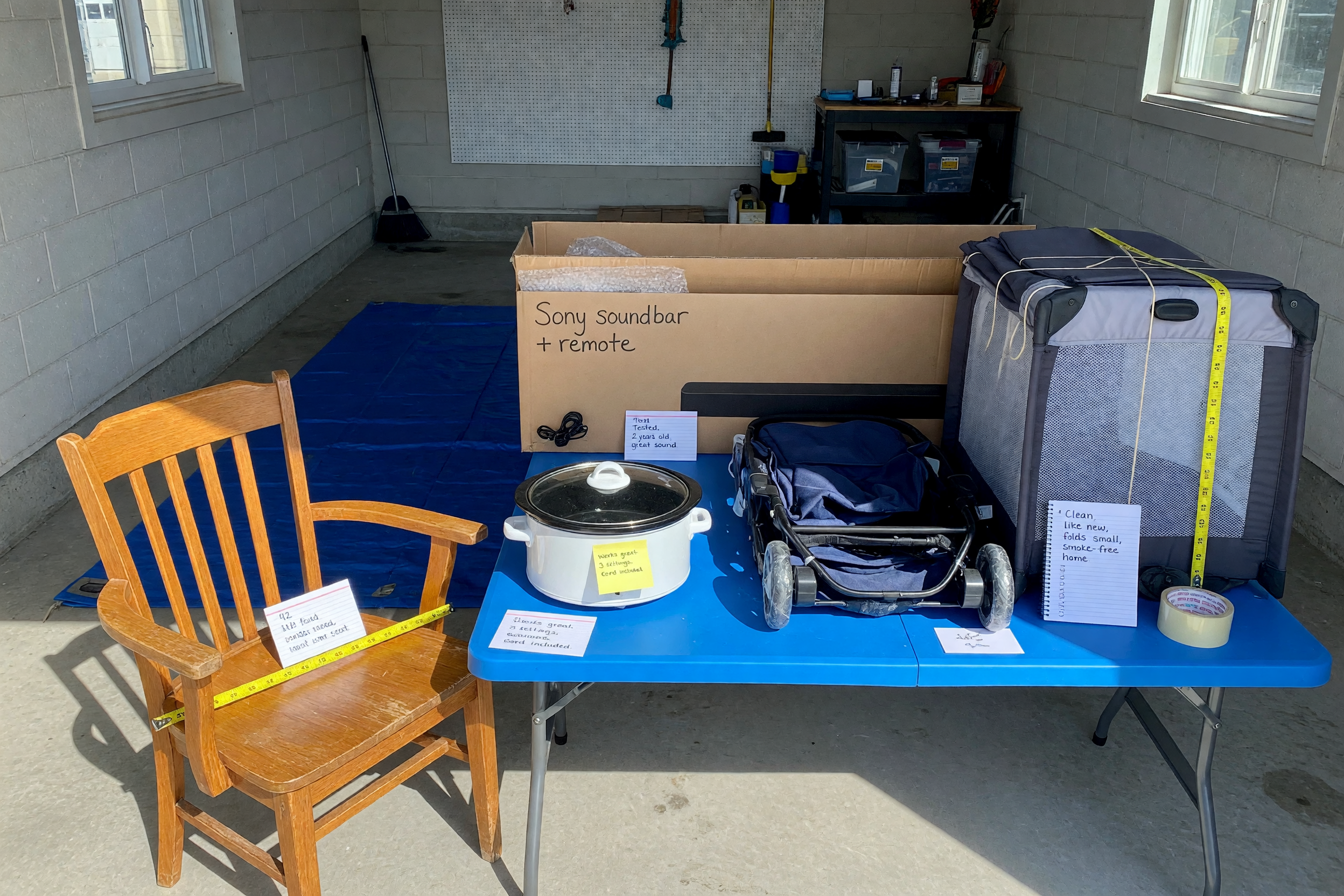
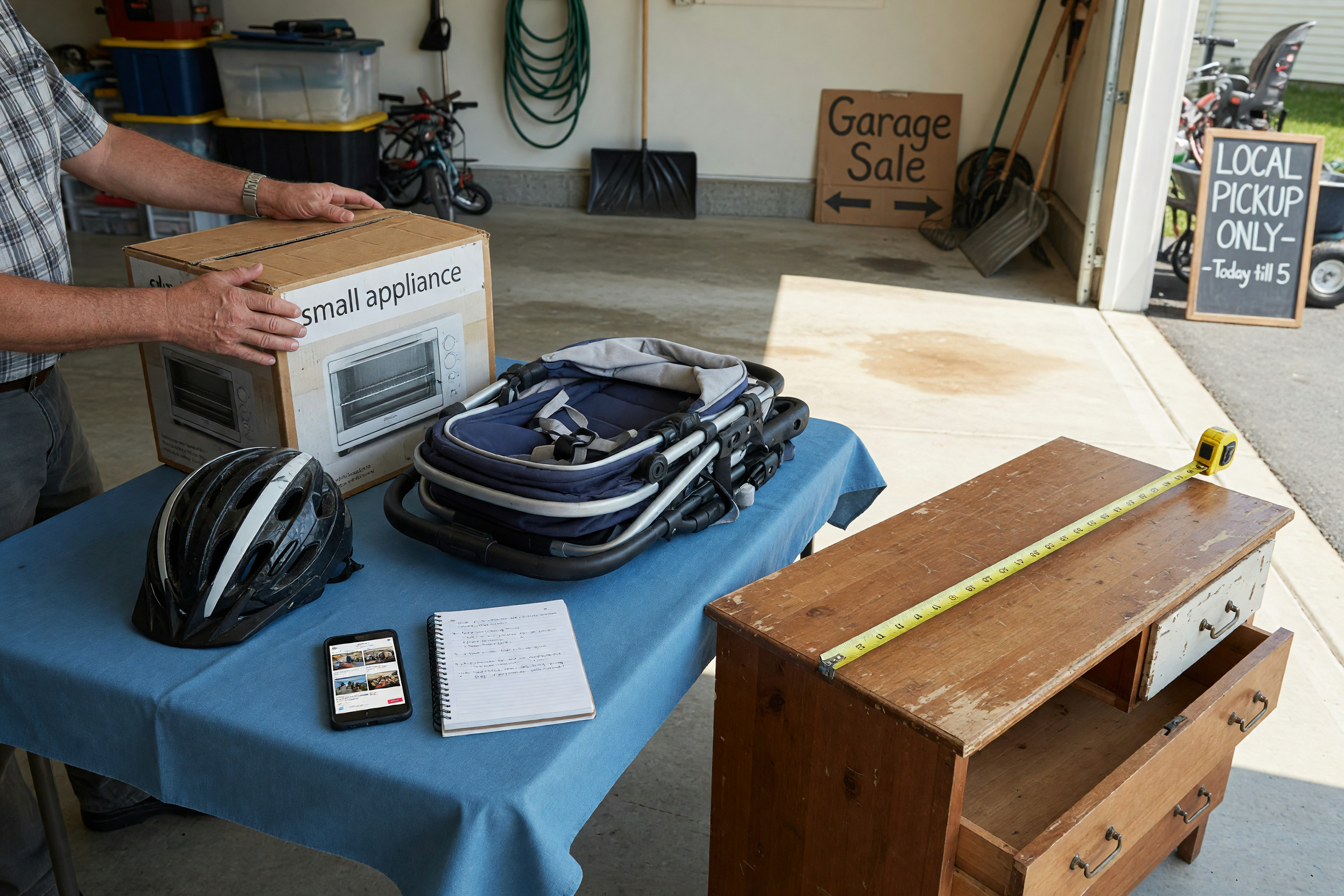
Here's the Brixaz-specific piece most safety guides miss: your listing itself is a safety tool. When contact is direct and tied to a real local post with your photos, condition notes, and ZIP, the buyer arrives already knowing what they're getting — which removes the on-site arguments where deals go sideways. Nobody shows up expecting a flawless dresser and reacting badly to the water ring you already photographed.
A complete listing also filters your inbox before you ever pick a spot. Buyers who read the details and propose a specific public pickup time are self-selecting as serious; the copy-paste "still available?" crowd rarely gets that far. So the same clean listing that sells faster also makes the meetup safer. If you want the details structured for you — measurements, condition, category, pickup wording — run it through the listing assistant before you post, and you'll cut both the flaky messages and the on-site surprises.
Frequently asked questions
Where is the safest place to meet for a marketplace pickup?
A police department "safe exchange zone" is the safest — a marked, camera-covered spot in the station lot made for online-sale handoffs. If there isn't one nearby, use a busy retail or bank parking lot in daylight, or meet inside a store for small electronics so the buyer can test the item at a table.
How do I sell safely if the item is too big to move?
For large furniture, keep your exact address out of the listing and early messages — share only the cross-street or ZIP until a specific pickup time is set. Meet in daylight, have another adult home, and stay at the driveway or porch rather than inviting the buyer inside.
What payment methods are safe for local deals?
Cash counted in hand, or an instant transfer you have confirmed as settled in your own app before the item moves. Refuse checks, overpayment or "extra payment" stories, and any payment "link" you must click to receive funds. A screenshot of a sent payment is not money — verify your actual balance changed first.
What are the biggest scam red flags?
Pressure to move off the listing to text or email, a "shipper" or "mover" for a clearly local item, requests for your card or a verification code, overpayment refund stories, and a generic "still available?" that never mentions your photos or details. Any one of these is reason enough to stop replying.
Is it safe to give my number or address to a buyer?
Keep messaging through the listing until you've agreed on a public meetup, and share your full address only for large items once a firm pickup time is set — never before. A legitimate buyer never needs your card, bank login, or a verification code, so treat any such request as a scam.
How can I tell a serious buyer from a time-waster?
Serious buyers reference your actual photos and details, propose a specific public daytime spot, and name cash or a cleared transfer. Time-wasters send vague one-liners, dodge on a meeting place, or steer toward shipping and payment apps. A clear, detailed listing naturally attracts more of the first kind and fewer of the second.



Comments
Loading comments...
Checking sign-in status...