
The Used Couch Photo Checklist That Gets More Serious Buyers
Sell your used couch faster with the exact 8-photo shot list, the measurements buyers search for, honest flaw photos, and pickup wording that filters time-wasters.
ARTICLE LANGUAGE
Showing original language
A used couch is one of the hardest things to sell online, and it almost always comes down to the photos. The listing sits for two weeks, the only replies are "still available?" and lowballs, and the seller quietly assumes nobody wants it. Usually the couch is fine. The pictures just didn't answer the questions a serious buyer has before they'll load a truck and drive across town.
Buyers can't sit on your sofa through a screen, so every photo is doing the job of a test-sit. This guide gives you the exact shot list, the measurements to include, and the honest flaw photos that make a stranger comfortable enough to say "I'll take it." Work through it once and your couch stops attracting tire-kickers and starts pulling the buyers who actually show up with cash.
Why couch buyers scroll past your listing
Big furniture is a commitment. A buyer has to picture it in their room, arrange help and a vehicle, and trust that it isn't hiding a sagging frame or a smell. One dim photo from across a cluttered room answers none of that, so they keep scrolling to a listing that does. The couch isn't the problem — the missing information is.
The good news is that furniture photos are easy to get right because a sofa doesn't move and doesn't have hidden specs to research. You just need to show it completely and honestly. On Brixaz, buyers message you directly with no middle layer, so a listing that already shows the size, the fabric, and the real condition means the first message you get is "when can I pick it up?" instead of "can you send more pics?"
The 8 photos every used couch listing needs
Shoot these in daylight with the couch pulled a foot off the wall and the cushions straightened. Turn on room lights too, but avoid harsh flash that flattens the fabric. Eight photos is the sweet spot: enough to answer everything, not so many that the important ones get buried.
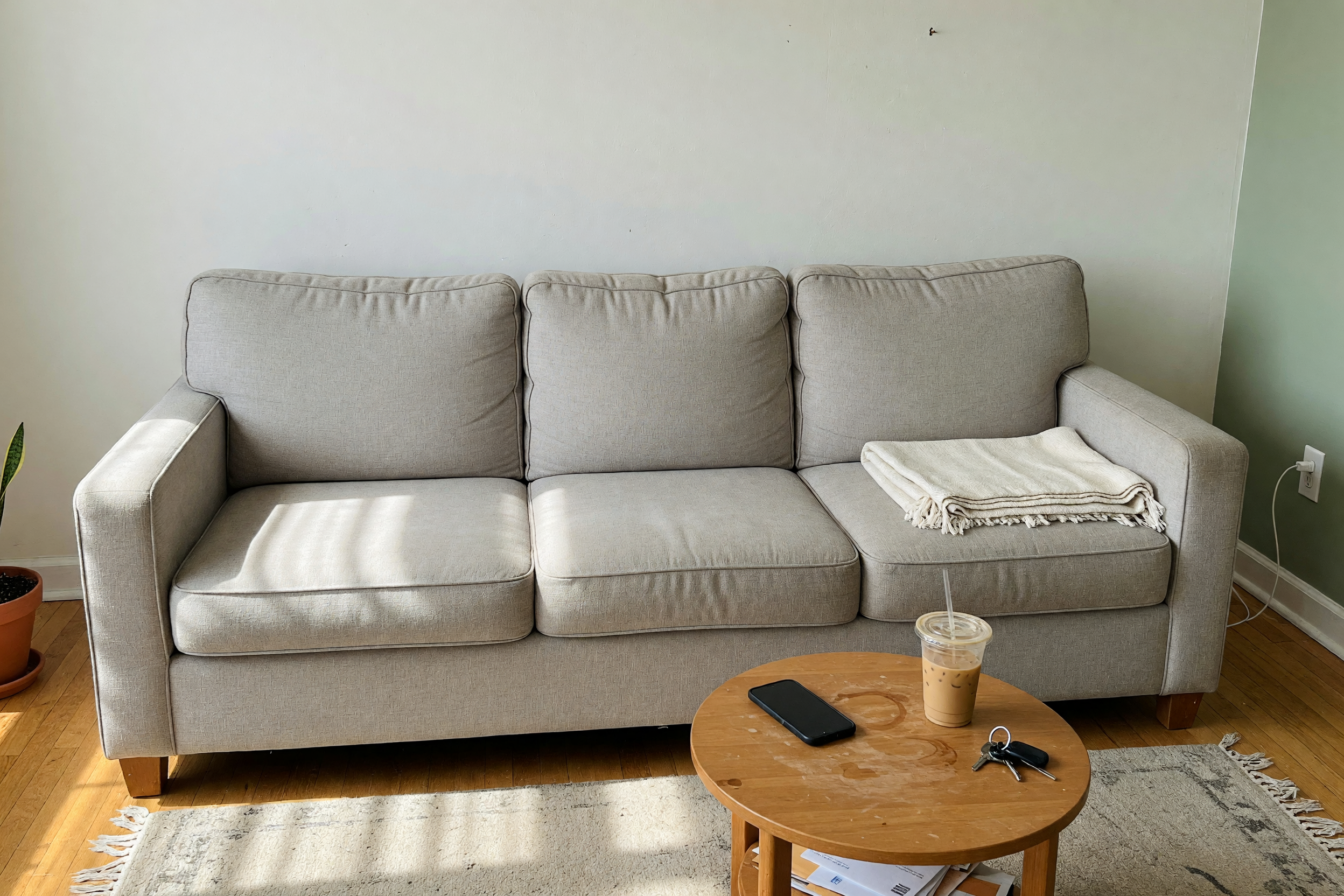
- Full front, straight on — the hero shot. The entire couch in frame, level, against a plain-ish background so its lines are clear.
- Three-quarter angle — from one front corner, so buyers read the depth and how it sits in a real room.
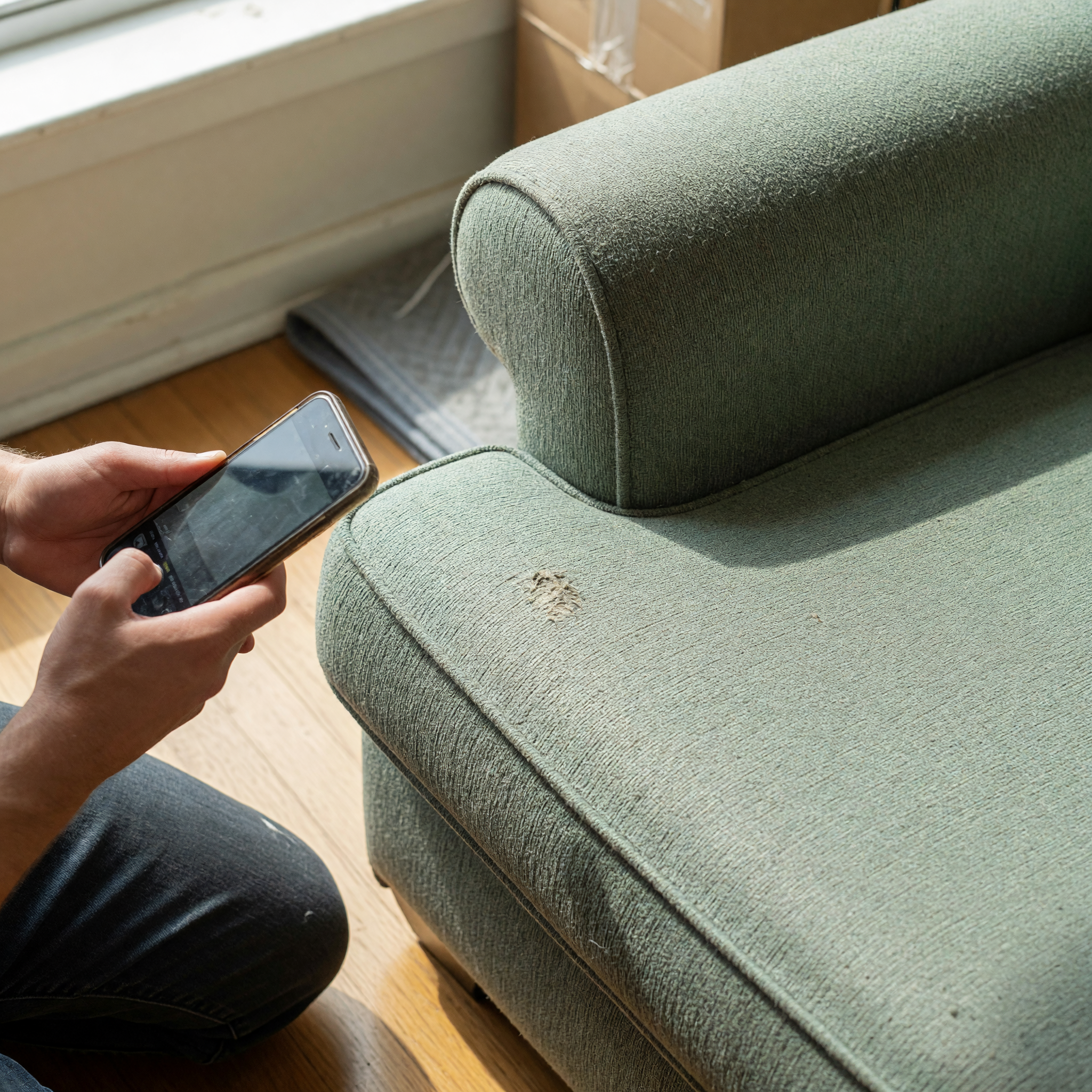
- Both arms, close up — arms take the most abuse; show pilling, fading, or pet wear honestly.
- Seat cushions, top down — proves whether they still have loft or have gone flat, the number-one buyer worry.
- Cushions removed — the deck underneath tells buyers about crumbs, stains, and frame condition.
- Back of the couch — matters when it will float in a room instead of against a wall.
- The one flaw, up close — the tear, stain, or scratch you'll mention. Showing it builds trust, not doubt.
- A tape measure across the width — a photo of the actual length reads faster than a number and proves you measured.
If you want the fields prompted for you as you go, the Brixaz listing assistant walks you through what furniture buyers expect to see so you don't forget the deck shot or the measurements.
Measure before you shoot, not after
Half of couch questions are "will it fit?" — through the buyer's door, up their stairwell, and along their wall. Answer that in the listing and you skip an entire round of messages. Measure with a tape and put the numbers right in the description. Here's what a vague listing leaves out versus what a serious one includes:
| Field | Bad listing | Better listing |
|---|---|---|
| Overall width | "Big couch" | "84 in wide (arm to arm)" |
| Depth | Not listed | "38 in front to back" |
| Height | Not listed | "34 in tall at the back" |
| Seat height | Not listed | "18 in from floor to cushion" |
| Type / seats | "Sectional maybe" | "Standard 3-seat sofa, not a sectional" |
| Fabric | "Cloth" | "Woven polyester, light gray, no removable covers" |
| Age & use | "A few years" | "Bought new in 2021, used in a low-traffic den" |
| Pet / smoke | Not listed | "Smoke-free home, one cat (no scratching on it)" |
Those last two lines do quiet, important work. Buyers with allergies or a strict "no pet furniture" rule filter themselves out before they message, and buyers who don't care keep reading with more confidence because you volunteered it.
Show the flaws — it closes faster, not slower
The instinct is to hide the coffee stain and hope nobody notices. It backfires every time: the buyer spots it on pickup, feels misled, and either walks or grinds you down on price in your driveway with the couch already half-loaded. A clear flaw photo up front does the opposite. It says "this is exactly what you're getting," and honesty is what makes a stranger comfortable paying a stranger.
Name the flaw plainly in words next to the photo: "small coffee stain on the left cushion, shown in photo 7 — flips over so it's hidden," or "cat scratch on the right arm, about 2 inches." Buyers forgive disclosed flaws. What they don't forgive is a surprise. A honestly-flawed couch at a fair price outsells a "perfect" one that clearly isn't.
Write a caption buyers actually read
Photos pull buyers in; the caption closes them. Keep it scannable — a short intro line, then the measurements and details as a quick list. Compare these two:
Bad: "Couch for sale. Good condition, must go. $200 obo. Message for details."
Better: "Gray 3-seat sofa, bought new in 2021, used in a low-traffic den. 84 in wide, 38 in deep, 34 in tall, seat 18 in off the floor. Woven polyester, light gray. Smoke-free home, one cat (never scratched it). One small coffee stain on the left cushion — shown in photo 7, and the cushion flips to hide it. Frame is solid, cushions still have their shape. $200, reasonable offers OK. Local pickup only near 78704; you'll need two people and an SUV or truck."
The better version isn't padding — every line retires a question the buyer would otherwise have to ask. To sanity-check your number before you post, run the couch through the Brixaz price checker and browse what comparable sofas are going for on local search. When it's ready, you can post the couch with the sofa category prefilled so it lands in front of the right local furniture buyers.
Nail down pickup before anyone shows up
A couch is the one item where pickup logistics make or break the sale, and it's the detail most listings skip. A buyer who assumed it would fit in their sedan will cancel at your door. Spell it out so only the equipped buyers commit. Add two lines to the bottom of every couch listing:
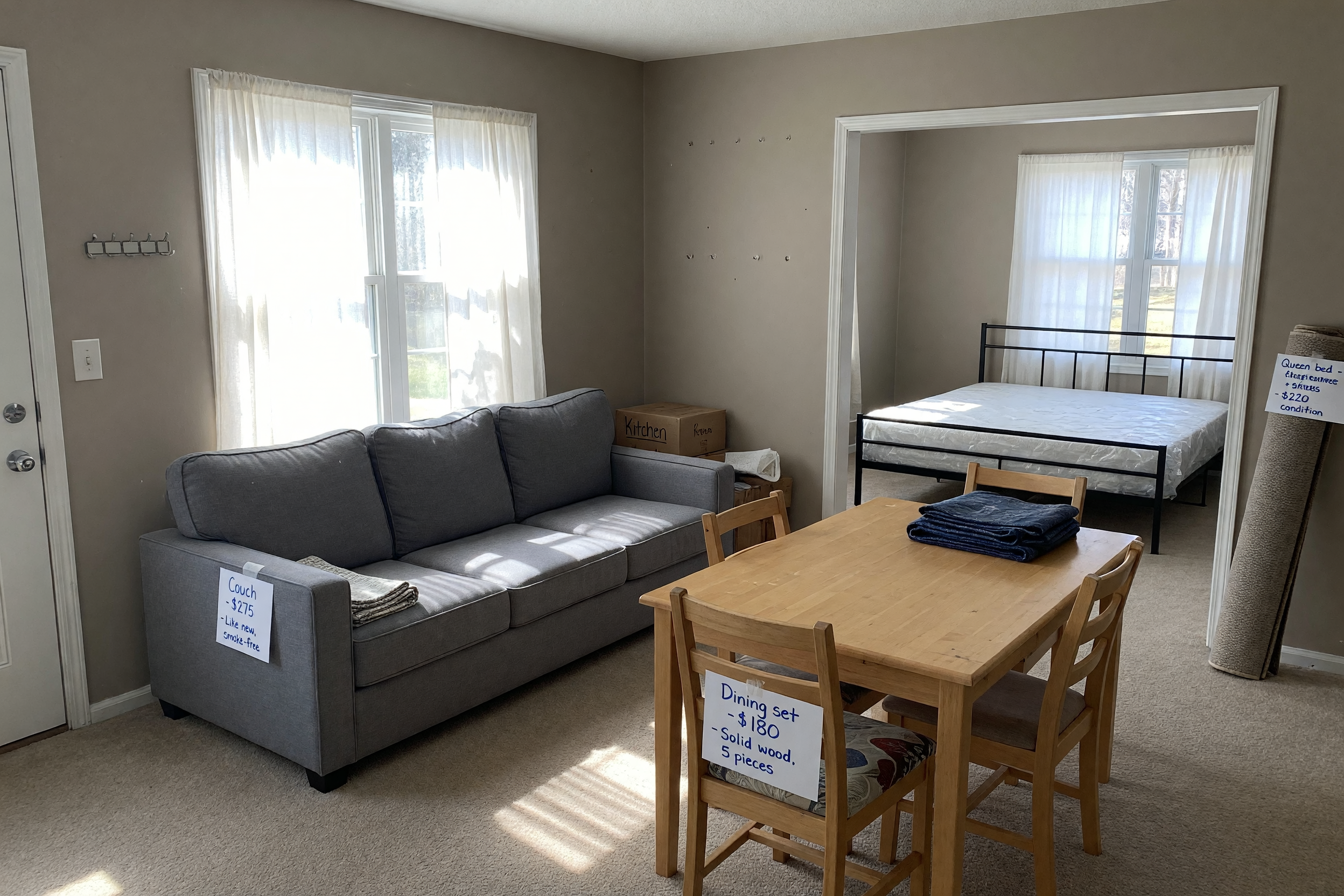
- Pickup: "Local pickup only near [neighborhood + ZIP]. It's on the [first/second] floor — you'll need at least two people and a truck, van, or SUV with the seats down."
- Timing & payment: "I can help you carry it out. Cash on pickup. Available weekday evenings and Saturday mornings — tell me a window and I'll hold it."
Offering to help carry it out is a small line that signals a smooth, safe handoff and reassures the buyer they won't be wrestling a sofa down your stairs alone. Meet during daylight, have a second person home, and don't take the listing down until the couch is actually on their truck.
For sellers who are ready to move from photos to a pickup-ready listing: sell a used sofa locally
Related Spanish guide for couch sellers: vender sofá usado con medidas y daños claros
FAQ: photographing a used couch to sell
How many photos should a used couch listing have?
Aim for about eight: a full front shot, a three-quarter angle, both arms, the seat cushions, the deck with cushions removed, the back, one clear flaw close-up, and a tape measure across the width. That covers every buyer question without burying the important shots under twenty near-identical ones.
Should I clean the couch before taking photos?
Yes. Vacuum it, straighten the cushions, and wipe down the arms and legs first. A quick clean makes the fabric photograph truer to its real condition, and buyers read a tidy couch as one that was cared for. Just don't over-edit the photos afterward — filters that hide wear read as a red flag.
What's the best lighting for furniture photos?
Natural daylight near a window, with the room lights on for fill. Shoot in the morning or late afternoon to avoid harsh midday glare, and skip the camera flash — it flattens fabric texture and washes out the true color. Pull the couch a foot off the wall so it isn't in its own shadow.
Do I really need to show the stains and damage?
Yes, and it helps you. A disclosed flaw shown in a photo builds trust and prevents the buyer from feeling ambushed on pickup, which is where deals fall apart or get renegotiated in the driveway. An honestly-flawed couch at a fair price sells faster than a "perfect" one buyers don't believe.
What measurements do couch buyers care about most?
Overall width, depth, and height, plus seat height. Buyers use width and depth to check it fits their space and their vehicle, and seat height for comfort. Photographing a tape measure laid across the width proves the number is real and reassures buyers you actually measured.
How do I make sure the buyer can actually pick up a couch?
State the pickup terms in the listing: the neighborhood and ZIP, the floor it's on, and that they'll need two people and a truck, van, or SUV. Offer to help carry it out and give clear time windows. Spelling this out filters out buyers who'd otherwise cancel at your door with the wrong vehicle.



Comments
Loading comments...
Checking sign-in status...