
How to Sell Furniture in New York Without Wasting a Weekend
A vague furniture listing burns the one thing New York sellers can't spare: time. Here are the measurements, details, pricing, and pickup wording that turn a post into a same-weekend sale.
ARTICLE LANGUAGE
Showing original language
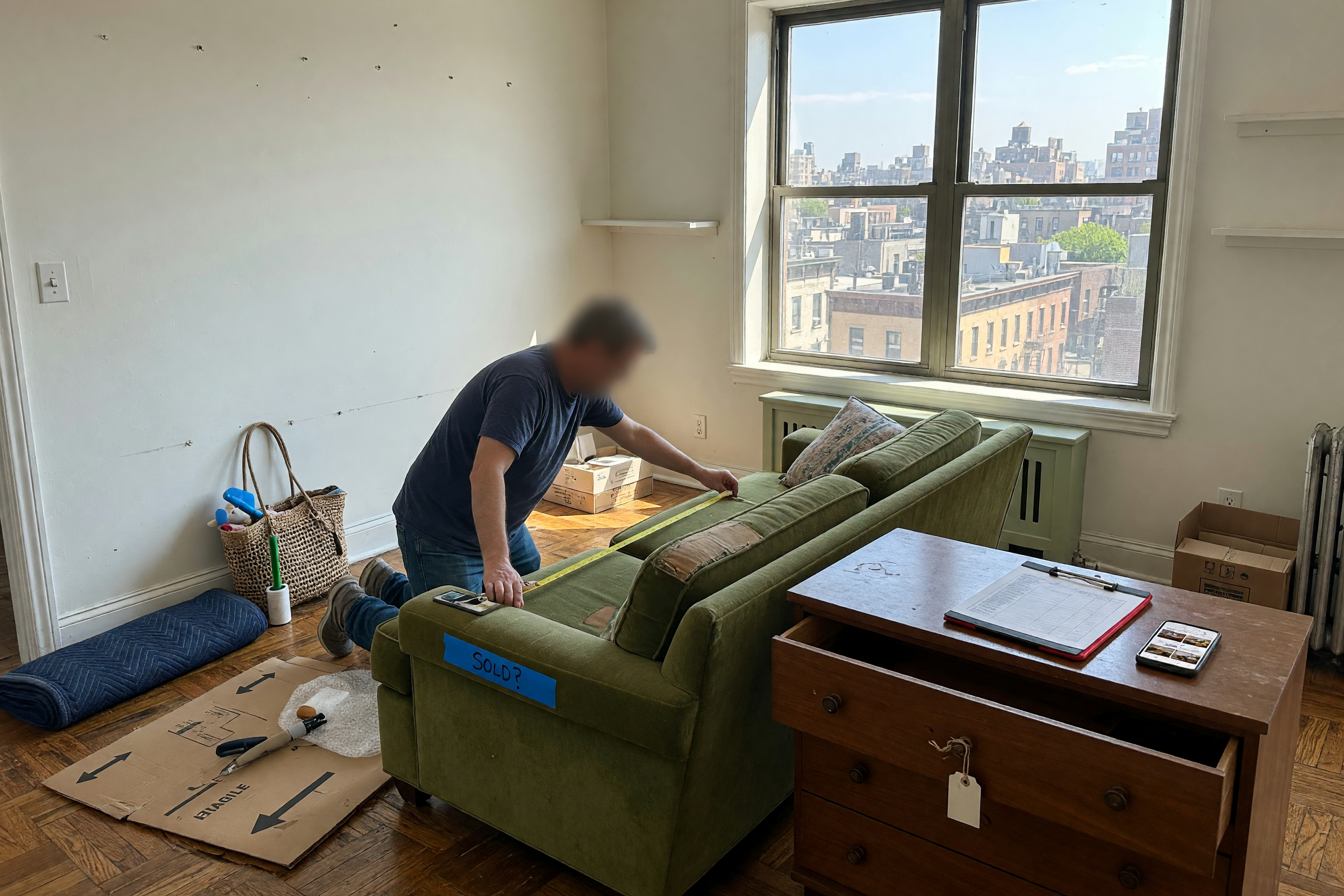
Selling a couch in New York can eat an entire weekend before a single dollar changes hands. You post a blurry photo and one line, then spend two days answering "is this still available?", explaining measurements you never listed, and rescheduling a buyer who ghosted because your fourth-floor walk-up surprised them at the door. In a city where nobody has a garage, a spare truck, or a free Saturday, a vague furniture listing is not just slow — it burns the one resource every seller here is short on: time.
The good news is that furniture moves fast in New York when the listing does the screening for you. Buyers here are decisive; they message the posts that already answer their questions and skip the ones that will cost them an hour. This guide walks through the measurements to capture, the details local buyers screen for, how to price for a fast market, and — the part most sellers get wrong — how to write pickup logistics so the person who shows up can actually get the piece out your door.
Why selling furniture in New York eats your weekend
The friction in New York is not demand. It is logistics and uncertainty stacked on top of each other. A buyer in Brooklyn or Queens is not just deciding whether they like your dresser — they are quietly calculating whether it fits through their apartment door, whether they can get a Curbside or a friend with an SUV, whether it will clear your stairwell, and whether the trip across two boroughs is worth it. Every one of those questions that your listing does not answer becomes a message you have to field, or a no-show you never see coming.
So the weekend does not disappear to buyers who don't exist. It disappears to buyers who need information you left out. A listing that states the exact dimensions, the floor and access, the real condition, and a firm pickup window collapses a dozen back-and-forth messages into one: "I'll take it, I can come Saturday at 2." That is the whole game. You are not writing an ad; you are pre-answering the objections that would otherwise cost you two days.
Measure and document before you post
Do this once, before you write anything, and you will never scramble for it mid-conversation. Furniture buyers in a dense city are ruthless about fit, because a piece that doesn't clear the doorway is a wasted trip and a wasted rental van. The measurements are not optional detail — they are the first thing a serious buyer checks.
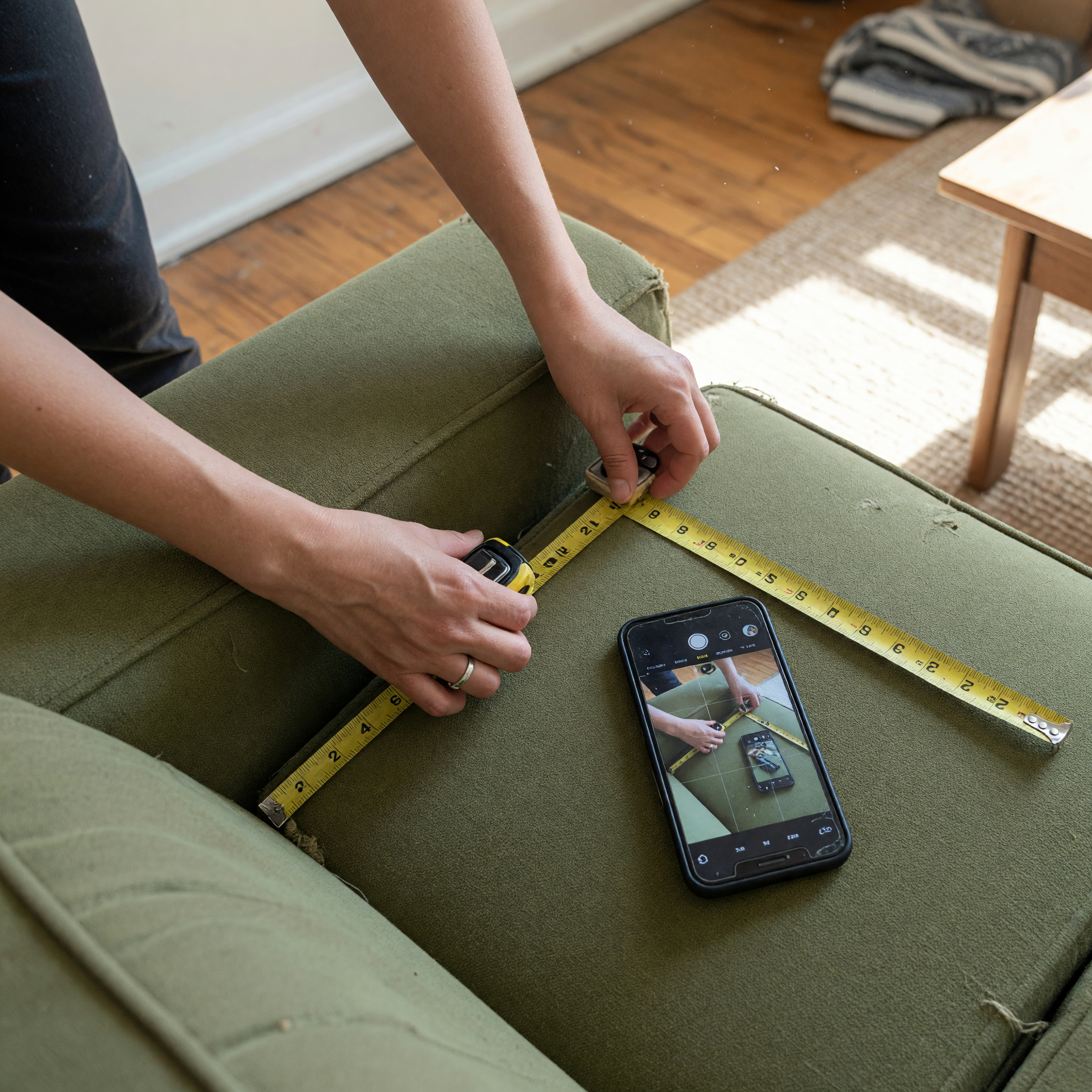
- Three core dimensions. Width, depth, and height in inches. For a sofa, also note the diagonal depth, which is what actually determines whether it turns a tight corner.
- The tricky sub-measurements. Seat height for chairs and sofas, clearance under a table, drawer count and interior depth for dressers, and whether legs unscrew.
- Honest condition, close up. Photograph any stain, scratch, wobble, or pet wear directly. A named flaw costs you a small discount; a flaw discovered at pickup costs you the whole sale and the afternoon.
- Weight and person-count. "Solid wood, needs two people" or "light enough for one" tells a buyer whether to bring help. This single line prevents the most common no-show.
Shoot your photos in daylight, from the corners, with the piece cleared of clutter — plus one wide shot showing it in the room for scale. Never use a stock or catalog image; New York buyers read that as a scam instantly. When you post to the furniture section, these facts become the body of your listing instead of a two-day interrogation.
The listing details New York buyers screen for
Local buyers scan furniture listings for a specific set of facts and move on the moment one is missing. Run your post through this checklist before it goes live — each blank row is a message you'll have to answer manually, or a buyer you'll lose to a more complete listing down the block.
| What buyers check | Why it decides the message | How to write it |
|---|---|---|
| Exact dimensions | Determines if it fits their space and door | "Sofa: 78"W x 35"D x 33"H, seat 19"" |
| Condition, stated plainly | Sets expectations, prevents pickup renegotiation | "Small scuff on left arm, shown in photo 3" |
| Material & weight | Tells them how many people and what vehicle | "Solid oak, heavy — needs two to carry" |
| Neighborhood + access | Decides the trip and the stairwell plan | "Astoria, Queens, 3rd-floor walk-up" |
| Pickup window | Converts interest into a scheduled time | "Pickup this Sat–Sun, 10am–6pm" |
| Price & flexibility | Signals whether to message at all | "$180, firm — priced to move this weekend" |
| Reason for selling | Reassures there's no hidden defect | "Moving, everything must go by Sunday" |
A buyer who reads those seven lines has nothing left to ask except when to come. That is the difference between a listing that sells Saturday morning and one that generates forty messages and no pickup.
Price it to move in a fast market
New York furniture turns over constantly — people move every month, and there is always fresh supply. That cuts both ways: a fair price sells in hours, but an optimistic one sits while newer listings bury it. Do not anchor to what you paid; a buyer does not care about your receipt. Anchor to what your exact piece is listed for right now in the city.
Spend ten minutes before you pick a number. Browse recent local listings for the same type of piece — same style, similar condition, similar size — and note the range. See where the clean, well-photographed posts sit, and place your number just under them rather than at the desperate bottom or the fantasy top. If you are moving on a deadline, say so and price accordingly; "moving Sunday, priced to clear" is the most powerful line in New York selling, because everyone here understands a move-out clock and will show up fast for a real deal.
Whatever you decide, state your flexibility precisely. "Firm" saves everyone time when your price is already fair; "reasonable offers OK" invites a small nudge without opening the floodgates. A vague "OBO" just tells the whole city to guess how low you'll go, which produces lowballs, not pickups.
Nail the pickup logistics so the sale actually happens
This is where New York sales die. A buyer commits, then arrives to find a fifth-floor walk-up with no elevator and a couch that won't make the turn — and now you both wasted the afternoon. Write the logistics into the listing so the buyer self-selects before they ever message.
State the neighborhood, the floor, and whether there is an elevator or stairs. Note if there's a loading zone, a doorman, or building hours that limit move-outs. Say who does the carrying: "you'll need to bring help and a vehicle — I can help carry it down to the curb" sets a clear boundary and prevents the awkward doorway standoff. If a piece comes apart, say so — "legs unscrew, fits in a standard car" widens your buyer pool enormously, because now anyone with a sedan can take it, not just the rare New Yorker with a truck. For a picture of how active local listings read in your area, your New York City page shows what strong furniture posts look like in a fast market.
Bad versus better listing copy
The same couch, written two ways, gets two completely different weekends. Compare the vague version that generates questions with the specific version that generates a scheduled pickup:
| Weak listing | Better listing |
|---|---|
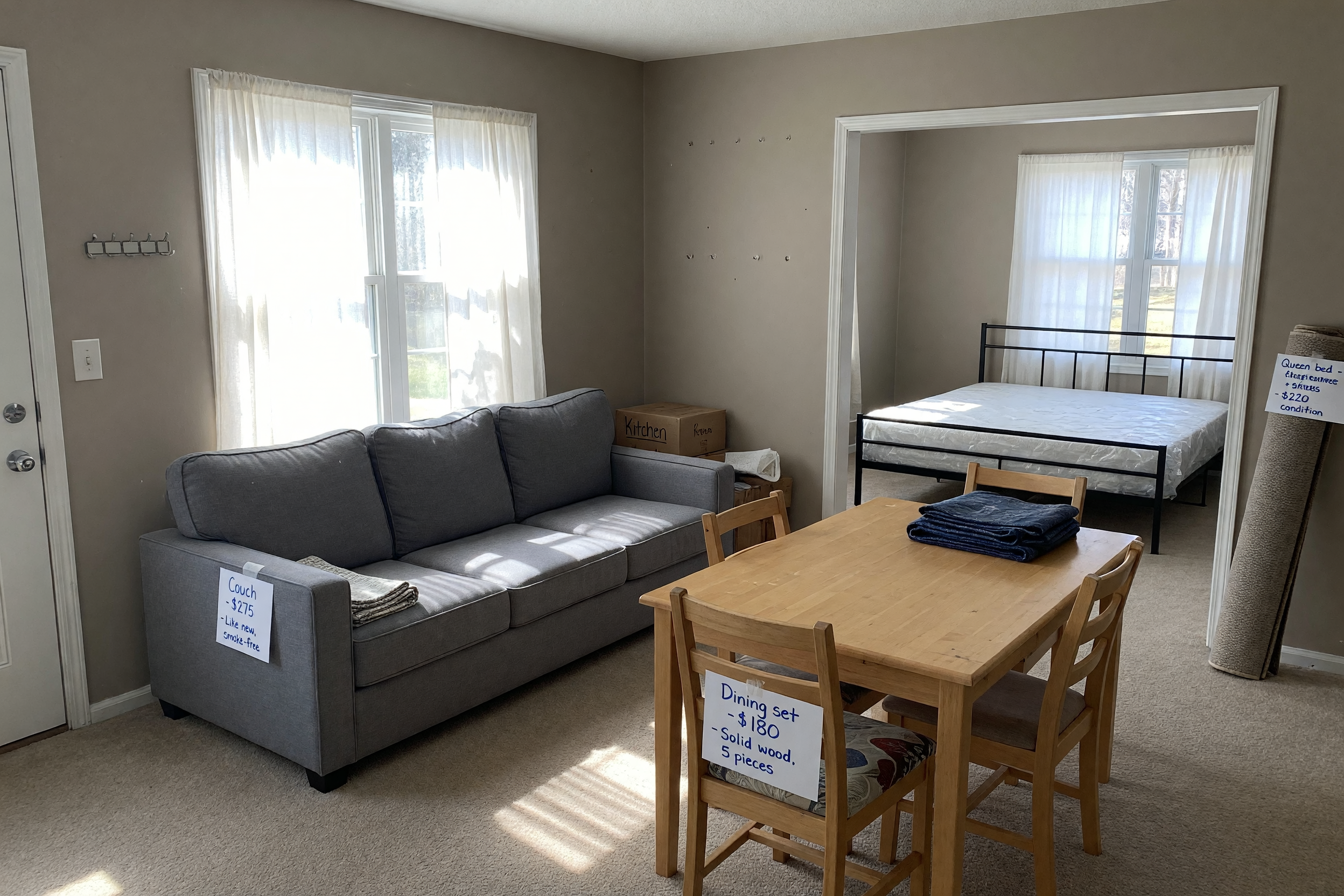
| "Couch for sale, good condition, $200 OBO" | "Grey 3-seat sofa, 78"W x 35"D x 33"H. Clean, one small arm scuff (photo 3). $180 firm." |
| "Pick up in Brooklyn" | "Bushwick, 2nd-floor walk-up. Legs unscrew — fits a standard car." |
| "Message me" | "Pickup this Sat–Sun 10am–6pm. Bring one helper; I'll assist to the curb." |
| "Selling stuff" | "Moving out Sunday, so it needs to go this weekend — priced to clear." |
Because a buyer contacts you directly on Brixaz with no middleman and no algorithm deciding who sees your post, the clarity has to live in the listing itself — and that is exactly why the detailed version wins. The seller who answers the fit, access, and timing questions up front gets the one message that matters while the vague listing is still trading "still available?" notes.
Frequently asked questions
How fast does used furniture actually sell in New York?
A fairly priced, well-documented piece often sells within a day or two, and same-day is common on weekends when people are apartment-hunting and moving. The delay almost never comes from lack of demand — it comes from missing measurements, unclear pickup access, or a price anchored to what you paid instead of what comparable local listings are asking now.
What measurements do New York buyers care about most?
Width, depth, and height in inches, plus the diagonal depth for anything that has to turn a tight corner. For sofas and chairs add seat height; for dressers note drawer count and whether legs unscrew. In a city of narrow doors and walk-ups, fit is the first thing a serious buyer checks, so listing exact numbers is what earns the message.
Should I price based on what I originally paid?
No. Buyers price from what your exact piece is listed for locally today, not from your receipt. Browse current listings for the same style, size, and condition, then place your number just under the clean, well-photographed ones. If you're on a move-out deadline, say so and price to clear — a real deadline plus a fair price is what makes New York buyers show up fast.
How do I handle pickup when I live in a walk-up?
State it in the listing: the neighborhood, the floor, and whether there are stairs or an elevator. Set the carrying boundary clearly — "bring one helper and a vehicle; I'll help carry it down to the curb." If the piece comes apart, say "legs unscrew, fits a standard car," which lets anyone with a sedan take it instead of only buyers with a truck.
How do I avoid no-shows and time-wasters?
No-shows come from surprises. When your listing already answers fit, access, weight, price, and pickup window, buyers who can't make it work never message in the first place, and the ones who do arrive ready. Confirm a specific time rather than "sometime this weekend," and note that the piece needs help to move so nobody shows up alone and leaves empty-handed.
Where do I post furniture for sale in New York on Brixaz?
Use the post form set to sell furniture, add your measurements and the checklist details, and upload your own daylight photos. Posting is free, buyers message you directly, and your listing surfaces to local New York shoppers who can pick up the same week.



Comments
Loading comments...
Checking sign-in status...