
Sell Used Car Parts: Fitment, Condition, Pickup
A practical listing guide for owners, mechanics, and part-out sellers who need buyers to understand fitment, condition, OEM numbers, pickup, and shipping before they message.
ARTICLE LANGUAGE
Showing original language
If you have take-off wheels, headlights, mirrors, trim, seats, sensors, engine accessories, body panels, or leftover repair parts, start with a specific Brixaz used car parts listing. A buyer does not just need to know that a part exists. They need to know what vehicle it fits, whether it is OEM or aftermarket, what condition it is in, whether the part number is visible, and how pickup or shipping will work.
The conversion question for this guide is concrete: an owner, mechanic, body shop, reseller, or driveway part-out seller can post one real used auto part today. The exact listing should include the part name, donor vehicle, fitment limits, condition, defects, part number, photos, price, pickup location, and whether shipping is available. Brixaz is still in founding-seller mode, so the honest trade-off is a smaller audience today, free posting, direct buyer contact, and low competition in thin vehicle categories.
Start with fitment, not hype
Used car parts buyers search with practical words: year, make, model, trim, side, engine, transmission, wheel size, color, part number, and whether the item is OEM. Your listing title should put those facts ahead of vague phrases like "great part" or "must sell." A buyer looking for a driver-side mirror for a 2016 sedan is not helped by "car mirror for sale." They need to know whether it matches their vehicle before asking anything else.
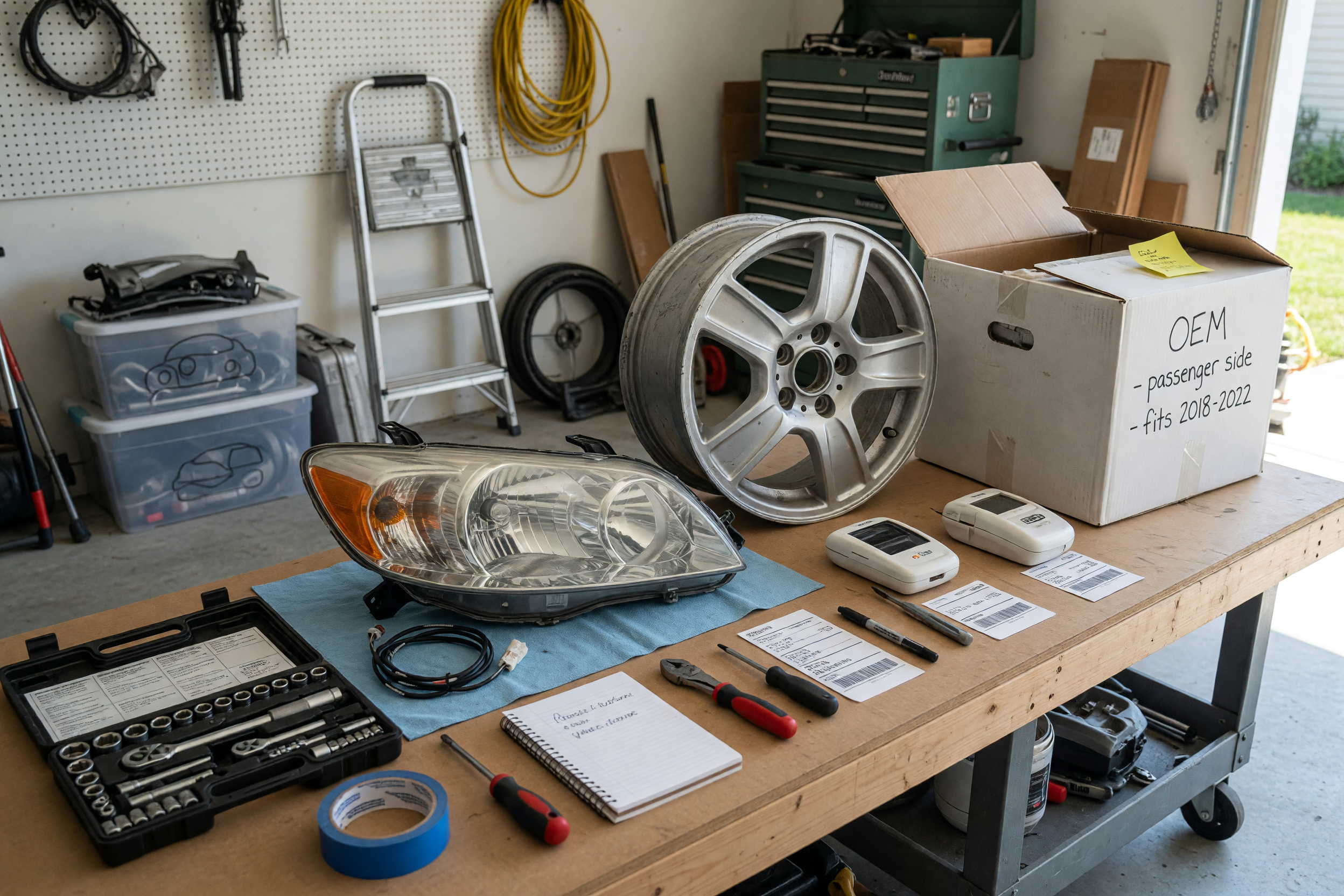
Bad listing copy says, "Used headlight, good condition, fits many cars." Better copy says, "OEM right passenger headlight removed from a 2018 Toyota Camry LE. Lens has light haze, all mounting tabs shown in photos, bulbs not included. Buyer must verify part number and fitment before pickup." The better version is not longer for the sake of length. It answers the first buyer question and protects you from mismatched messages.
If you are unsure about compatibility, do not guess. Say what vehicle the part came from and tell buyers to verify fitment using their VIN, part number, trim, engine, and production date. That one sentence can prevent returns, arguments, and wasted pickup appointments.
Show condition like the buyer cannot inspect it yet
Condition is not one word. "Good" can mean different things for a wheel, bumper, alternator, seat, radio, door, sensor, or catalytic converter. Describe scratches, cracks, broken tabs, missing clips, dents, rust, corrosion, fading, mileage when removed, whether the part was tested, and what is included. If a part came off a running car, say that. If you do not know whether it works, say that too.
Use direct language: "Removed during bumper replacement, not crash damaged," "tested before removal," "untested spare from storage," "one mounting tab broken," "surface rust but no holes," or "paint code unknown." Buyers of used parts expect some wear. What they do not want is a surprise that makes the part unusable.
Use this used auto parts listing checklist
Before you publish, fill in the fields that let a serious buyer self-check compatibility. You may not know every answer, but the listing should separate confirmed facts from buyer-verification items.
| Listing field | What to include | Example wording |
|---|---|---|
| Part name | Exact part, side, location, and set count | Driver-side front fender, one piece |
| Donor vehicle | Year, make, model, trim, engine, transmission if relevant | Removed from 2015 Honda Civic EX, 1.8L automatic |
| Part number | OEM or aftermarket number when visible | Part number visible in photo; buyer to verify match |
| Fitment limits | Known compatible range or buyer verification note | May fit 2012-2015 models; verify by VIN before pickup |
| Condition | Tested, untested, mileage, damage, missing pieces | Tested before removal, one clip missing, normal wear |
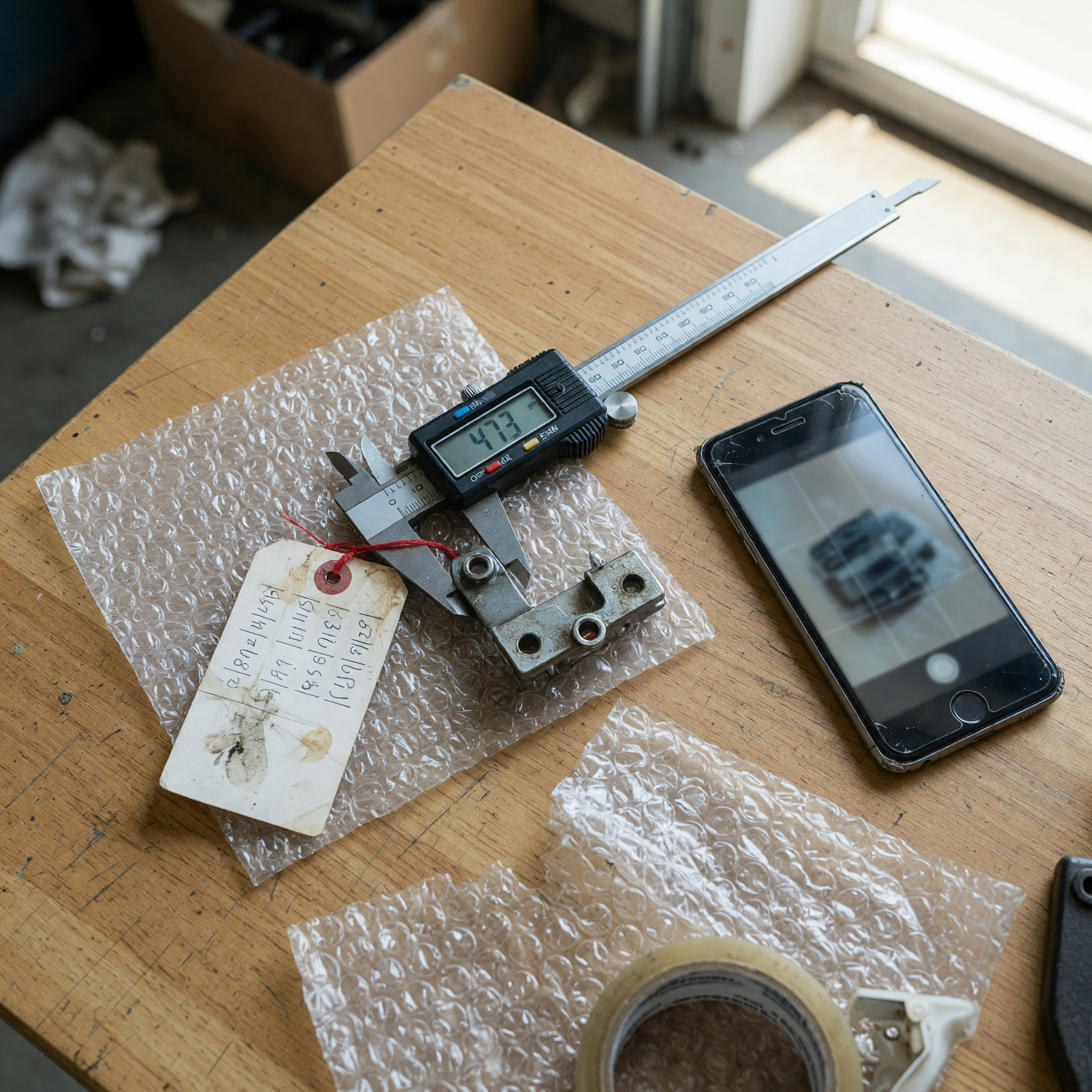
| Measurements | Wheel size, bolt pattern, panel dimensions, connector count | 17-inch wheel, 5-lug pattern, center cap included |
| Photos | Front, back, connectors, mounting points, damage, labels | Photos show all tabs, plug, lens haze, and label area |
| Price | Firm, negotiable, bundle price, cash or digital payment | $80 firm for the pair, local pickup only |
| Pickup or shipping | City, pickup windows, weight, packing, shipping limits | Pickup near Austin; shipping small parts at buyer cost |
| First message | Vehicle details and pickup timing | Send year, make, model, VIN fitment check, and pickup window |
If the wording is the part slowing you down, turn your notes into a draft with the marketplace listing template generator. If you are unsure about the asking price, compare current local listings, completed marketplace sales, and condition, then sanity-check the draft with the listing price checker. A pricing tool cannot confirm fitment, but it can help you avoid a listing that is wildly out of step with similar used parts.
Photograph labels, connectors, mounting points, and damage
Auto parts photos should work like a remote inspection. Take a clean wide shot, front and back views, the part number or label if it is safe to show, connector plugs, mounting tabs, bolt holes, weld points, serial areas with private information avoided, and every defect. For wheels, include tread if tires are mounted, wheel size, curb rash, bends, and the back side. For body panels, show dents, paint condition, rust, and whether clips or hardware are included.
Do not rely on one dark garage photo. Put the part on a clean floor, table, mat, or cardboard. Avoid license plates, VIN stickers from a whole vehicle, private paperwork, shop invoices with names, or brand logos staged as decoration. If a part number is visible, include it, but do not claim it fits every vehicle that appears in a search result.
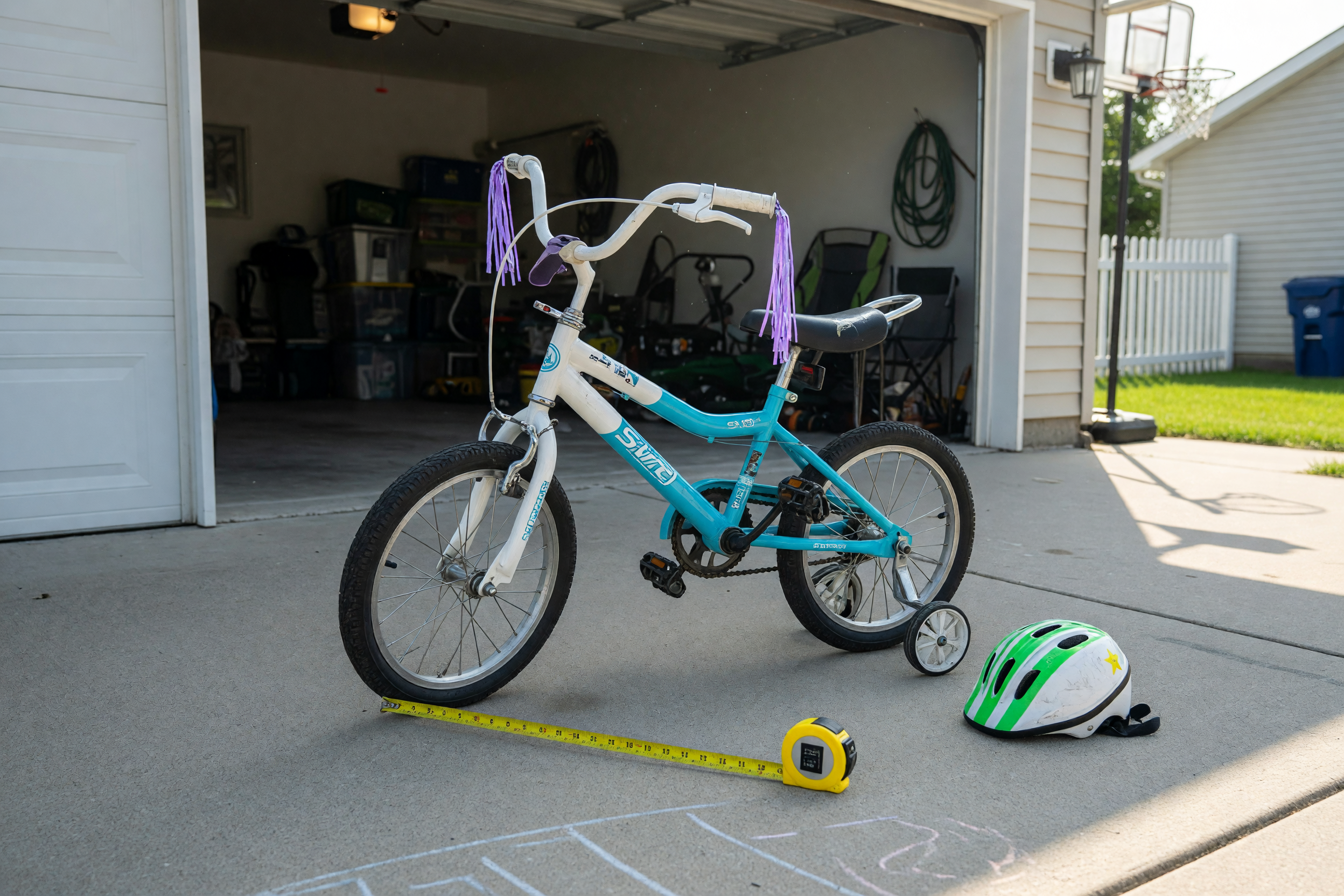
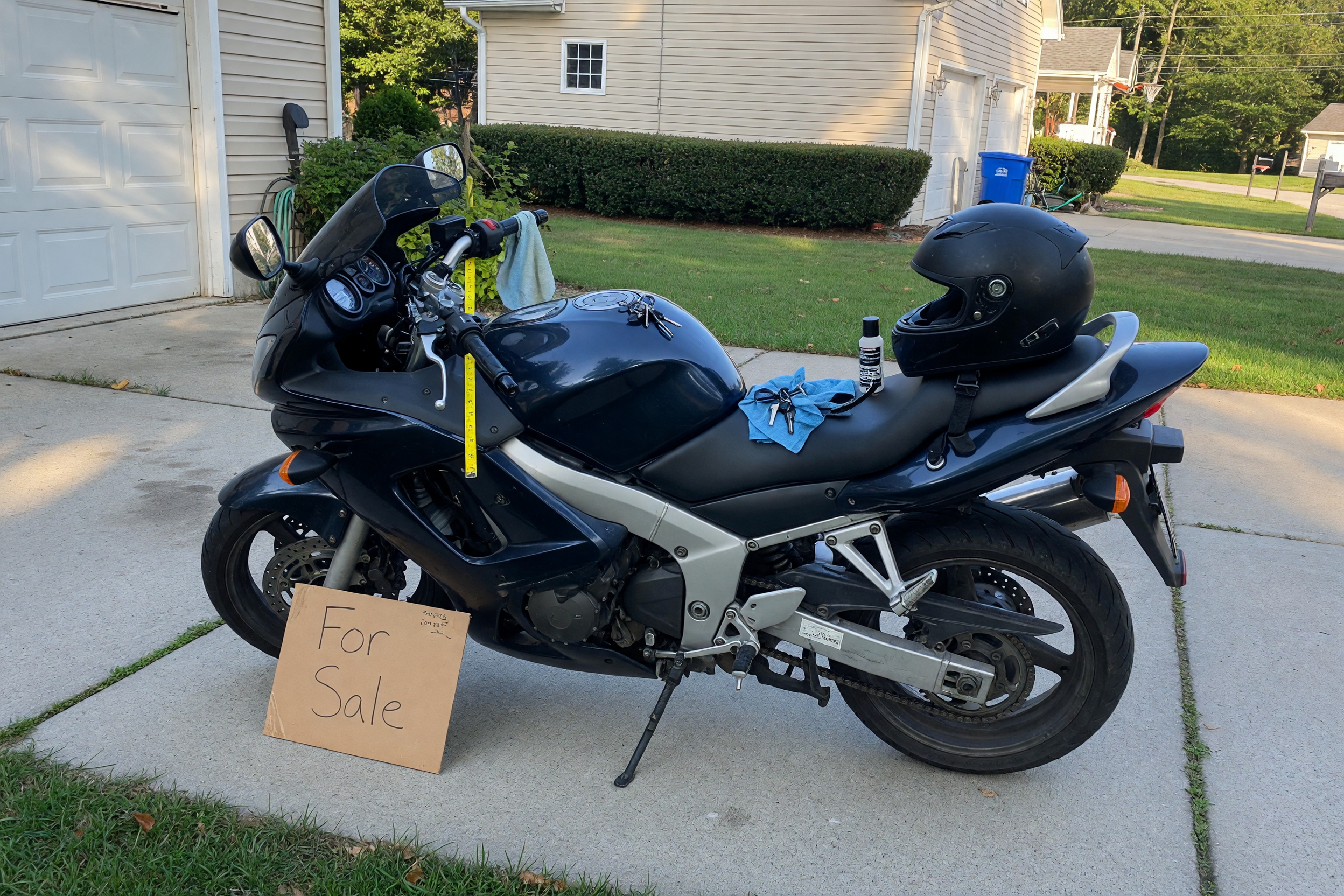
Brixaz keeps vehicle-related listings together through the vehicles section, so a parts post can sit near cars, motorcycles, bicycles, and other owner listings instead of getting buried among unrelated household goods. Clean category choice matters because the first buyer message is more likely to be about the part, not where it belongs.
Make pickup, shipping, and returns clear
Used car parts can be awkward to move. A bumper, door, wheel set, hood, seat, or transmission part may require a truck, straps, help lifting, or daylight pickup. Small sensors, switches, modules, trim pieces, and emblems may be easy to ship, but only if you can pack them safely and the buyer pays the real cost. Say what you are willing to do before the buyer negotiates.
Useful wording sounds like this: "Local pickup only for bumper cover; buyer brings vehicle large enough to transport it. I can meet evenings or Saturday morning. Small brackets can ship at buyer cost after payment clears. No returns for wrong fitment; buyer verifies part number before purchase." Adjust that to your own terms and local rules, but do not leave the basics unstated.
For higher-value parts, meet in a public, practical location when possible, or use a safe shop or driveway handoff with another adult aware of the appointment. Do not let a buyer remove additional parts from a vehicle unless that is the explicit arrangement. If the part is heavy, state whether you can help load it.
Write the first-message prompt that filters buyers
The last lines of the listing should tell buyers exactly what to send. A strong prompt is: "Please send your year, make, model, trim, engine, the part number you are matching if you have it, and two pickup times." That turns the first message from "available?" into a fitment check.
For wheels and tires, ask for bolt pattern, wheel size, tire size, and whether they need one wheel or a full set. For body panels, ask for side, color expectations, and whether they can repaint. For electronics, ask them to verify connectors and programming needs before purchase. For engines, transmissions, and driveline parts, include mileage, test status, and whether the buyer needs accessories, mounts, harnesses, or only the bare part.
One Brixaz-specific insight: direct contact makes a detailed used-parts listing more valuable than a short ad. When the category is thin, the seller who explains fitment, condition, pickup, and first-message requirements gives buyers a reason to trust the listing even before the marketplace has deep inventory.
Related guide: boat or RV title and systems-check listing guide
FAQ
What should I include when I sell used car parts online?
Include the part name, donor vehicle, year, make, model, trim, engine or transmission when relevant, OEM or aftermarket part number, condition, defects, photos, price, pickup or shipping terms, and a buyer-verification note.
How do I describe fitment without making a bad promise?
State the vehicle the part came from and any known compatibility range, then tell buyers to verify fitment using their VIN, part number, trim, engine, connector, side, and production date before buying.
Should I list untested used car parts?
Yes, if you clearly mark them as untested and price them accordingly. Say whether the part came from a running vehicle, storage, a repair job, or a part-out, and describe visible condition honestly.
What photos help sell used auto parts?
Use photos of the full part, front and back, part number, connectors, mounting points, labels, damage, measurements, and included hardware. For wheels, tires, and body panels, show wear from several angles.
Should I offer shipping for used car parts?
Offer shipping only when you can pack the part safely and charge the real cost. Large or fragile parts such as bumpers, doors, glass, seats, wheels, and body panels are often better as local pickup.
Where should I post used car parts on Brixaz?
Post them as a selling offer in the auto parts category. The prefilled Brixaz route in this guide sets the listing type, side, category, and source so the part lands in the right marketplace context.




Comments
Loading comments...
Checking sign-in status...