
How to Split Rent Fairly With Roommates: 3 Methods That Work
Equal, by room size, or by income? See a worked 3-roommate example, private-bathroom premiums, and couples rules — plus a free calculator.
ARTICLE LANGUAGE
Showing original language
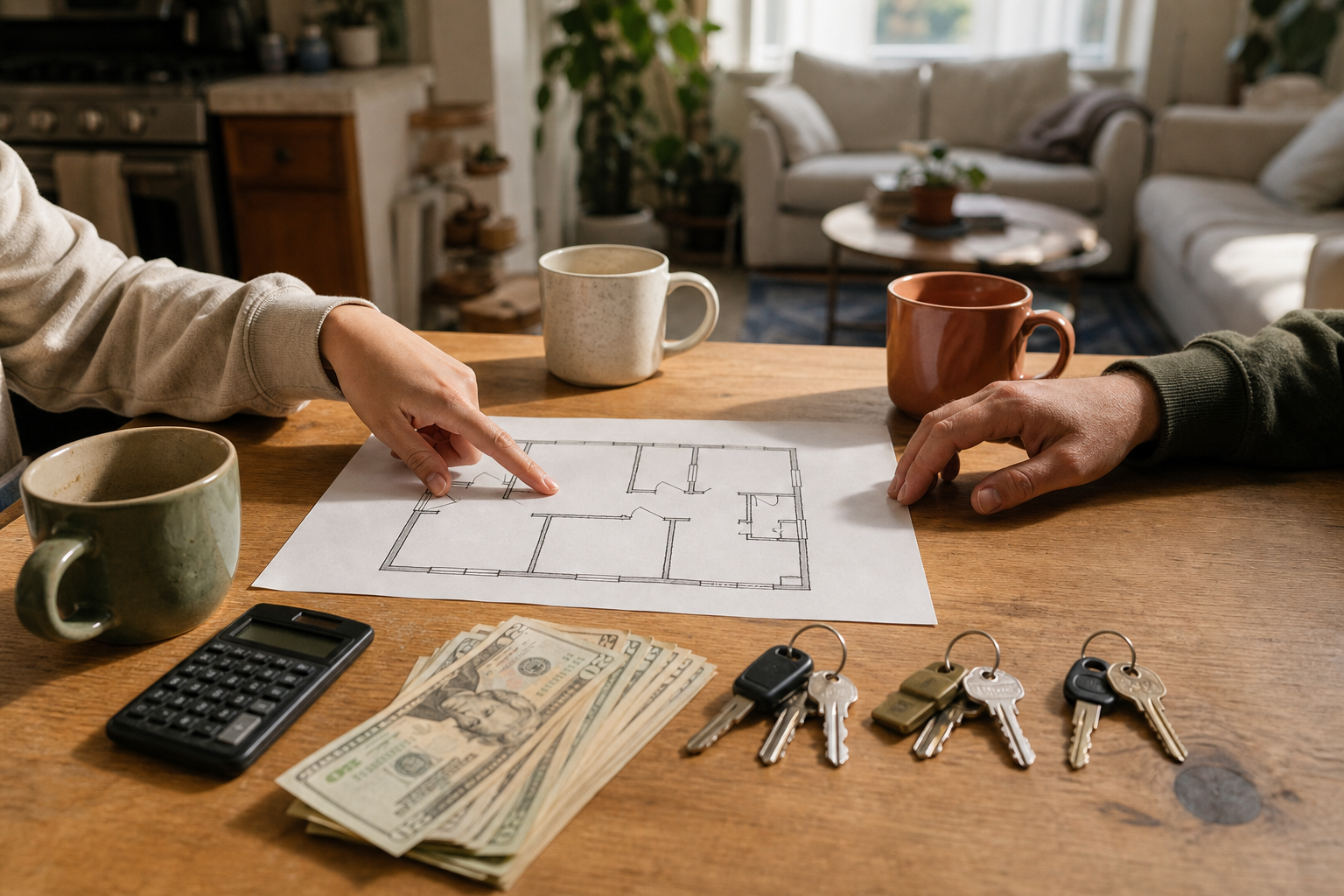
The average asking rent in the US now sits near $2,000 a month, per Zillow (zillow.com), and HUD's FY 2026 Fair Market Rents (huduser.gov) rose another 2.8% on average. Sharing is how most renters cope — but "we'll just split it" falls apart the moment one bedroom is nearly twice the size of another, one has its own bathroom, or one roommate earns double. A split that's off by $50 a month costs someone $600 a year.
Roommates actually use three methods: equal, by room size, and by income. This guide works through all three with the same three-roommate example, covers the standard conventions for private bathrooms and couples, and shows how to raise the subject without making it weird. Prefer the math done for you? The free rent split calculator runs every method and gives you a shareable link so everyone checks the same numbers.
The three methods at a glance
| Method | How it works | Best when |
|---|---|---|
| Equal split | Rent ÷ number of roommates | Rooms are similar in size and features |
| By room size | Bedrooms priced per square foot; common areas split equally | Rooms differ in size, light, or bathroom access |
| By income | Everyone pays the same percentage of take-home pay | Incomes differ a lot and everyone agrees ability to pay matters |
Method 1: Split rent equally
Divide the rent by the number of roommates: $2,400 across three people is $800 each. Equal splits are right when bedrooms are genuinely comparable — similar square footage, same bathroom access, no obvious dud room — and for short sublets where renegotiating isn't worth the effort. The weakness: with unequal rooms, an equal split quietly forces the person in the smallest room to subsidize the person in the biggest one.
Method 2: Split by room size
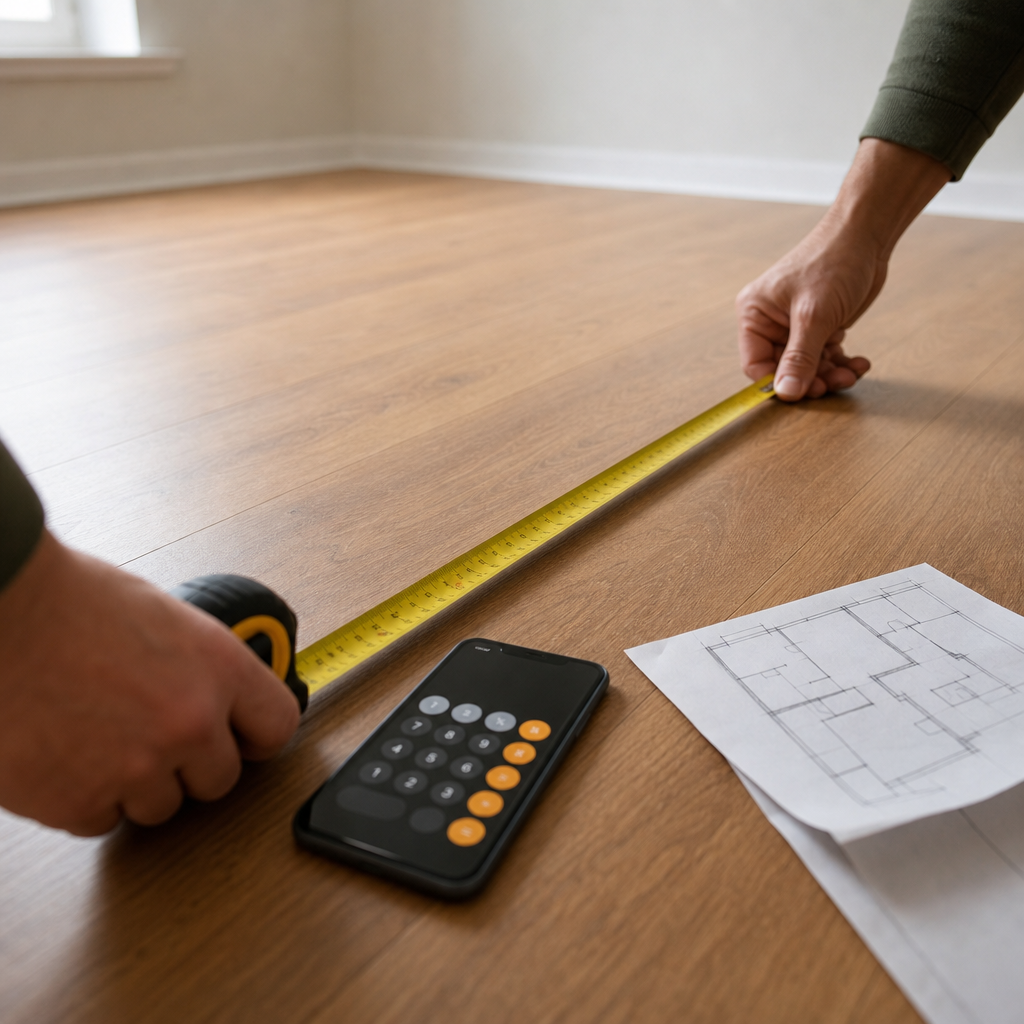
The square-footage method is the most widely accepted default among roommate calculators and property-management guides. The logic: you pay privately for the space only you use, and everyone splits the space everyone shares. Two steps:
rate = rent ÷ total square footage
your share = (your room's sq ft × rate) + (common-area rent ÷ number of roommates)
Worked example: 3 roommates, $2,400 rent, uneven rooms
A 1,200 sq ft apartment rents for $2,400 a month, so every square foot costs $2.00. The three bedrooms measure 180, 140, and 100 sq ft — 420 sq ft total. The remaining 780 sq ft of kitchen, living room, and hallways is common area worth $1,560, split three ways at $520 each.
| Roommate | Room size | Room rent (×$2.00) | Common-area share | Monthly total |
|---|---|---|---|---|
| Alex | 180 sq ft | $360 | $520 | $880 |
| Sam | 140 sq ft | $280 | $520 | $800 |
| Jordan | 100 sq ft | $200 | $520 | $720 |
| Total | 420 sq ft | $840 | $1,560 | $2,400 |
Against the $800-each equal split, Sam pays the same either way, Jordan saves $80 a month, and Alex pays $80 more — a fair price for a room 80% bigger.
Private bathrooms and other room adjustments
Square footage isn't the whole story. The common convention for a private or en-suite bathroom is a 10–20% premium on that room's share — some guides value it like 50–100 extra square feet instead. If Alex's 180 sq ft room had a private bath at a 15% premium, you'd treat it as 207 "effective" square feet and rerun the math: Alex's share rises, the others' fall, and the total still lands exactly on $2,400. Typical adjustments in the other direction:
- No closet: −5% to −10% — the renter buys storage furniture and gives up floor space for it
- No window or very poor light: −10% to −15% — in many cities a windowless room isn't even a legal bedroom
- Loud street-facing wall: −5% to −15%, depending on how bad it actually is
- Walk-in closet or private balcony: +5% to +10%
These are negotiation starting points, not rules — pick numbers everyone accepts and apply them consistently.
What about couples sharing one room?
The standard convention — used by Splitwise's rent calculator (splitwise.com), among others — prices the bedroom once but counts the couple as 1.5–2 people for common areas and utilities, since two people use the kitchen, living room, and bathrooms. The couple pays one room share plus a 1.5× or 2× slice of the common-area rent. Agree on the factor up front: 2 is the stricter reading, 1.5 the usual compromise.
Method 3: Split by income
Everyone pays the same percentage of take-home pay. Say the same $2,400 apartment houses three people bringing home $3,000, $4,000, and $5,000 a month — $12,000 combined. Rent is 20% of that total, so the shares are $600, $800, and $1,000. Income splits fit households where salaries differ a lot and everyone genuinely agrees that ability to pay matters more than room size — most often couples and close friends. Two caveats: it requires sharing pay information honestly, and it should be recalculated whenever someone's income changes. If trust is thin, use room size instead.
How to have the conversation
The method matters less than agreeing on it before anyone signs. Rules that keep it civil:
- Do it while you're still looking. The easiest version of this conversation happens while you're browsing rooms and rentals, not after move-in, when whoever got the big room defends the status quo.
- Lead with the method, not a number. "Should we price rooms by size?" invites discussion; "you owe $880" starts a fight.
- Let a neutral tool be the bad guy. Numbers everyone can inspect read as arithmetic, not a power play.
- Write it down. One shared message covering the method, each person's share, and what triggers a recalculation.
- Plan for mid-month changes. If someone moves in or out partway through a month, a prorated rent calculator settles the partial month instead of an argument.
When you're ready to run your own numbers, the rent split calculator handles all three methods plus bathroom premiums and couples — free, no signup, and nothing you enter is stored.
FAQ: splitting rent with roommates
What is the fairest way to split rent with roommates?
The room-size method is the most widely accepted default: price each bedroom by its square footage and split common areas equally. Equal splits work when rooms are similar; income-based splits fit households with very different earnings. Whichever you choose, agree on it in writing before anyone signs the lease.
How much more should someone with a private bathroom pay?
A 10–20% premium on that room's share is the common convention among roommate calculators and rental guides. Some guides value an en-suite like 50–100 extra square feet instead. Treat it as a starting point for negotiation, pick a number everyone accepts, and apply it consistently.
How should a couple sharing one room split rent with roommates?
Price the bedroom once, but count the couple as 1.5–2 people for common areas and utilities. Two people use the kitchen, living room, and bathrooms, so the couple pays one room share plus a larger slice of the shared space. Agree on the exact factor before move-in.
Is splitting rent by income fair?
Yes, when everyone agrees that ability to pay matters more than room size — common for couples and friends with very different salaries. Each person pays the same percentage of take-home pay. It only works with honest income sharing, and it should be recalculated whenever someone's earnings change.
What if a room has no window or no closet?
Discount that room's share before splitting. Typical ranges: −5% to −10% for no closet, −10% to −15% for no window or very poor natural light, and −5% to −15% for heavy street noise. Apply the discount to the room's square footage, then run the split as usual.
Should a rent split be put in writing?
Yes, always. A short message or roommate-agreement clause stating the method, each person's monthly share, and what triggers a recalculation prevents most disputes. Landlords usually hold all tenants jointly responsible for the full rent, so your internal split only exists in whatever you write down.

Comments
Loading comments...
Checking sign-in status...