
eBay vs Poshmark vs Mercari vs Facebook: 2026 Seller Fees Compared
Exact 2026 seller fees for eBay, Poshmark, Mercari, Facebook, Depop and more — what you keep on a $50 or $100 sale, and when $0 local wins.

ARTICLE LANGUAGE
Showing original language
List the same $100 jacket on four platforms and you'll walk away with anywhere from $80 to $100. That spread — pure fees — is the difference between a flip that was worth your Saturday and one that wasn't. Below are the exact 2026 fee schedules for eBay, Poshmark, Mercari, Facebook Marketplace, and four more platforms, verified against each platform's official fee pages, plus what you actually keep on a $50 and a $100 sale. To plug in your own price and shipping, the free reseller fee calculator runs all eight platforms side by side, no signup.
The 2026 seller fee table
The short version: eBay takes 13.6% plus $0.30–$0.40 per order in most categories. Poshmark takes 20% (a flat $2.95 under $15). Mercari takes a flat 10%. Facebook Marketplace takes 10% on shipped checkout orders with an $0.80 minimum — but $0 when the buyer picks up and pays you in person. Here's the full picture on a straight sale with no buyer-paid shipping:
| Platform | 2026 seller fee | You keep on $50 | You keep on $100 |
|---|---|---|---|
| eBay | 13.6% + $0.30–$0.40 per order | $42.80 | $86.00 |
| Poshmark | 20% ($2.95 flat under $15) | $40.00 | $80.00 |
| Mercari | 10% flat | $45.00 | $90.00 |
| Facebook Marketplace (shipped) | 10%, $0.80 minimum | $45.00 | $90.00 |
| Depop | 0% selling fee + 3.3% + $0.45 processing | $47.90 | $96.25 |
| OfferUp (shipped) | 12.9%, $1.99 minimum | $43.55 | $87.10 |
| Vinted | $0 (buyer pays a protection fee) | $50.00 | $100.00 |
| Whatnot | 8% + 2.9% + $0.30 processing | $44.25 | $88.80 |
| Local pickup, cash | $0 | $50.00 | $100.00 |
These rates come straight from eBay's selling-fees page (ebay.com), Mercari's fee help article (mercari.com), and Poshmark's fee policy (support.poshmark.com), last verified July 2026. Three caveats. eBay's 13.6% is its standard most-categories rate — books and media run higher, guitars lower. Sales tax is excluded here, and since eBay, Facebook, and Whatnot's processor also take their cut on tax, real fees run slightly higher than shown. And Mercari's flat 10% applies to listings created or updated since January 6, 2025, when it brought back seller fees with no separate processing charge.
The spread is bigger than it looks
On a $50 sale, the gap between Poshmark ($40.00) and a local cash deal ($50.00) is $10 — a fifth of your revenue, gone. On $100 it's $20. And every shipped figure above still owes the shipping label if you offered “free shipping,” plus packaging, drop-off time, and the platform's payment-hold window before you can touch the money. Local cash is yours the moment it hits your hand.
The fee-basis trap: what the percentage applies to
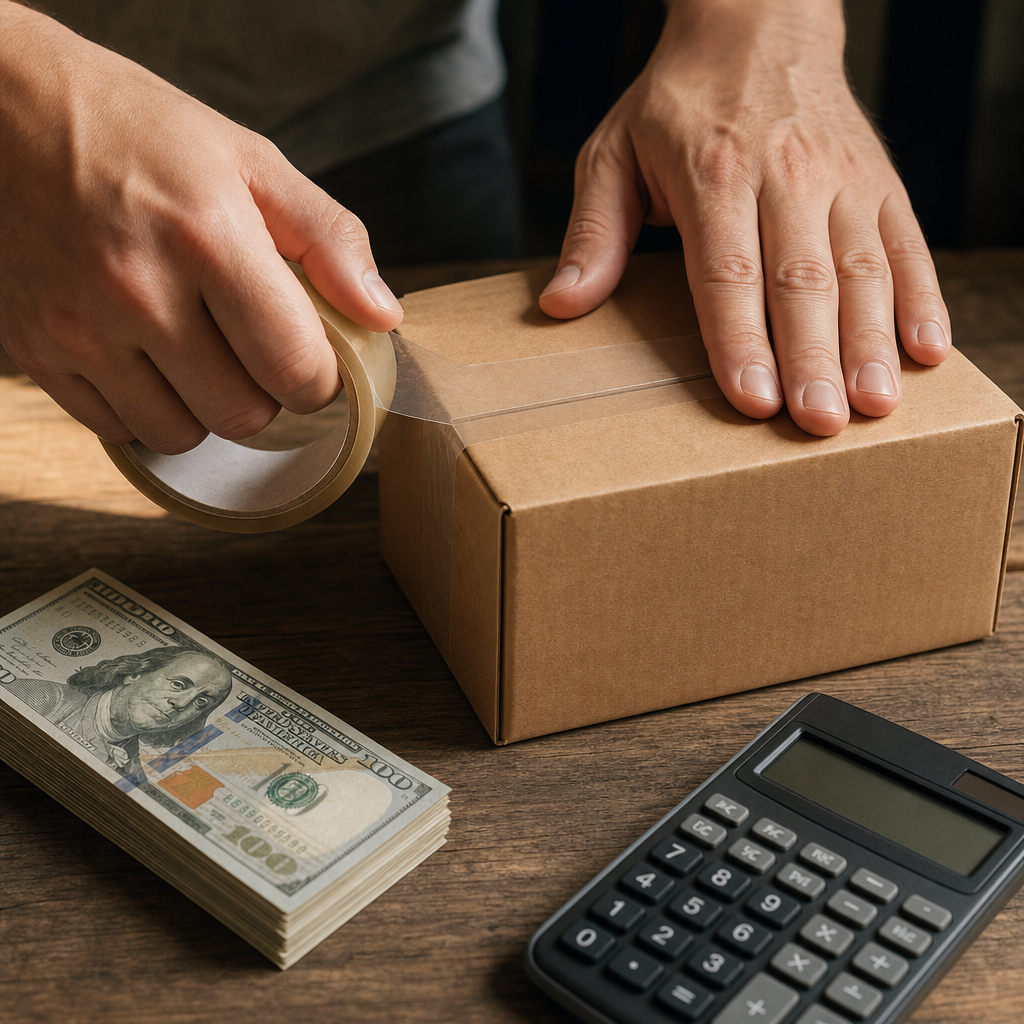
The rate is only half the story — the other half is what it's charged on. eBay and Facebook take their percentage of the total the buyer pays, including shipping and sales tax. Mercari and Depop charge on the item plus buyer-paid shipping. Poshmark and OfferUp charge on the item price alone, because the buyer pays the shipping cost directly.
Take a $60 hoodie with $8 buyer-paid shipping. eBay charges 13.6% of the $68 total plus $0.40 — $9.65 — so you keep $58.35. Poshmark takes 20% of $60, or $12.00, leaving you $48.00: a worse payout even though it ignores shipping entirely. Mercari and Facebook each take 10% of $68 ($6.80), leaving $61.20. Depop takes just $2.69, leaving $65.31. Sell the same hoodie locally and you pocket $60.00 flat — no fee, no label, no packaging.
When a shipping platform is worth the fee
- National demand beats local supply. Collectibles, designer pieces, niche electronics, discontinued parts — when the right buyer probably isn't within 25 miles, an online audience sells the item faster and at a higher price, fee included.
- High value per pound. A $300 camera lens ships for a few dollars. Paying a platform to reach millions of buyers makes sense when shipping barely dents the margin.
- You're building a resale business. Repeat buyers, seller ratings, and volume tools matter at scale — fees become a predictable cost you price into every listing.
When local wins — and the $0-fee angle
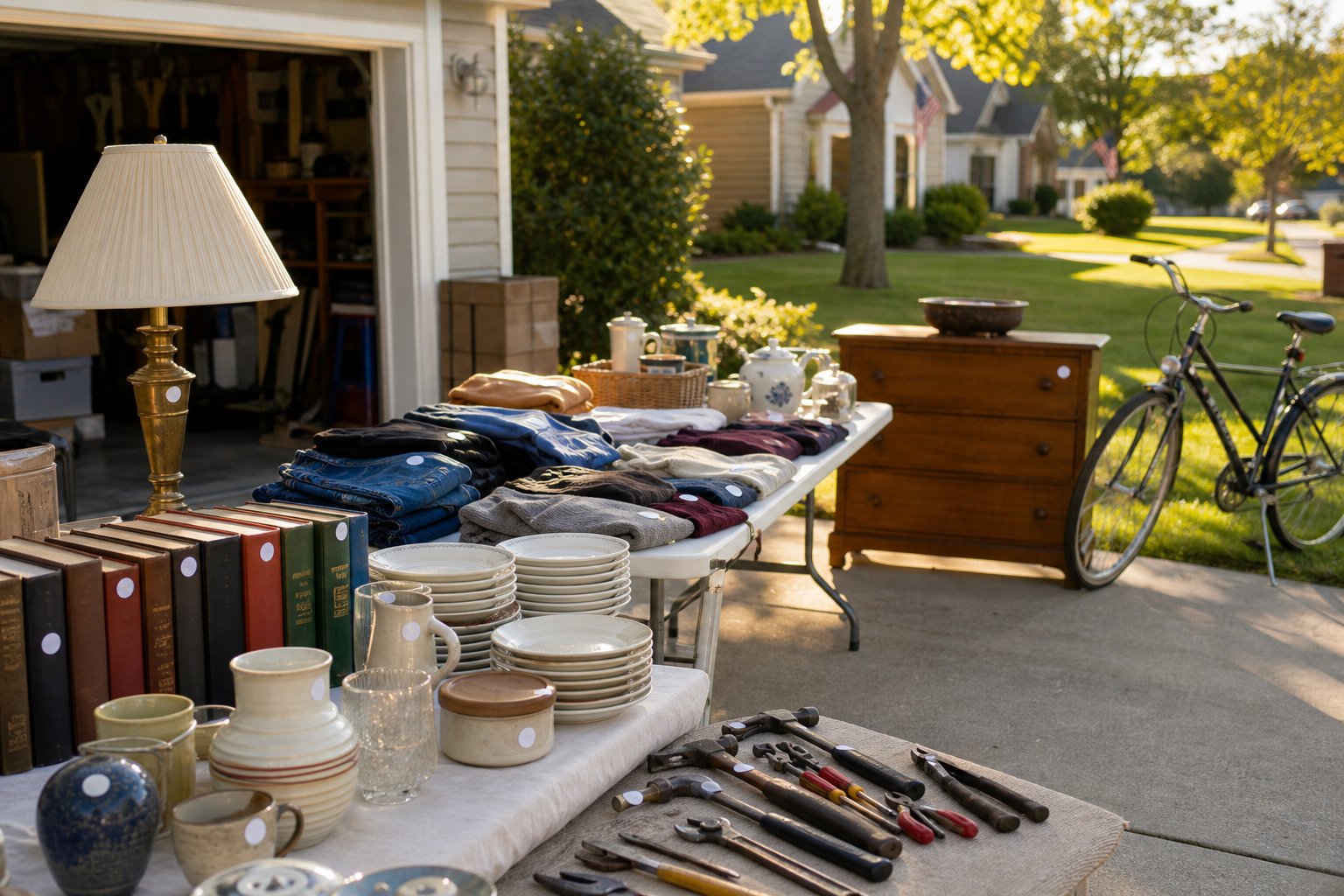
- Bulky, heavy, or fragile. Furniture, exercise equipment, appliances, TVs — shipping is impractical, and freight costs erase whatever the platform's audience added.
- Cheap items. Under about $30, fixed per-order fees, minimums, and a label eat most of the margin. OfferUp's $1.99 minimum on a $12 shipped sale is 17% by itself.
- You want the cash now. No payment holds, no return window, no “item not as described” claims after the buyer inspected it in person.
The $0 options: Facebook Marketplace local pickup and OfferUp local deals charge nothing, and a Brixaz listing is free with no commission or payment processing — buyers near you pay in person and you keep 100% of the price. Before setting yours, browse used items for sale near you to see what similar stuff actually lists for.
Whichever way you lean, run your exact price, shipping, and item cost through the fee calculator first — it also back-solves the most you should pay when sourcing a flip at a target margin.
A final note on timing: platform fees are not static. eBay adjusts final-value fees by category several times a year, Mercari has overhauled its fee model twice in recent memory, and promotional fee holidays come and go without much announcement. Before a big listing batch, spend two minutes confirming the current schedule on the platform's own fee page — and re-run the numbers. A two-point fee change on a $300 item is six dollars, which is often the entire difference between matching a competitor's price and beating it.
FAQ: reseller fees in 2026
Which platform has the lowest seller fees in 2026?
For shipped sales, Vinted charges sellers $0 and Depop charges only payment processing (3.3% + $0.45) — far below Mercari (10%), eBay (13.6%), and Poshmark (20%). For truly zero fees, sell locally: Facebook Marketplace pickup, OfferUp local deals, and local classifieds listings all cost nothing.
Does eBay charge fees on shipping?
Yes. eBay's 13.6% final value fee applies to the total the buyer pays — item price, shipping, and sales tax — plus a $0.30–$0.40 per-order fee. Offering free shipping doesn't dodge it; it just moves the shipping cost into your item price, where the fee still hits.
Are Facebook Marketplace local sales really free?
Yes. There's no selling fee when the buyer pays you in person with cash, Zelle, or Venmo. The 10% selling fee (minimum $0.80) applies only to shipped orders through Facebook checkout — a rate that doubled from 5% in April 2024.
Why is Poshmark's fee charged on the item price only?
Because the buyer pays Poshmark's flat shipping label directly, so shipping never enters your payout. Poshmark takes a flat $2.95 on sales under $15 and 20% on sales of $15 or more, with no separate payment-processing fee on top.
Is Mercari's 10% fee really all-in?
Yes. Since January 6, 2025, Mercari charges a flat 10% on the item price plus buyer-paid shipping, and the old 2.9% + $0.50 processing fee is gone. Buyers pay a separate 3.6% Buyer Protection fee, which can soften offers but is never billed to you.
Will I get a 1099-K for selling used stuff?
Only above the federal threshold: $20,000 in payments and more than 200 transactions in a year, though some states set lower thresholds. Selling personal items for less than you originally paid is generally not taxable income — keep receipts for anything valuable.




Comments
Loading comments...
Checking sign-in status...