
How Much Should I Charge? A 2026 Pricing Guide for Local Service Pros
Typical 2026 US rates for cleaning, lawn care, babysitting, handyman work, and pressure washing — plus how to position and raise your price.
ARTICLE LANGUAGE
Showing original language
"How much should I charge?" stalls more new service businesses than licensing, marketing, and scheduling combined. Price too high and the phone stays quiet. Price too low and you work every weekend just to lose money on gas and supplies. The fix is not guessing harder — it is starting from published national rates and adjusting with a repeatable formula. Below are typical 2026 US rates for five of the most common local services, plus how to position your price against competitors and when to raise it. Want the fast version? The free service price calculator runs these same numbers for ten services in about thirty seconds.
Start from the national range, not a guess
Every figure below comes from published 2026 cost guides — the same fact-checked data behind the calculator. These are national typical ranges: what customers actually pay, before your costs come out.
| Service | Typical US range (2026) | Priced | Data source |
|---|---|---|---|
| House cleaning | $0.10–$0.20/sq ft standard (typical visit $118–$238); deep clean avg $260 ($180–$375) | per visit | Angi |
| Lawn mowing | Most visits $42–$68 (avg ~$55); $99–$264 for 1–2 acres | per visit | LawnStarter / Angi |
| Babysitting | $18–$27/hr for one child; roughly $3/hr more per additional child | per hour | UrbanSitter / Care.com |
| Handyman work | $50–$80/hr independent; $75–$125/hr specialty; common minimum fee $125–$150 | per hour | HomeGuide / Angi |
| Pressure washing | $0.30–$0.55/sq ft for driveways and flatwork; whole-house wash avg $311 ($100–$710) | per job | Angi |
Two of these deserve a closer look, because they are where new pros underprice hardest. Angi's 2026 cleaning guide (angi.com) puts a standard clean at $0.10–$0.20 per square foot — so a 1,500 sq ft home should bill $150–$300 per visit, yet beginners routinely quote a flat $80. Babysitting has a wide but honest spread: UrbanSitter's 2026 report (urbansitter.com) shows a national average of $26.24 per hour for one child, while Care.com's average is $21.07 — which is why $18–$27 is the defensible range, not the $12 many sitters still ask.

Adjust the base rate with three multipliers
A national range is a starting point, not your price. Adjust it in this order:
Suggested price = national base × cost of living × experience × supplies
- Cost of living (±15–25%). Low-cost areas run about 15% below the national range; expensive metros run about 25% above. Per LawnStarter's 2026 mowing data (lawnstarter.com), most visits land at $42–$68 nationally — but the same quarter-acre cut that goes for $45 in a small Texas town can fetch $90 in a Boston suburb.
- Experience (±10–15%). Just starting out? Take about 10% off the range to win your first reviews. Years of experience, photos, and references? Add 15%.
- Supplies (+8%). Bringing your own equipment or products justifies a 5–10% premium. Customers happily pay for not having to think about it.
National ranges hide big local variance, so sanity-check the output: browse the local services listings in your area and see what providers with similar experience actually advertise before locking in a number.
Compete, market, or premium: pick a position on purpose
Once you have an adjusted range, choose where to sit in it — deliberately. Here is the worked example for an established cleaner in an average-cost area who brings her own supplies, quoting a 1,500 sq ft standard clean:
- Base rate: $0.10–$0.20 × 1,500 sq ft = $150–$300
- Experience and cost of living: both average, so × 1.00
- Brings her own supplies: × 1.08 = $162–$324, rounded to $160–$325
Compete (~$160) is the low end — the right call for a first client when you need reviews more than margin. Market (~$245) is the midpoint, where most established providers should sit. Premium (~$325) only works when your listing backs it up: real photos of your work, a stack of reviews, and fast replies. Pick one on purpose; drifting between them confuses customers and trains them to haggle.
Know your floor before you take a single job
The ranges above are what customers pay — not what you keep. As an independent provider you will typically owe about 15.3% self-employment tax on net earnings, plus supplies, fuel, insurance, and unpaid drive time between jobs. Work out the lowest price at which a job still pays you fairly after all of that. That is your floor, and nobody gets a quote below it — not family friends, not "exposure" gigs. If your post-cost hourly take does not comfortably beat local hourly wages, you have built yourself a worse job, not a business.
Raising your rates without losing customers
- Start 10–15% under market, never 40% under. A modest discount wins first jobs and reviews; a drastic one signals low quality and attracts problem clients.
- Raise after 5–10 solid reviews. That is the point where social proof, not price, is winning you jobs.
- New customers first. Quote the new rate to incoming leads right away; give regulars 30 days' notice so nobody feels ambushed.
- Booked solid two weeks out? You are underpriced. A full calendar is the market telling you to move up 10–15% and let demand find the level.
And bill like a business from day one — a clean written invoice does more to justify a professional rate than any sales pitch. The free invoice generator handles that in about a minute.
Set your rate, then go get customers
Run your own numbers — service, area, experience, supplies — through the service price calculator and you will have a defensible range plus all three positioning points in under a minute.
Finally, treat your rate as a living number, not a tattoo. Review it every season: if you are booked solid two weeks out, you are underpriced — raise the rate for new customers and keep loyal ones where they are for a while. If the calendar has holes, do not race to the bottom; tighten your service area instead, since windshield time is the most expensive part of a cheap job. Providers who adjust quarterly earn measurably more per hour by year two than those who set a rate once and defend it.
After setting a rate, use this freelance listing guide to explain your scope, availability, and first-message instructions clearly. freelance service listing
For a cleaning-specific pricing example: house cleaner pricing and package listing guide
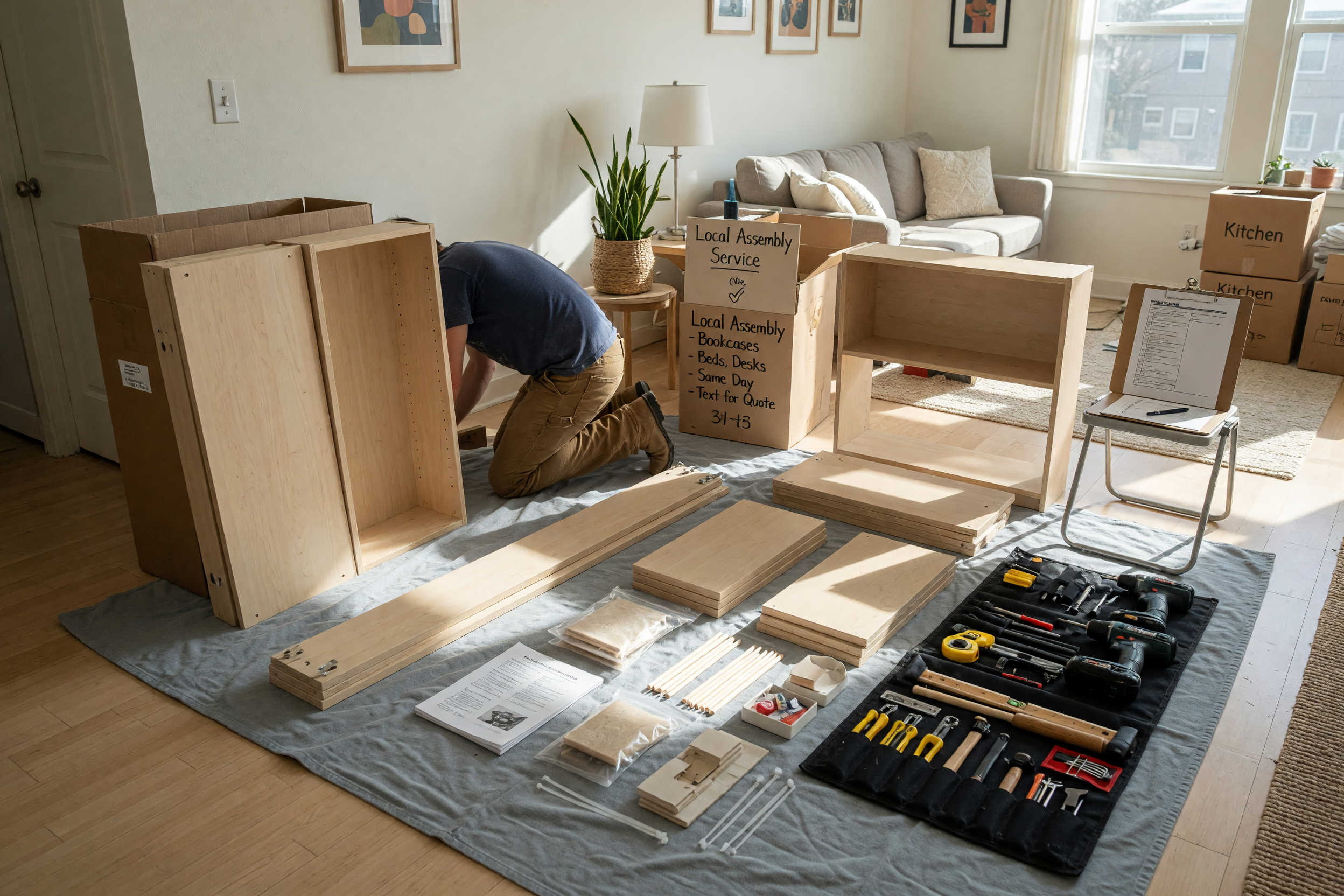
For a concrete pricing example: furniture assembly service pricing
FAQ
How much should I charge for house cleaning in 2026?
$0.10–$0.20 per square foot for a standard clean, with typical visits at $118–$238 (Angi, 2026). Deep cleans average $260, usually $180–$375. A 1,500 sq ft standard clean lands between $150 and $300 per visit.
What is a fair babysitting rate for one child?
$18–$27 per hour is typical nationally in 2026. Care.com reports an average of $21.07 and UrbanSitter $26.24; a second child adds about $3.60 per hour. Charge more for infants, late nights, or extra duties like cooking.
How much do handymen charge per hour?
$50–$80 per hour for independent general repairs in 2026; skilled or specialty work runs $75–$125 per hour (HomeGuide/Angi). Most pros also set a minimum service fee of $125–$150 so small jobs stay worth the drive.
Should I undercut competitors when starting out?
Price 10–15% under market, not far below it. A modest discount wins first jobs and reviews, while a rate 40% under signals low quality and attracts problem clients. Raise your price once you have 5–10 solid reviews.
Should I charge extra for bringing my own supplies?
Yes — about 5–10% more. Supplying your own equipment or products saves customers hassle, and the calculator applies an 8% premium for it. Fold it into your quote rather than listing it as a separate line-item fee.
Do these rates include taxes and expenses?
No. The ranges reflect what customers pay, before your costs. Independent providers typically owe about 15.3% self-employment tax on net earnings, plus supplies, fuel, and insurance — so set your floor price to cover all of that, not just your time.



Comments
Loading comments...
Checking sign-in status...