
How to Post Delivery and Errand Services as a Local Gig
Delivery and errand work is the easiest local gig to start — you already own the car. Here are the exact listing fields, pricing logic, and safety limits that turn a scroll into a booked run.
ARTICLE LANGUAGE
Showing original language
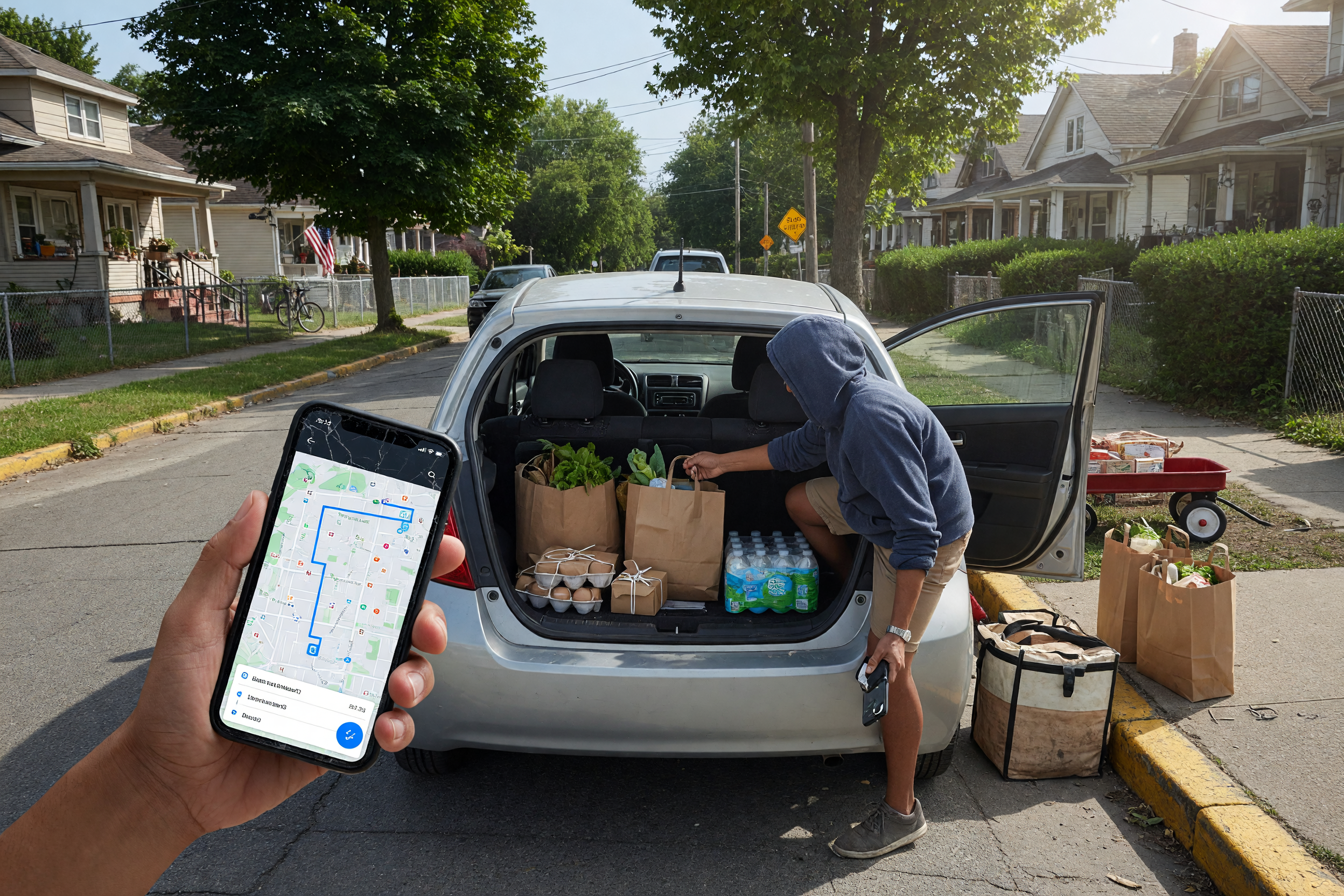
You have a car, a few free hours between other commitments, and a whole neighborhood full of people who need a grocery run, a package dropped at the post office, or a prescription picked up before a shift starts. Delivery and errand work is one of the easiest local gigs to start — you already own the tools. The hard part is not the driving. It is writing a listing that makes a busy stranger trust you enough to hand over their shopping list, their address, and sometimes their cash.
Most delivery and errand posts fail at exactly that step. They say "will run errands, cheap, message me" and then wonder why the only replies are tire-kickers asking "how much?" for the tenth time. A good listing does the opposite: it answers the questions a person has before they can ask them, sets a clear service area and price logic, and draws a firm line around what you will and will not do. This guide gives you the exact fields to fill in, a copy-and-adapt checklist, and the wording that turns a scroll into a booked run — so you can post on the Brixaz gigs section today and start getting real requests.
Why most delivery and errand gigs get ignored
When someone is looking for an errand runner, they are usually a little stressed and a little cautious. Maybe they are stuck at work and their kid needs something from the pharmacy. Maybe they are elderly and cannot lift a case of water. They are about to trust you with a task that touches their home, their money, or their family — so a vague, one-line post reads as a risk, not a bargain.
The listings that get skipped share the same gaps. They do not say where the person will actually drive, so a reader in the next town over cannot tell if it applies to them. They do not explain how pricing works, so every conversation starts from zero. And they say nothing about reliability or limits, which is the exact thing a nervous first-time client wants to hear. Because a client contacts you directly on Brixaz with no dispatcher and no big-app rating to fall back on, every reassurance has to live in the post itself. That is not a disadvantage — it is your opening. The runner who writes like a dependable neighbor, not a faceless app, wins the message before anyone talks price.
The fields every delivery and errand listing needs
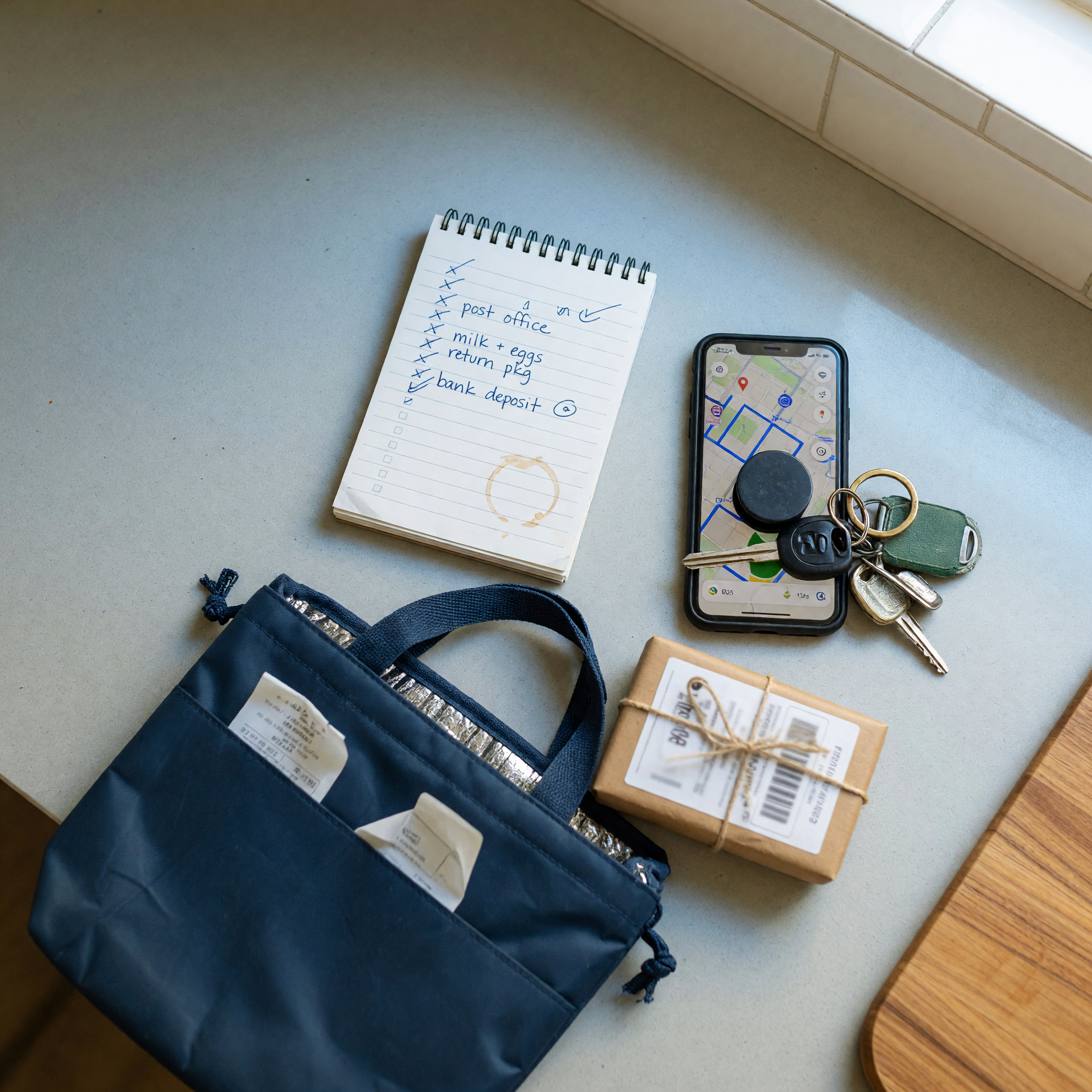
Buyers scan a service post for a short list of facts, and they decide in seconds whether to message or move on. Fill in every row below before you publish. A blank row is a question the reader will not bother to ask — they will just scroll to the next runner who already answered it.
| Field | Why it matters | How to write it |
|---|---|---|
| What you do | Sets expectations instantly | "Grocery runs, pharmacy pickups, package drop-offs, and small errands" |
| Service area | Filters out requests you can't reach | "I cover the north side of the city and the two suburbs just past it — about a 10-mile radius" |
| Hours you run | Avoids back-and-forth on timing | "Weekday mornings and evenings, all day Saturday" |
| Vehicle & capacity | Tells them what fits | "Compact SUV — fits a full grocery haul or a few medium boxes" |
| How pricing works | Ends the endless 'how much?' loop | "$15 flat for a run under 5 miles, plus the cost of items" |
| Turnaround | Reliability is the whole sale | "Most same-day requests done within 2–3 hours" |
| How you handle payment | Removes the money fear | "You reimburse the receipt total, then pay my fee on delivery" |
| What you won't carry | Protects you and builds trust | "No alcohol, prescriptions requiring ID transfer, or anything over 40 lbs" |
Notice that half these fields are about safety and money, not the driving itself. That is deliberate. A client who can see exactly how the receipt, the fee, and the handoff work has nothing left to worry about — so they message you instead of the person who left it all a mystery.
Draw your service area on a map, not in your head
The single biggest reason errand requests fizzle is a fuzzy service area. "Anywhere in town" sounds generous but tells the reader nothing, and it buries you in requests you have to decline for distance. Be concrete instead. Name the neighborhoods, the ZIP codes, or a mile radius from a landmark everyone knows. "I run errands within about 10 miles of the downtown transit center — that covers Midtown, the East Side, and Riverdale" lets a reader place themselves instantly.
Then decide how distance changes your price, and say so. A flat fee for anything inside your core zone plus a small per-mile add-on beyond it is easy to understand and easy to trust. If you will occasionally go farther for a bigger job, add one line: "Longer trips possible for a larger order — just ask." That invites the high-value request without committing you to drive an hour for a single coffee. Clients browsing local services and gigs reward the runner who makes the geography obvious.
Price your runs so a client can say yes fast
Errand pricing confuses people because it bundles two very different things: the items themselves and your labor. Separate them out loud. The client always reimburses the actual receipt — no markup on the milk. Your fee is for the time, gas, and convenience, and it should be a number a reader can accept without doing math. A clean structure looks like this: a flat base fee for a standard run in your core area, a small bump for extra stops, and a per-mile rate outside the zone.
Do not invent prices to look cheap; set a fee that is actually worth your time after gas, or you will resent every booking. And avoid the vague "prices vary" trap. A reader cannot budget against "varies," so they close the tab. Give one concrete example in the post — "a typical grocery run for one store, under five miles, is a flat fee plus your receipt" — and the reader can picture the whole transaction. When they can picture it, they book it. If you also handle bigger household tasks, point clients toward a separate services listing so each post stays focused on one job.
Write copy that earns the first message
The difference between a listing that sits dead and one that gets steady requests is usually just the wording. The weak versions leave the reader guessing; the stronger versions answer and reassure. Compare them:
| Weak copy | Better copy |
|---|---|
| "Will run errands, cheap." | "Grocery runs, pharmacy pickups, and package drop-offs on the north side — $15 flat under 5 miles, plus your receipt." |
| "Reliable and fast." | "Most same-day requests done within 2–3 hours. I text you a photo of the receipt and confirm before I head over." |
| "I can do most things." | "Best for groceries, small packages, and standard pickups. I don't carry alcohol or anything over 40 lbs." |
| "Message for price." | "Flat $15 in my core zone, plus $1/mile beyond it. Longer trips for bigger orders — just ask." |
Two habits do most of the work here. First, lead with a specific, priceable example instead of an adjective — "reliable" is a claim, "done within 2–3 hours, I text a receipt photo" is proof. Second, name your limits proudly. Telling a client what you will not carry makes everything you will carry more believable, because it shows you have thought about the job like a professional rather than someone desperate for any dollar.
Set safety boundaries and handle money cleanly
Errand work is trust work, so the small print protects both sides. Spell out how money moves before the first job: whether the client sends the item cost up front or reimburses the receipt afterward, and how they pay your fee. A simple rule like "you cover the receipt total, I show you the itemized receipt, and my fee is paid on delivery" leaves no room for a dispute. Keep every receipt and confirm the shopping list in writing before you shop.
Set physical and legal limits too. Skip anything you are not licensed or comfortable to handle — controlled medications that require an ID transfer, large quantities of alcohol, cash-only high-value items, or loads too heavy for your vehicle. For first-time clients, meeting at a doorstep or a well-lit entrance for the handoff is reasonable, and there is nothing wrong with saying you confirm the address and a phone number before the first run. People who genuinely need help will respect the structure; the ones who push back on basic boundaries are the ones you want to filter out anyway. If you would rather receive requests than post an offer, browse what neighbors are asking for in the help-wanted requests and reply to the ones you can cover.
Related on the Brixaz blog: How to Invoice as a Handyman, Cleaner, or Independent Pro, How Much Do DoorDash and Uber Eats Drivers Really Make After Expenses?.
Bundle more than deliveries: post one task-help service for errands, assembly, and cleaning
Related errand helper guide: helper jobs near me for errands
For providers who handle broader assistant work, this New York-focused guide adds rates and boundaries: personal assistant and errand service listing
For providers who also handle errands: personal assistant errands listing
Frequently asked questions
How should I price a delivery or errand gig?
Separate the two costs so a client can accept fast. They always reimburse the actual receipt with no markup, and your fee covers time and gas. Set a flat base fee for a standard run in your core area, a small add-on for extra stops, and a per-mile rate beyond your zone. Put one concrete example in the listing so the reader can picture the whole transaction instead of guessing.
How do I make people trust me with their money and their address?
Explain the money flow in the post before anyone asks: who pays for the items, how you show the receipt, and when your fee is paid. Confirm the shopping list and address in writing, keep every receipt, and text a photo of it before you deliver. Naming your limits — what you won't carry and how you handle first-time clients — signals you treat this like real work, which is exactly what a cautious client wants to see.
What should I refuse to carry or do?
Skip anything you are not licensed or equipped for: controlled prescriptions that require an ID transfer, large amounts of alcohol, high-value cash-only items, and loads heavier than your vehicle safely handles. Stating these limits up front is not negative — it makes everything you do offer more credible and filters out requests that would waste your time or put you at risk.
How big should my service area be?
Big enough to get requests, small enough to actually serve. Name specific neighborhoods, ZIP codes, or a mile radius from a well-known landmark instead of saying "anywhere." Charge a flat fee inside your core zone and a small per-mile add-on beyond it, and add one line inviting longer trips for bigger orders. Concrete geography lets a reader place themselves instantly and message with confidence.
When are the best times to run errands for clients?
Whenever your clients are stuck and can't go themselves — typically weekday mornings and evenings around work hours, and weekends for bigger grocery hauls. List the exact windows you are available so people don't have to ask, and note your usual turnaround, like "most same-day requests done within 2–3 hours." Reliability at a predictable time is what turns a one-off run into a repeat client.
Where do I post a delivery and errand gig on Brixaz?
Post it in the gigs section using the free listing form. Fill in every field from the checklist — what you do, your service area, hours, pricing logic, turnaround, and limits — and clients can message you directly to book. There is no dispatcher and no cut taken, so the clearer your post, the more real requests you get from people nearby.


Comments
Loading comments...
Checking sign-in status...