
Marketplace Pricing Guide: Set a Fair Local Price Without Guessing
Stop guessing your price. Use real local comps, a simple condition ladder, and a five-minute checklist to set a fair number that gets used items sold fast.
ARTICLE LANGUAGE
Showing original language
The single biggest reason a used item sits unsold isn't the item — it's a number picked out of the air. Price it too high and serious buyers scroll past without a word; price it too low and you either leave money on the table or, worse, attract flippers who lowball you anyway because "cheap" reads as "desperate." Most people set a price by feeling: what they paid, what feels fair, or whatever round number comes to mind. Then they wait, get silence, and assume nobody wants it.
You don't have to guess. Setting a fair local price is a repeatable, five-minute process built on what similar items are actually selling for near you, adjusted for real condition and how fast you want it gone. This guide walks through that process for anything you'd post used — furniture, electronics, baby gear, tools, a bike — so you can put a confident number on it, get real messages, and hand it off this week instead of relisting it for the third time.
Why a guessed price quietly kills your listing
A guessed price fails in two directions, and both look the same from your side: no messages. Too high, and buyers who know the category compare your number to everything else in their feed and move on — you never even see the interest you lost. Too low, and you draw resellers hunting for margin, get a flood of "is this still available?" with no follow-through, and often sell for less than a patient, well-priced listing would have earned. The frustrating part is that silence gives you no feedback, so people keep dropping the price blindly instead of fixing the real problem.
People searching "donde vender cosas usadas" and "websites to sell locally" aren't looking for the lowest price — they're looking for a fair one they can trust. On Brixaz, buyers contact you directly with no fees skimmed off the top, so the price you post is the price that anchors the whole conversation. A number that's clearly grounded in the local market does half the selling for you: it signals you've done your homework, and it turns the first message into "when can I pick it up?" instead of "what's your lowest?"
Start with real comps, not the sticker price you remember
The price you paid is irrelevant to a buyer, and so is the current retail price of the new version. What matters is the "sold-for" number on items like yours, in similar condition, near you, right now. That's your comparable — your comp. Before you set anything, spend three minutes gathering a handful of them.
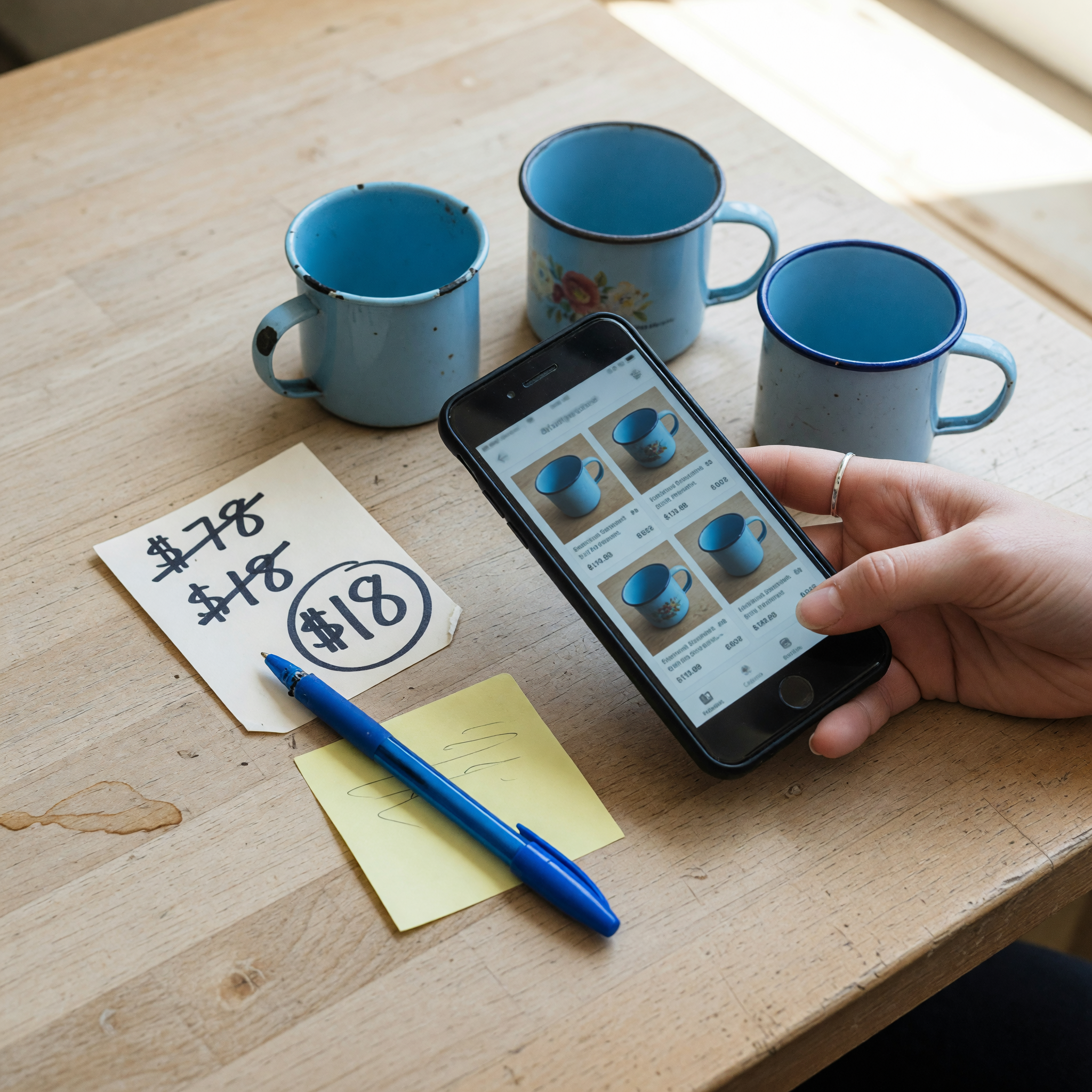
The fastest way to gather comps is to search the exact item the way a buyer would and read the range. Open local search, type the brand and model or a plain description ("Ikea Kallax shelf," "graco stroller," "electric drill"), and note the spread of prices on items that look like yours. Ignore the outliers — the one priced like it's brand new and the one priced to dump today — and find the cluster in the middle. That cluster is your market. If you want the read done for you, drop the item into the Brixaz price checker for a quick local estimate instead of eyeballing it.
Adjust for condition and age, not optimism
Once you have the middle-of-the-market number, adjust it honestly for your specific item. Two things move the price: condition and age. A comp cluster assumes "good used condition." If yours is better or worse, move off the middle accordingly — and be honest, because the buyer will judge condition from your photos the moment they arrive, and a mismatch kills the deal in the driveway.
Use a simple condition ladder rather than agonizing over exact percentages:
| Condition | What it means | Where to price vs. the comp cluster |
|---|---|---|
| Like new | Barely used, no marks, all parts, sometimes the box | Top of the cluster |
| Good | Light, normal wear; fully working; complete | Middle of the cluster |
| Fair | Visible wear, a flaw or two, still fully functional | Lower third, and name the flaws |
| For parts / needs work | Doesn't fully work or is missing key pieces | Well below cluster, or list as free |
Age matters most for anything electronic or trend-driven. Phones, laptops, and TVs lose value fast as new models land; a two-year-old phone in great shape still can't command a one-year-old price. Furniture and tools hold value far better — a solid wood dresser or a good drill barely depreciates if it's cared for. And if the honest answer is "this needs work" or "it's older than it's worth," don't fight it: listing it on Brixaz Free Stuff moves it in a day and clears your space, which is often the real goal.
A five-minute pricing checklist you can run on any item
Here's the whole process in order. Run it once and you'll have a number you can defend and a listing that reads as fair at a glance:
- Search the exact item the way a buyer would, and read the spread of similar listings near you.
- Find the middle cluster — ignore the highest and lowest outliers and mark the price most comparable items sit at.
- Place your condition on the ladder above and move up or down from that cluster.
- Apply age — knock more off electronics and trend items, less off sturdy furniture and tools.
- Add a small negotiation buffer — usually 10-15% — so you can say yes to a reasonable offer and still land where you want.
- Round to a clean number buyers scan easily ($40, $75, $120), and state whether it's firm or "OBO."
- Decide your walk-away price before anyone messages, so you negotiate from a plan, not from pressure.
Write the final number down with your walk-away price beside it. When an offer comes in, you're not doing math under pressure in a parking lot — you already know your yes and your no.
Bad price versus better price, side by side
The difference between a listing that stalls and one that sells is usually a number and one line of context. Compare these common pricing mistakes with the fix:
| Common pricing mistake | Better approach |
|---|---|
| "I paid $200, so I want $150" | "Comps sit around $90; mine's clean, so $100" |
| An oddly specific number like $63 | A clean, scannable $65 or $60 |
| No indication if the price moves | "$100, firm" or "$100 OBO" stated plainly |
| Priced at new-retail because it's "barely used" | Priced against used comps, with the light wear noted |
| Dropping the price $5 every few days blindly | One fair price backed by comps, held with confidence |
| Same price for a broken and a working unit | Working priced to the cluster; broken listed for parts or free |
Notice the last row. Bundling condition into one hopeful price is what breeds distrust — a buyer can't tell if they're getting a deal or a problem. Pricing to honest condition, and saying so in the listing, is the Brixaz-specific edge: because buyers reach you directly and there's no platform fee inflating the number, a clean, comp-based price reads as trustworthy and closes faster than a padded one ever will.
Price to sell, then protect your floor
A fair price gets messages; a plan keeps you from giving away margin once they arrive. Decide up front whether you're pricing to move fast (list at the low-middle of the cluster and expect a quick sale) or to maximize (list slightly high with a real buffer and be patient). Both are valid — just pick one on purpose. Then hold your walk-away number. If a lowball comes in, a calm "Thanks, but I've had it priced fairly against similar ones — I can do $X" reroutes most buyers to a real offer.
When your number is set, post the item to the category that matches it so the right local buyers find it, with the price, condition, and pickup area right in the listing. You can open the selling form ready to go and let nearby buyers message you directly, or start from the sell-used flow if you've got several things to clear. A confident, comp-based price plus a clear listing is what turns a scroll into a pickup.
Related pricing guide: precio de muebles usados con urgencia de venta
FAQ: pricing used items for a fast local sale
How do I know what my used item is actually worth?
Look at what comparable items are selling for near you right now, not what you paid or what the new version costs. Search the exact item, find the middle cluster of similar listings, and adjust up or down for your item's condition and age. That local, condition-adjusted number is its real worth to a buyer today.
Should I price high and let buyers negotiate down?
A small buffer of about 10-15% is smart so you can say yes to a reasonable offer. But pricing well above the market backfires — buyers who know the category never message, so you get silence instead of negotiation. Price close to the market with a modest buffer, and set your walk-away number before anyone reaches out.
How much less than retail should a used item sell for?
It depends entirely on the category. Electronics and trend items drop fast — often 40-60% off retail within a year or two. Sturdy furniture, tools, and quality baby gear hold value far better and may only be 20-40% below new if they're in good shape. Comps in your area are the only reliable answer; ignore the new-retail price.
What if my item is old or doesn't fully work?
Be honest and price it as "for parts" or "needs work," well below the working-item cluster, and name exactly what's wrong. If the realistic value is near zero or the goal is just to clear space, listing it on Free Stuff usually moves it within a day — which beats letting it sit unsold at a price no one will pay.
Should I put "firm" or "OBO" on my price?
Say which one plainly, because ambiguity invites lowballs. "Firm" tells buyers the number is set and filters out hagglers; "OBO" (or best offer) invites negotiation and can move an item faster. Pick based on how quickly you want it gone, and either way, know your walk-away price before you post.
Why does a fair price matter more on a direct marketplace?
Because there's no platform fee padding the number and buyers contact you directly, the price you post is exactly what anchors the conversation. A comp-based, condition-honest price signals you're a serious seller and earns a first message that's ready to buy — not one fishing for how low you'll really go.



Comments
Loading comments...
Checking sign-in status...