
Local Deals Near Me: Make Your Used Listings Stand Out
Make a fair price read like a real bargain: value signals, honest anchoring, bundle and price-drop tactics, and pickup wording that closes deals fast on Brixaz.
ARTICLE LANGUAGE
Showing original language
When someone searches "local deals near me," they are not browsing for fun — they want a real bargain they can pick up this week without paying shipping or waiting on a box. That buyer is scanning fast, and they reward one thing above all: a listing that instantly reads as genuine value. If you have used items sitting in a closet, a garage, or a spare room, that hunt for deals is your fastest path to a sale. The trick is not slashing your price to nothing. It's making a fair price look and feel like the deal it already is.
This guide shows a seller exactly how to turn ordinary used items into discount listings that stand out to deal-hunters — the value signals buyers look for, honest price anchoring, bundle and price-drop tactics, bad-versus-better copy, and pickup wording that closes fast. Everything here works for one lamp or a full moving sale. If you can take a few clear photos and set a fair number, you can post today.
Why "local deals near me" buyers scan for value signals
A deal-hunter behaves differently from a casual browser. They open a dozen listings in a row, spend about three seconds on each, and close the ones that make them do math or guess. They are trained by every clearance rack and yard sale to look for the same shorthand: a price that is clearly below new, a reason it's cheap that isn't "something's wrong with it," and a clear way to grab it nearby.
So the buyer skimming local deals is silently asking: Is this actually cheaper than buying new? Why is it this price? And can I pick it up without a hassle? A listing that answers all three in the first two lines gets the message. One that hides the price, buries the condition, or leaves out pickup gets skipped — not because the item is bad, but because a better-labeled deal was one scroll away. On Brixaz, recent local listings surface together by city, so your job is to win the three-second scan against the listing right next to yours.
What actually makes a listing read as a real deal
A real deal is not a low number floating with no context. It's a fair price wrapped in three facts the buyer can verify at a glance: what it costs new, why you're selling, and what condition it's in. Gather these before you write anything — a missing field is the most common reason a well-priced item sits unsold next to a worse one that moved.
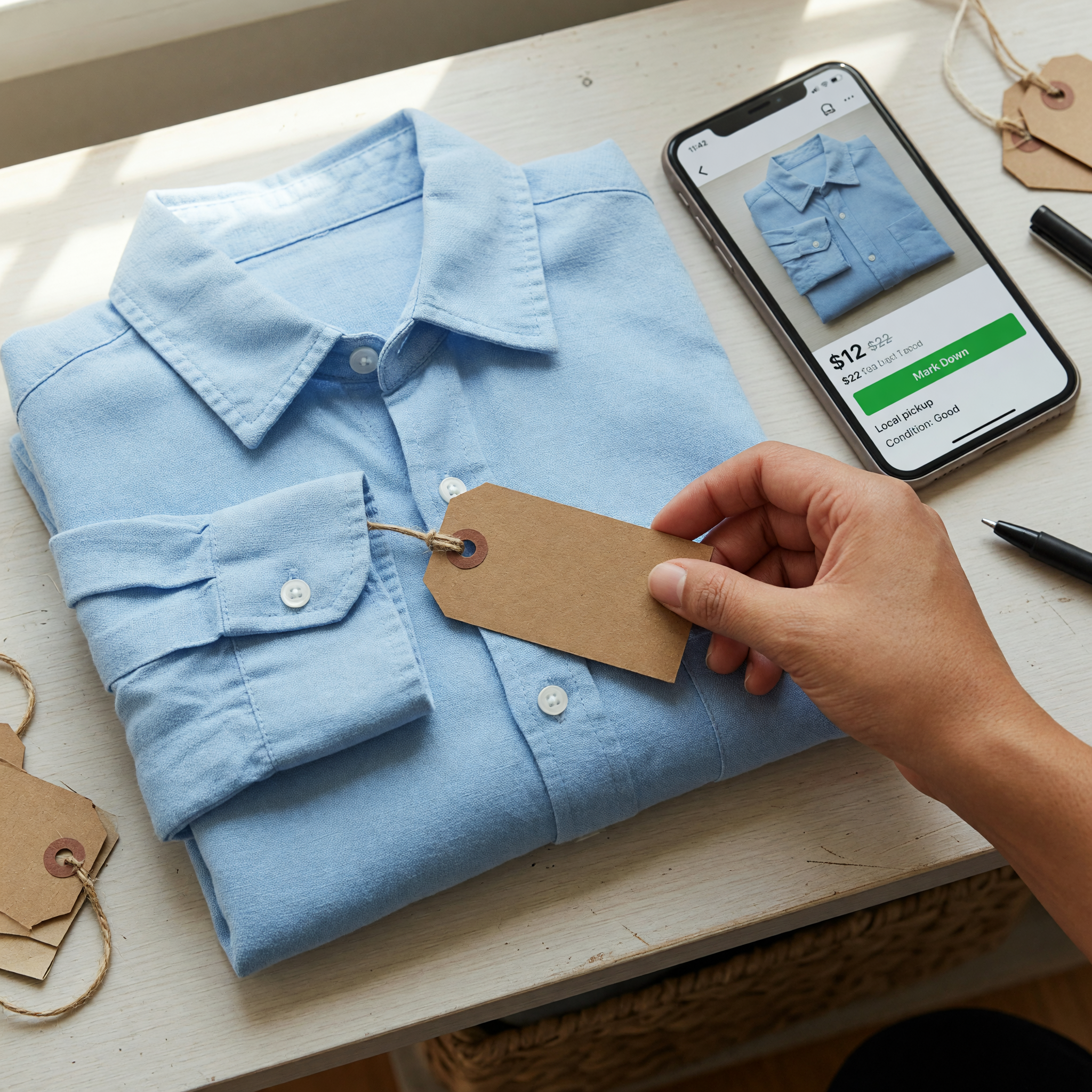
Fill every row of this checklist before you publish. It's what turns "cheap" into "smart buy":
| Value signal | Weak version | Deal-worthy version |
|---|---|---|
| Anchor to new price | "$40" | "$40 — retails around $110 new" |
| Reason for selling | (none) | "Moving in two weeks, need it gone" |
| Condition, honestly | "good condition" | "Used one season, one small scuff shown in photo 3" |
| Age & use | (none) | "18 months old, smoke-free home" |
| Pickup clarity | "text me" | "Cash on pickup, [neighborhood], evenings or Saturday" |
| What's included | (none) | "Comes with original charger and box" |
The anchor row does the heaviest lifting. "$40" is a number the buyer has to research. "$40, retails around $110" is a decision they can make on the spot — you did the comparison for them. That single line is the difference between a listing that reads as a random price and one that reads as a discount. Want a sanity check on your anchor before you post? Run the item through the Brixaz listing price checker to see a sensible local range.
Price the deal so it looks like a deal, not a red flag
There's a narrow lane between "great deal" and "why is this so cheap?" Price too high and the deal-hunter scrolls past. Price suspiciously low with no explanation and they assume it's broken, stolen, or bait. The fix is to pair every aggressive price with a plain reason.
A useful rule of thumb for everyday used goods in working condition is roughly 40–60% of today's new price, then adjust: down for visible wear or missing pieces, up for barely-used items with the box and accessories. If you want to go lower to sell fast, say why — "priced to move because I'm relocating Friday" turns a scary-low number into an understandable one. The reason is what keeps a low price from reading as a warning.
Avoid round-number theater. "$300 OBO" on a common item reads as an opening bid begging to be halved. A specific number tied to a reason — "$185, that's half of what I paid 14 months ago" — reads as a seller who has already decided. Deal-hunters trust decided sellers because it means less haggling and a faster pickup.
Bad vs. better "deal" listing copy
The specifics matter more than the adjectives. Compare two versions of the same item — a used air fryer.
Bad: "Air fryer for sale. Barely used. Great deal. $35. Text me."
Better: "5-quart air fryer, 18 months old, retails around $90 new. Used maybe a dozen times — kitchen's too crowded so it has to go. Works perfectly, comes with the original basket and manual, one small scuff on the side (photo 3). $35 firm, cash on pickup in the [neighborhood] area. Free this evening or Saturday morning — send me a time and I'll confirm."
The better version never says "great deal," yet it reads as one. The new-price anchor proves the value, the reason for selling explains the price, the honest scuff builds trust, and the pickup window kills the back-and-forth. "Barely used" is a claim; "used maybe a dozen times, comes with the manual" is evidence. Deal-hunters buy evidence.
Bundle and price-drop tactics that move slow items
Some items are worth more together than apart, and deal-hunters love a bundle because it feels like extra value for one trip. If you have several small related things — kitchen gadgets, kids' clothes in a size, tools, cables — group them into one "everything for $X" listing instead of a dozen $5 posts nobody wants to drive for. A bundle also lets you clear the long tail of low-value items that would never sell alone.
For anything that's been sitting, use a visible price drop. Editing your listing to a lower number and adding "Price dropped from $60 to $45" gives the deal-hunter a reason to act now, because a falling price signals a motivated seller. Keep the drop honest — don't inflate the original to fake a discount, because local buyers compare listings and remember. If an item is genuinely free or you just want it gone, list it in the Free Stuff section; "free, curbside, first to grab it" is the fastest-moving listing there is and it brings foot traffic to your other posts.
When you have more than a few items, treat it as a mini clearance event. Post the strongest deals as their own listings so they surface in search, and mention "more available, ask" so a buyer coming for one thing leaves with three. You can browse how strong local listings are framed on the sell-used page before you write your own.
Pickup and trust wording that closes a deal fast
Once a deal-hunter wants your item, the sale lives or dies on logistics and trust. Spell out four things so the buyer who messages is the buyer who shows up:
- General area, not your address: "Pickup in the [neighborhood] area, exact spot shared once we set a time." Give the precise location only to the person who's coming.
- Payment, stated up front: "Cash on pickup" or your preferred app, so there's no fumbling at the door.
- A real availability window: "Evenings this week or Saturday morning" ends the endless "when can I come?" loop instantly.
- Honest condition, restated: reference the flaw photo so nobody arrives expecting mint and walks away.
For safety, meet at your door or a visible public spot, favor daylight, and have someone home for larger pickups. These are normal boundaries and serious buyers expect them. The Brixaz difference here is direct contact: the buyer messages you, not a middleman, so the whole conversation goes straight to "what time works?" — which is exactly what a deal-hunter wants. Fill the fields once with the listing assistant and your deal is ready to post.
Frequently asked questions
How do I make my used item show up in "local deals near me" searches?
Post it as its own local listing with a clear title, an honest price anchored to the new cost, and real condition notes. Recent listings surface together by city, so specificity wins the three-second scan. Start a listing with your intent pre-set at the posting form, add a couple of clear photos, and you'll appear alongside the freshest deals buyers are browsing.
What price makes something look like a deal without looking broken?
Roughly 40–60% of today's new price is a safe anchor for working, everyday used goods, adjusted down for wear and up for barely-used items with the box. If you go lower to sell fast, pair the number with a plain reason like "moving Friday." A low price with no explanation reads as a red flag; a low price with a reason reads as a bargain.
Should I bundle items or list them separately?
List your strongest, higher-value items separately so each one surfaces in search. Group small, low-value related items — cables, kids' clothes in a size, kitchen gadgets — into one "everything for $X" bundle so a buyer makes one trip for several things. Bundling clears the long tail that would never sell alone and feels like extra value to a deal-hunter.
Does dropping the price actually help sell faster?
Yes, if it's honest. Editing a stale listing to a lower number and noting "price dropped from $60 to $45" signals a motivated seller and gives buyers a reason to act now. Don't inflate the original price to fake a discount — local buyers compare listings and remember, and a fake markdown costs you the trust that closes the sale.
Why include the original retail price in my listing?
Because it does the buyer's research for them. "$40" is a number they'd have to look up; "$40, retails around $110 new" is a decision they can make instantly. The anchor is what turns a plain price into a visible discount, and it's the single biggest thing that makes a fair listing read as a genuine deal.
Is it safe to sell to local deal-hunters I don't know?
Yes, with normal boundaries. Share only your general area in the listing and the exact spot once a time is set, take cash on pickup, meet at your door or a visible public place in daylight, and have someone home for bigger items. Direct contact on Brixaz means you talk straight to the buyer, so you control the time, place, and terms of every handoff.



Comments
Loading comments...
Checking sign-in status...