
Advertise translation services: rate and delivery
Practical guide for translators seeking direct clients: define languages, rate, format, delivery, and limits before publishing your service on Brixaz.

ARTICLE LANGUAGE
Showing original language
If you are a freelance translator, bilingual assistant, community interpreter, or document specialist, the next step is not writing a long biography. It is turning a specific service into a clear ad and posting your translation service on Brixaz with languages, rates, delivery formats, and limits from the very first message.
This guide is written for a specific person: someone in the United States who can accept real jobs this week, such as Spanish-English translation of personal documents, websites, menus, product sheets, letters, subtitles, forms, or hourly bilingual support. Brixaz is still in its early stages, so it does not promise views or guaranteed clients. The practical advantage is different: posting is free, the client contacts you directly, and an empty translation category leaves room for a complete ad to be easily compared.
Choose a translation service you can actually deliver
An ad gains clarity when it offers a concrete task, not an infinite list. "I do translations" forces the client to ask everything. "Spanish-English translation of personal documents in PDF or Word" already filters better. "Translation of menus and product sheets for small businesses" attracts restaurant owners, shops, and sellers who need to publish content quickly.
Before writing, define the main service you want to sell today. It could be personal document translation, commercial translation, website localization, subtitles, bilingual proofreading, video call interpretation, support calls, preparation of non-legal forms, or translation for marketplace listings. Do not mix medical interpretation, certified legal documents, and marketing texts if you do not offer all three with the same level of expertise.
A bad text says: "Translator available. Good price. Message me." A better text says: "I translate personal documents from Spanish to English and English to Spanish. I work with PDF, Word, and legible photos. I deliver an editable version and a final PDF. I respond with a price after seeing the number of pages, urgency, and format." The second version is not more elegant; it is more useful.
Post languages, direction, and specialty without exaggerating
A client's first filter is the language pair. Write it out completely: Spanish to English, English to Spanish, Portuguese to Spanish, French to English, or the actual pair you handle. If you only proofread already translated texts, say so. If you do oral interpretation but not written translation, say so. If you do both, separate the conditions.
It is also useful to name your specialty. A translator for school documents does not necessarily want to translate contracts. A technical translator can work with manuals, safety data sheets, or software, but might not accept personal certificates. A bilingual provider for local businesses can translate menus, flyers, customer messages, product descriptions, and FAQs.
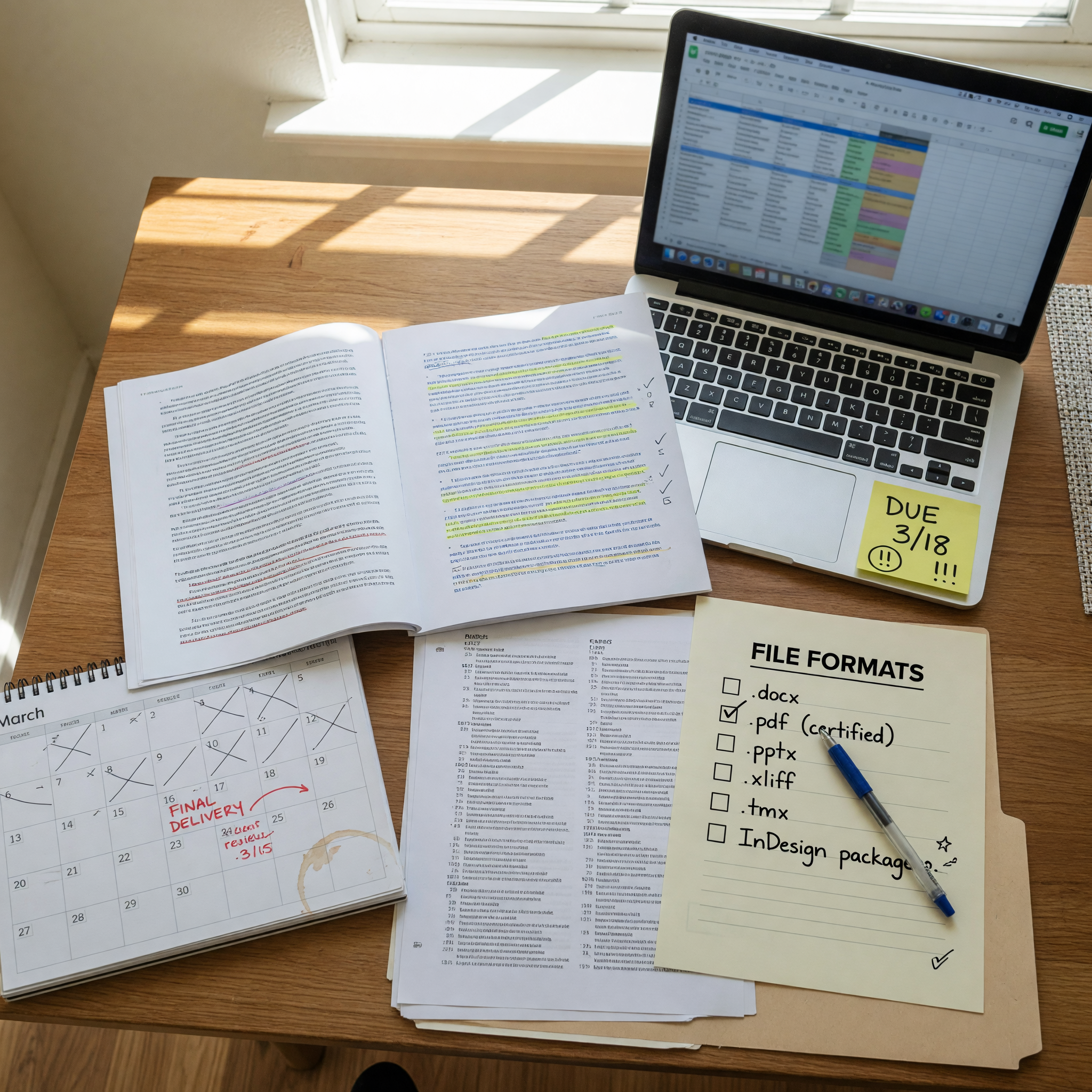
Avoid promising "certified translation" if you do not know exactly which document accepts that certification, what format the receiving entity requires, and if you need a signed statement, seal, notarization, or specific credentials. You can write: "I do not provide legal advice or guarantee acceptance by agencies; tell me which entity will receive the document to confirm if I can help you." That phrase reduces misunderstandings without sounding defensive.
Turn the rate into a simple comparison
Many clients do not know if a translation is charged per word, page, hour, or project. Your ad must explain how you quote. Do not invent a rate if you still need to see the file, but you can explain the method. For example: "I quote per legible page for simple documents, per word for editable texts, and per hour for proofreading or bilingual calls."
If you post a starting price, accompany it with limits. "From $X" without context generates useless messages. Better: "Starting price for simple one-page personal documents, legible file, standard delivery. Technical, urgent, handwritten, or complex format texts are quoted separately." You don't have to use those values if you don't want to publish prices; the important thing is to explain what changes the quote.
| Ad Detail | What it should clarify | Drafting example |
|---|---|---|
| Languages | Pair and direction | Spanish to English and English to Spanish |
| Type of work | Document, web, subtitle, proofreading, or call | Personal documents, menus, and texts for local businesses |
| Rate | Per page, word, hour, or project | I quote after seeing pages, format, and deadline |
| Delivery | Final file and timeframe | Editable Word and final PDF; standard delivery in 2 to 4 business days |
| Limits | What you do not accept or requires review | I do not translate complex legal documents without reviewing the final use |
The table can be converted almost directly into your ad. If you already have text published on another platform, do not rebuild it by hand: use Brixaz import to bring the base and then adjust language, rate, and delivery. If you only have loose notes, build the draft with the ad template generator and edit it with your voice.
Explain formats, files, and delivery date
The file format changes the work. An editable Word document does not cost the same effort as a blurry multi-page photo. A PDF with tables, seals, or columns may require more time. A video for subtitles needs duration, script, spoken language, final format, and whether the client expects an SRT file, plain text, or burned-in subtitles on the video.
Your ad should ask for clear files from the start: number of pages, complete photos without cuts, editable text if it exists, real deadline, and final use. It should also indicate how you deliver: Word, PDF, Google Docs, bilingual file, SRT subtitles, spreadsheet, or text ready to paste on a website. The clearer you are, the less time you will waste quoting impossible jobs.
The delivery date must be specific but honest. "Fast" doesn't help. "Standard delivery in 2 to 4 business days after receiving the complete file and confirming the price" helps much more. If you accept rush orders, state that they are confirmed before starting. If you don't work weekends, say so. If you respond at night but deliver during business hours, it's also worth clarifying.
Set professional and trust-based boundaries
Translation services can touch personal information: names, addresses, certificates, bank statements, files, histories, contracts, private messages, or client information. A serious ad should explain how you care for those files without promising absolute security that you cannot demonstrate.
Use simple language: "I only use documents to prepare the quote and complete the translation. I do not publish samples with private information. If the document contains sensitive data, you can cover unnecessary numbers before sending it for a quote." This builds trust and also protects your time.
Also separate translation from consulting. Do not say a document will be accepted by a school, court, agency, employer, or bank if you do not control that decision. You can translate the content and deliver the agreed format; acceptance depends on the entity. This boundary avoids claims and helps the client ask before paying for the wrong format.
A specific Brixaz idea: direct contact rewards ads with clear boundaries. Since the client can write to you without a payment intermediary, your ad should ensure the first message arrives with the file, language, date, and final use, not just "how much does it cost." In a service category with little organic supply, that clarity can turn your ad into the standard that other clients compare.
Write a message that gets complete inquiries
End your ad with an instruction for the first message. This isn't a generic call; it's a way to save back-and-forth. You can write: "To quote, send me the source and target language, type of document, number of pages or words, current format, delivery format, deadline, and what the translation will be used for."
If you do work for businesses, ask for the usage channel: web, menu, packaging, email, catalog, social media, or ads. If you do interpreting, ask for the date, duration, topic, platform, and if it requires technical vocabulary. If you do subtitles, ask for video duration, spoken language, final language, if there is a script, and desired format.
You can also link your service to useful discovery surfaces. A remote or bilingual provider can appear as both a local and remote service; that's why it's convenient to complete your city, time zone, and availability when you publish in remote services. If you want to explain why it's worth publishing early even though the site is growing, the founding sellers page shows the exchange clearly: less audience today, less competition per category, free posting, and direct contact.
Checklist for publishing your translation service
Before publishing, check that your ad allows for quoting without a long conversation. You don't need to write a full page, but you do need to cover these points.
- The title names the main service: document translation, commercial texts, subtitles, bilingual proofreading, or interpreting.
- The first paragraph says who should hire you and what result they will receive.
- Languages are written with a clear direction, not just "bilingual."
- The rate explains if you quote per page, word, hour, project, or after reviewing the file.
- Delivery indicates the final format, standard timeframe, and conditions for rush orders.
- Boundaries clarify certifications, legal documents, confidentiality, and consulting not included.
- The service area mentions city, time zone, or remote availability.
- The final message asks for the file, language, deadline, format, and use of the translation.
Example ready to adapt: "I translate personal documents and texts for small businesses from Spanish to English and English to Spanish. I work with Word files, legible PDFs, and clear photos. I deliver editable Word and final PDF. To quote, send me the number of pages or words, deadline, current format, and final use. I do not provide legal advice or guarantee acceptance by external agencies."
FAQ about translation services
What should I include when advertising translation services?
Include languages, direction, type of document or content, rate method, delivery format, standard timeframe, availability, professional boundaries, and what the client must send to get a quote. The client should know if your service fits before writing to you.
Is it advisable to publish a fixed rate for translations?
Publish a fixed rate only if the scope is clear, for example, a simple page or a defined number of words. If the work varies greatly by format, urgency, or specialty, explain your quoting method and ask to see the file before confirming the price.
Can I offer certified translation in my ad?
Yes, only if you can deliver the format the client needs and you understand the basic requirements for certification, signature, or notarization. If you are not sure, avoid promising acceptance by third parties and ask to know which entity will receive the document.
What files should a translator ask for before quoting?
Ask for source and target language, complete file, number of pages or words, editable format if it exists, deadline, desired final format, and use of the translation. For subtitles or calls, ask for duration, topic, platform, and delivery format.
Where do I publish remote translations on Brixaz?
Post them as a service offered in the translation category. Complete the city or time zone, remote availability, languages, rate, and turnaround time so that local or remote clients can contact you directly.
What should I avoid in a translation advertisement?
Avoid promising legal results, acceptance by agencies, absolute confidentiality without a real process, prices that do not cover emergencies or difficult formats, and vague phrases like "all types of translation" if there are documents you do not accept.
A good translation advertisement does not try to sound big. It makes it possible for the right client to send a file, explain their deadline, and receive a helpful response from the first contact.





Comments
Loading comments...
Checking sign-in status...