
Post furniture assembly: price, types of work, and area
Guide for assemblers, handymen, and local providers who can assemble furniture this week and want to post a clear offer with price, coverage, photos, and a first message.
ARTICLE LANGUAGE
Showing original language
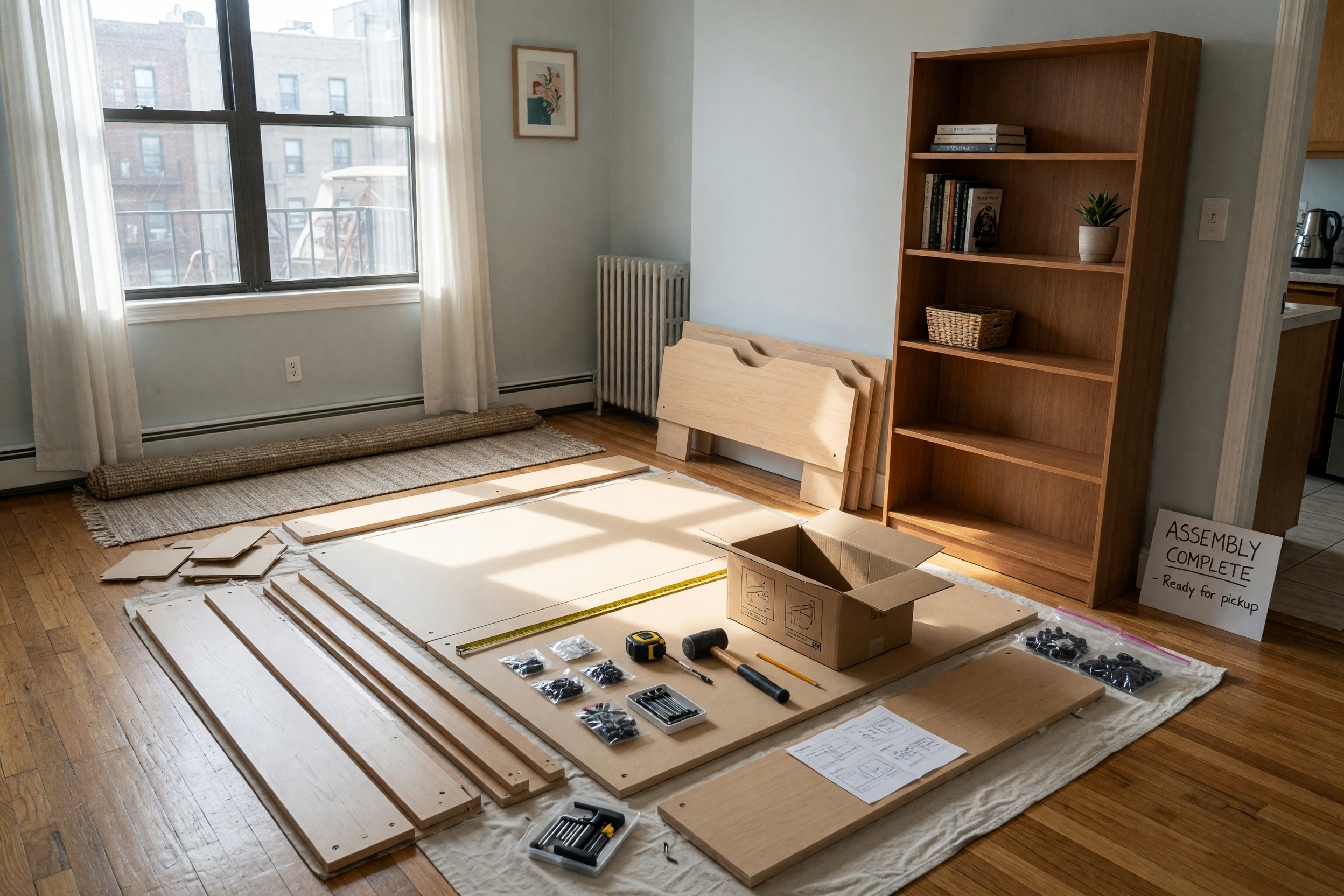
If you assemble beds, desks, shelves, dining sets, office furniture, or modular furniture, you can publish your furniture assembly service on Brixaz with a specific offer: what types of pieces you accept, what area you work in, how you charge, and what the client needs to have ready before you arrive. That clarity turns an informal service into an ad that someone can hire this week.
This guide is for a specific person: an independent assembler, handyman, student with tools, small crew, or home task provider who can complete real jobs in the United States. The ad should not promise "all types of repairs." It must sell a clear task: furniture assembly with a base price, limits, coverage area, availability, and direct contact. Brixaz still has a smaller audience than large platforms, but posting is free, it takes no commission, and the thin service categories give space to the first providers who write with precision.
Post a service, not a list of loose skills
The common mistake is writing an ad as if it were a business card: "I do everything, good price, responsible." That doesn't tell the client if you can assemble a bed with drawers, an L-shaped desk, a crib, a heavy TV stand, or ten dining chairs. The client arrives with a box, instructions, parts, and the fear of wasting an afternoon. Your ad must show that you know how to turn that problem into an organized visit.
A weak title would be: "Cheap handyman available". A better title would be: "Assembly of beds, desks, and shelves in Orlando, appointments this week". The second version answers three questions before the click: what you do, where you do it, and when you can help. It also avoids messages for jobs you don't want to accept, such as plumbing, electricity, or repairs beyond your scope.
In Brixaz local services, specific ads are easier to compare than general promises. If the buyer sees "furniture assembly" as a category, they expect practical information: pieces, price, schedule, tools, parking, apartment floor, and approximate time.
Define the types of furniture you accept
Not all furniture is assembled the same way. A small table might take 25 minutes; a modular closet could take several hours and require two people. If you don't separate the types of work, you'll receive confusing photos and questions that are impossible to quote. Make a short list of what you frequently accept and another for what you quote separately or don't do.
Weak example: "I assemble any furniture." Better example: "I assemble beds, cribs, desks, tables, chairs, shelves, TV stands, and office furniture. Large closets, tall cabinets, wall mounting, or very heavy pieces are quoted with photos and may require two people." That version doesn't make you seem less capable. It makes you seem organized.
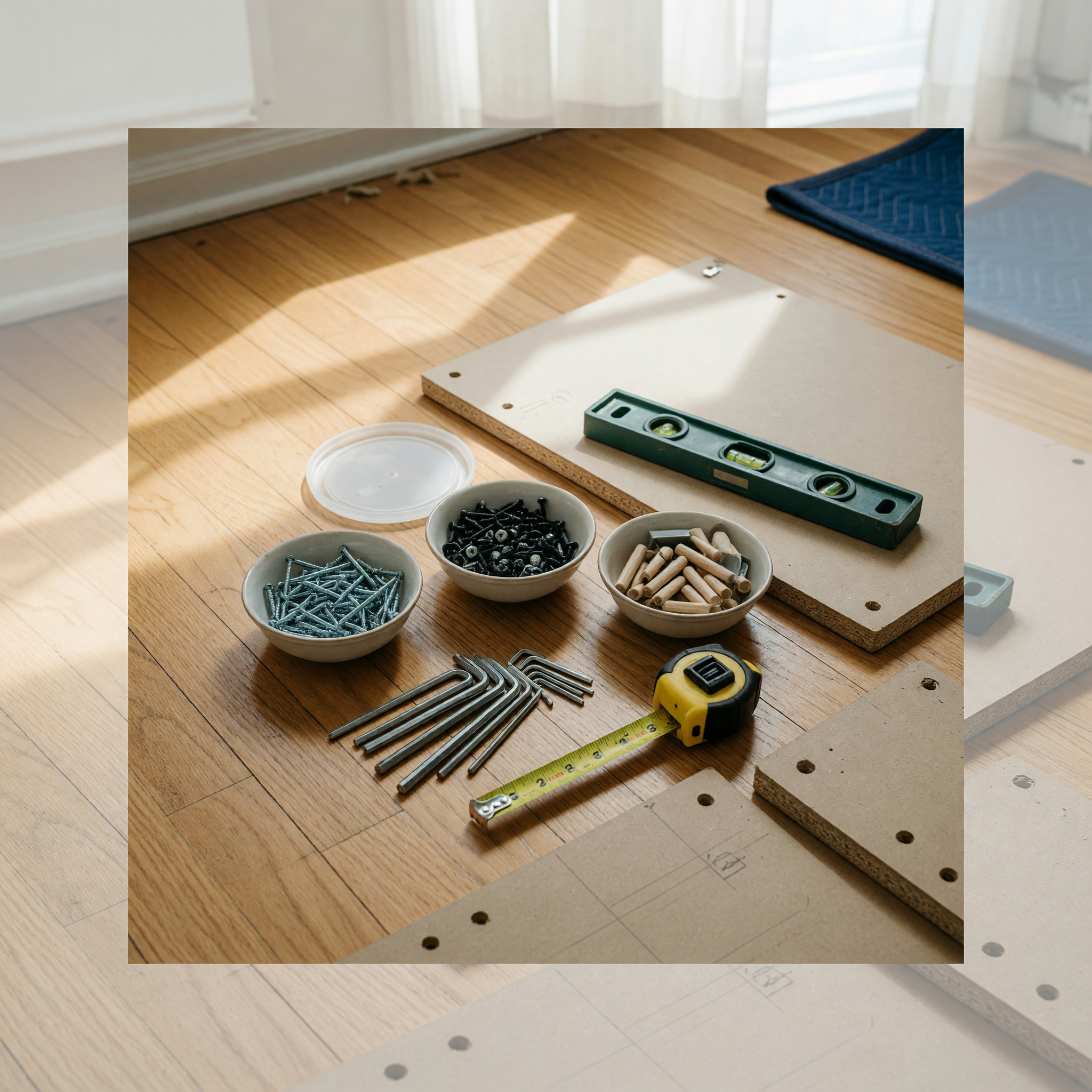
You should also mention if you bring your own tools. Many clients have the parts but lack a drill, level, extra Allen wrench, rubber mallet, or experience reading instructions. Write something like: "I bring basic assembly tools. The client must have all boxes, screws, instructions, and clear space to work." That phrase prevents wasted trips.
Use this table to build a hirable ad
A good furniture assembly ad doesn't need to be long, but it must address the doubts that hold the customer back. Use this table as a checklist before posting. If you're missing an answer, add it to the body of the ad or to the first message you request.
| Field | To clarify | Useful example |
|---|---|---|
| Main service | The pieces you assemble frequently | Beds, desks, shelves, tables, and TV stands |
| Special projects | What you quote with photos | Closets, tall furniture, large sets, or wall anchoring |
| Base price | Minimum per visit or how to quote | Minimum per visit; final price with photos and instructions |
| Area | Cities, neighborhoods, or realistic radius | I work in Queens, North Brooklyn, and Uptown Manhattan |
| Availability | Days, hours and emergencies | Weekday afternoons and Saturday mornings |
| Tools | What you bring and what the client must have | I bring basic tools; the customer must have all the parts. |
| Access | Parking, elevator, floor and workspace | Confirm if there is an elevator, parking, or stairs |
| First message | Information for a quote without unnecessary visits | Photos of boxes, model, city, floor and two schedules |
The board also protects you from poorly prepared jobs. If the client doesn't have all the parts, if the box arrived damaged, or if the furniture requires drilling into a wall that the building doesn't authorize, it's best to know before driving all the way there.
Give a clear price without getting trapped by a false number
Price is the point where many ads lose trust. If you don't provide any indication, you'll receive "how much do you charge?" messages without any information. If you set a rate that's too low to attract clicks, you'll end up correcting every conversation. The best option is to explain your minimum, what changes the price, and what data you need to finalize the quote.
Bad example: "Starting cheap, it depends." Better example: "I have a minimum per visit for small jobs. The final price depends on the type of furniture, number of pieces, if it needs to be anchored to the wall, the apartment floor, parking, and if a second person is required. Send photos of the boxes or a link to the model to get a quote before scheduling." The second text doesn't make up a rate and still provides structure for the client.
If you need to organize your offer before publishing it, use the Brixaz ad assistant to turn your notes into a draft. Then replace any generic phrases with your service areas, hours, limits, and actual way of quoting. An ad that sounds specific generates better messages than one that tries to please everyone.
Photos, coverage, and limits make the listing reliable
Photos don't need to show faces or addresses. They should prove that you do the work. Use images of organized tools, a finished piece, a simple before and after, a detail of aligned drawers or leveled shelves, and a clean scene showing that you left the area tidy. Do not show license plates, receipts, customer data, or building logos.
Coverage must be realistic. "The whole city" might attract volume, but also trips that don't pay off. If you work better by zones, say so: "Route in North Austin and Round Rock", "Appointments in Miami-Dade with parking available", or "Only Manhattan and Queens near the train". Precision helps the client and helps you build more profitable days.
Boundaries are also part of trust. You can write: "I don't do electrical, plumbing, TV mounting over fireplaces, wood cutting, or work that requires a license. Simple wall anchoring is confirmed with photos." That doesn't scare away good clients. It filters out the jobs that shouldn't reach your inbox.
Close with an initial message that serves to provide a quote
The end of the ad should train the customer to write well. Instead of "write to me," ask for the information you need to determine price and availability. For example: "Send the city or neighborhood, photos of the boxes, a link or model name, number of pieces, if there is an elevator or stairs, if there is parking, and two time slots that work for you this week."
You can also add a preparation line: "Before I arrive, please leave the boxes in the room where the furniture will be assembled, check that all the pieces are there, and clear some space to work." This reduces delays and shows professionalism. The client understands that you don't just charge for assembly; you also organize the visit.
The specific advantage of Brixaz is direct contact. You don't need to wait for a platform to package the lead or pay a commission for closing the job. But direct contact works best when the ad asks for the right message from the start. The page of vendedores fundadores explains the full trade-off: smaller audience today, less competition in new categories, free posting, and no guarantee of sales or views.
Frequently Asked Questions
How do I post a furniture assembly service?
Publish the service as a local offer, including the types of furniture you accept, area, availability, tools, minimum price or how to quote, real photos, and an initial message with details to calculate the job.
Should I set a fixed price for furniture assembly?
Set a fixed price only for jobs you can complete consistently. For variable items, list a minimum per visit or explain that you provide quotes based on photos, model, number of boxes, floor level, parking, and whether wall anchoring is required.
What information should the client send?
Ask for the city or neighborhood, photos of the boxes, a link or the furniture model, the number of pieces, if there is an elevator, if there is parking, if wall mounting is required, and two possible time slots. With that, you can respond with a price or specific questions.
Which photos help attract clients?
Use photos of clean tools, finished furniture, leveled details, aligned drawers, and a tidy area after the job. Avoid faces, addresses, license plates, receipts, and private data from previous clients.
Does furniture assembly count as a service or a gig?
If you want repeat customers and are available in an area, post it as a local service. If a person needs help for a single day with a specific task, they can post a gig, but the provider looking for clients should post the service.
How do I avoid missed trips?
State that the customer must have all parts, instructions, clear space, and confirmed access. Request photos before scheduling and clarify if you charge extra for stairs, difficult parking, heavy furniture, or a second person.
A strong furniture assembly ad doesn't try to cover every possible job. It covers the work you can do well this week, in the right area, with an initial message that allows you to quote without guessing.




Comments
Loading comments...
Checking sign-in status...