
How to Post a Cleaning Service Listing People Trust
A section-by-section template for writing a house cleaning listing people actually trust — with scope, pricing signals, a photo checklist, and copy-paste structure.
ARTICLE LANGUAGE
Showing original language
People do not hire a cleaner because of a low price. They hire the cleaner they trust to walk into their home, do careful work, and leave without any surprises. That trust is either built or lost in the first ten seconds of reading your listing. If your post says only "House cleaning, good prices, call me," you are asking a stranger to invite you inside on faith. Most won't.
This guide shows you exactly how to write a cleaning service listing that earns real messages from real local clients. You'll get a section-by-section template, a copy-paste structure, bad-versus-better examples, and a pre-publish checklist you can use before you post today.
Lead with the exact service, not "cleaning"
"Cleaning" is not a service. It is a category. A homeowner searching in their city is trying to match a specific need: a move-out deep clean, a weekly maintenance visit, a one-time post-renovation dusting, or an Airbnb turnover between guests. When your headline names the exact job, the right person stops scrolling and the wrong person scrolls past, which saves you both time.
Compare these two opening lines:
- Bad: "Cleaning services available, reasonable rates."
- Better: "Weekly and biweekly house cleaning for homes and apartments — kitchens, bathrooms, floors, and dusting. Move-out deep cleans on request."
The second version tells the reader what you do, how often, and what is included, before they have to ask a single question. Name your top two or three service types in the first two sentences and let everything else follow.
Spell out what a visit actually includes
The fastest way to lose a booking is to leave the buyer guessing about scope. Do you do inside the fridge? Interior windows? Baseboards? Laundry? A client who imagines one thing and gets another will not rebook, and worse, may leave you a bad review over a misunderstanding you could have prevented in your listing.
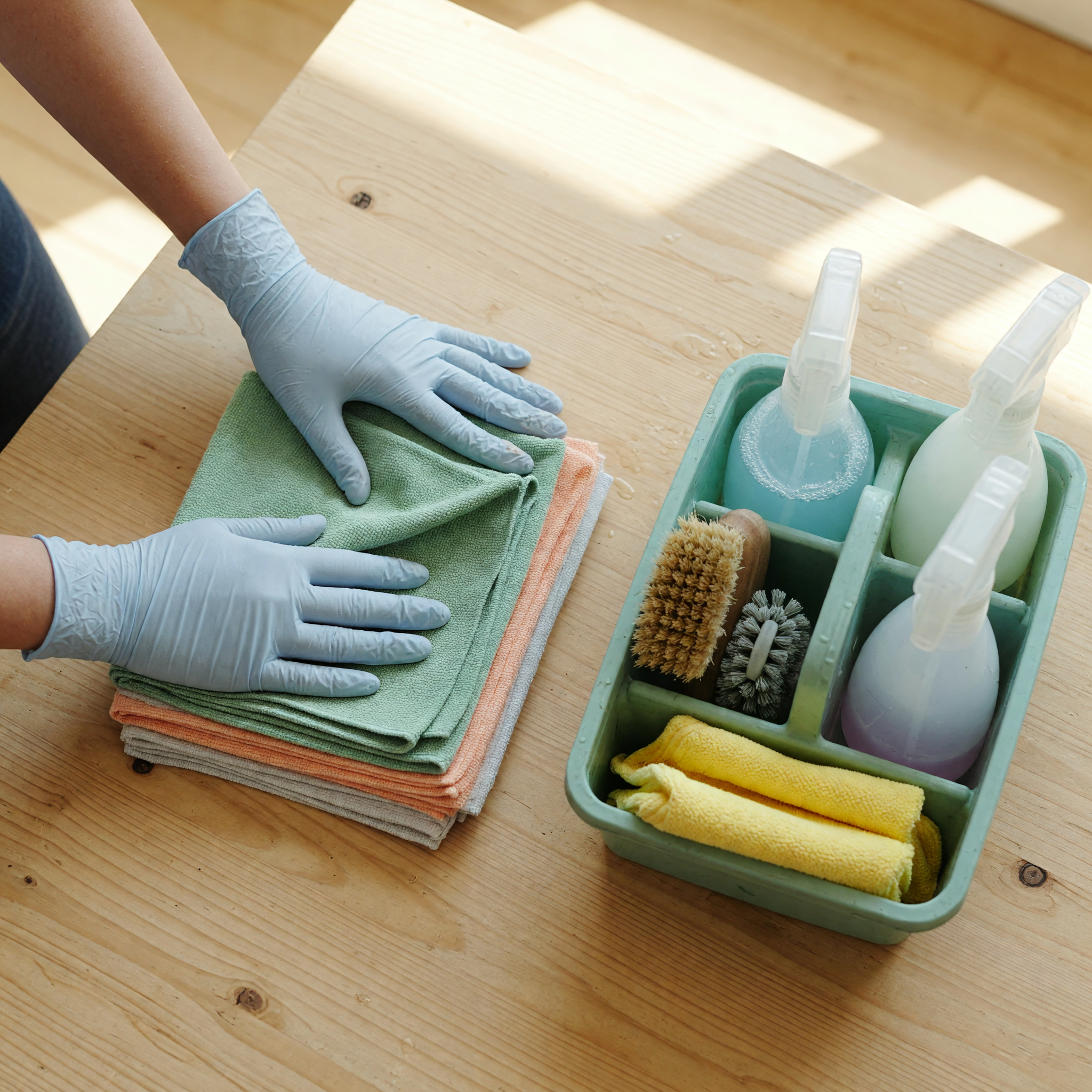
Write your scope as a plain list. Separate what is standard from what costs extra. Here is a structure that works for most residential cleaners:
| Field | What to write | Example |
|---|---|---|
| Standard visit | Rooms and tasks included every time | Kitchen counters, sink, stovetop, all bathrooms, floors vacuumed and mopped, dusting, trash out |
| Add-ons | Extras priced separately | Inside fridge, inside oven, interior windows, laundry fold, inside cabinets |
| Not included | Clear boundaries | Exterior windows, biohazard, mold remediation, moving heavy furniture |
| Supplies | Who brings what | I bring all supplies and equipment, or I use your products on request |
| Time per visit | Rough duration | Standard 2-bed apartment: about 2–3 hours |
You do not need to invent a rigid price sheet. But you do need to tell the reader where your service starts and stops. Clear boundaries make you look more professional, not less.
Give an honest pricing signal
You are not required to post a fixed rate, and for cleaning it often makes sense to quote after seeing the space. But a listing with zero pricing information forces every reader to message you just to find out if you are in their budget — and most won't bother. Give a signal, even a range or a starting point.
Good pricing language sounds like this:
- "Standard apartment cleanings typically start around a set minimum; I confirm the exact quote after a quick description of your home's size and condition."
- "I price by home size and frequency. Weekly clients get the best rate. Message me your square footage and number of bathrooms for a firm number."
- "Move-out deep cleans are quoted per job, not per hour, so you know the full cost up front."
Notice what these do: they explain how you price so the reader can predict the conversation. Never post an invented number just to fill the field — quote what you actually charge, or explain how you'll get there.
Photos: show your work, not stock scenes
Buyers trust before-and-after proof far more than a generic photo of a sparkling model kitchen. If you have permission, post real results: a streak-free glass shower, a polished stovetop, neatly stacked and wiped shelves. Keep client homes anonymous — no faces, no house numbers, no mail with names visible.
A simple photo checklist for a cleaning listing:
- One wide shot of a room you finished (living room or kitchen).
- One close-up of a detail most cleaners skip — a clean baseboard, faucet, or oven interior.
- Your supplies or caddy, to signal you come equipped.
- A before/after pair if you have one, clearly labeled.
Bright, in-focus, and real beats polished and fake every time. Blurry or dark photos read as careless, and carelessness is the one thing no one wants in a cleaner.
Set your area, availability, and how you show up
Cleaning is hyper-local. Nobody drives 40 minutes for a weekly clean if they can find someone nearby. Name your service area clearly — the neighborhoods, city, and how far you travel. On Brixaz, listings surface by city and state, so a reader browsing their own city page or searching by state can find a cleaner who actually covers their block. The more specific your area, the more the right people find you and the fewer dead-end messages you field.
Then answer the practical questions before they're asked:
- Availability: "Weekday mornings and Saturday afternoons open."
- Access: "I can work while you're home or with a key/lockbox for regulars."
- Notice: "Book 48 hours ahead for standard visits; deep cleans need a week."
- Reliability: "I confirm the day before and text if anything changes."
The Brixaz edge: direct contact and a clean category choice
Here is something specific to how Brixaz works that changes your results. When a client messages you about a cleaning listing, they reach you directly — there is no middle layer skimming a cut or throttling your replies. That means the speed and warmth of your first response is entirely in your hands, and it is the single biggest factor in whether a curious reader becomes a booked client.
Two practical moves take advantage of this. First, post under the correct local services category, not a generic catch-all, so browsers who are already hunting for a cleaner land on you instead of scrolling past furniture and phones. A clean category choice is free targeting. Second, treat your first reply like part of the listing: answer the size/scope question, offer two concrete time windows, and confirm your area in the same message. A homeowner who gets a clear, fast, direct answer rarely keeps shopping.
Copy-paste listing skeleton
Drop your details into this frame and you'll have a complete, trustworthy listing in a few minutes. Ready to go live? Start at post a listing and fill it in.
- Headline: Service type + frequency + area (e.g., "Reliable Weekly & Biweekly House Cleaning — Central Neighborhoods").
- What's included: Standard tasks, add-ons, and clear boundaries.
- Pricing signal: How you quote and what a typical job runs.
- Area & availability: Neighborhoods, travel radius, open days.
- Supplies & access: Who brings products, how you enter.
- Trust line: Experience, reliability habit, references on request.
- Call to action: "Message me your home size and preferred day for a quote."
For turning first cleaning jobs into stronger trust: earn 5-star service reviews
For cleaners who want sharper service-area and pricing copy: house cleaning services listing with area and price
Si quieres una version en espanol para captar clientes: publicar servicios de limpieza que reciben mejores mensajes
For providers who also reset closets, pantries, or garages, use this companion guide: post a home organization service
Related: trusted service post format
Related: cleaning service listing
Related: cleaning service listing template
Related: how to post a cleaning service listing people trust
Frequently asked questions
Should I list an exact hourly rate?
You can, but it's optional for cleaning. Many pros quote per job or per home size instead. What matters is giving a signal — a starting minimum, a range, or a clear "here's how I price" statement — so readers can self-qualify. A listing with no pricing information at all gets far fewer serious messages.
How do I build trust if I have no reviews yet?
Lean on specifics and photos. Real before/after images, a precise scope, references available on request, and a fast, thoughtful first reply do more than a star rating. Offer a first-visit walkthrough so the client feels in control. Trust is built by clarity and follow-through, and every established cleaner started with zero reviews too.
What should I never promise in a cleaning listing?
Don't promise results you can't guarantee — removing every stain, fixing water damage, or handling mold and biohazard unless you're actually equipped and insured for it. Overpromising leads to disputes. It's better to state clear boundaries and refer out what you don't do.
How do I handle safety when entering a stranger's home?
Set boundaries in your listing and confirm details before the first visit. Share your service area, work in daylight hours when possible for new clients, and keep the first booking as a walkthrough or standard clean rather than an overnight or after-hours job. Trust runs both ways — a client who respects your boundaries is usually a good client. If a request feels off, you're free to decline.
Where on Brixaz should a cleaning listing go?
Post it under local services so people actively searching for help find it. If a client is instead trying to hire you for a broader one-time task, they may browse need help requests too — but your standing cleaning offer belongs in local services under your city.
Write the listing you'd want to read if you were the one inviting a stranger into your home: specific, honest, and easy to say yes to. Do that, and the messages you get will already be from people ready to book.



Comments
Loading comments...
Checking sign-in status...