
Storage Space for Rent: List a Garage or Spare Room
Have an unused garage bay, basement room, shed, closet, or warehouse corner? Use this guide to list storage space with the size, access, and security details renters need before they message.
ARTICLE LANGUAGE
Showing original language
If you have an empty garage bay, basement room, shed, closet, spare office, or warehouse corner, you can turn it into a useful local rental listing today. Start with the place renters will actually compare this kind of supply: list storage space for rent on Brixaz, then write the post so someone can judge size, access, security, and rules before asking for your exact address.
The conversion question is concrete: a homeowner, landlord, renter with permission, shop owner, or small warehouse tenant can post one real storage area after reading this. The thing to post is not "extra space." It is a measured, rule-bound rental space such as "one dry 8 ft by 10 ft garage area for boxed household storage, month-to-month, access by appointment."
Who should list storage space this week
A good storage listing starts with space you control and can describe honestly. That may be half of a garage, a locked shed, a basement room, a spare bedroom used only for boxes, an office storage closet, or an unused corner of a small commercial unit. It should be dry, reasonably clean, and available long enough for a renter to move items in without guessing whether you will need the space back next weekend.
This topic matters because private storage supply is often invisible. People search for storage space when they are moving, downsizing, staging a home, clearing an apartment, or running out of room for seasonal items. If the local category is thin, one specific listing can help renters discover an option that is closer, smaller, or more flexible than a large facility. Brixaz is in founding-seller mode, so the useful supply is the point: the first real garage, shed, or spare-room listing gives nearby renters something they can act on.
Do not list space you are not allowed to rent. Check lease terms, HOA rules, building policies, insurance requirements, and local restrictions first. If you share the property with roommates, tenants, employees, or family, get agreement on access and boundaries before a renter arrives with boxes.
Define the exact space before you write
"Storage space for rent" is a search query, not a complete listing. The listing needs to say what kind of space is available, what it can hold, and what it cannot hold. A garage wall with shelves is different from a lockable room. A shed works for patio furniture and tools, but may not be right for documents, electronics, or upholstered furniture if it gets hot or damp. A warehouse corner may be useful for inventory, but only if access hours and loading rules are clear.
Bad copy: "Extra storage available. Good price. Message me."
Better copy: "Dry 8 ft by 10 ft section of a private garage for boxed household items, holiday decor, small furniture, and bins. Month-to-month. Access by appointment evenings or weekends. No food, chemicals, vehicles, business deliveries, or overnight work."
The better version answers the first renter questions without a long conversation. How big is it? Is it dry? What can I store? How do I access it? What is off limits? Those details also protect you from the wrong renter. Someone who wants to store tires, paint, inventory shipments, or a motorcycle will know whether to move on before asking for your address.
List size, access, and security clearly
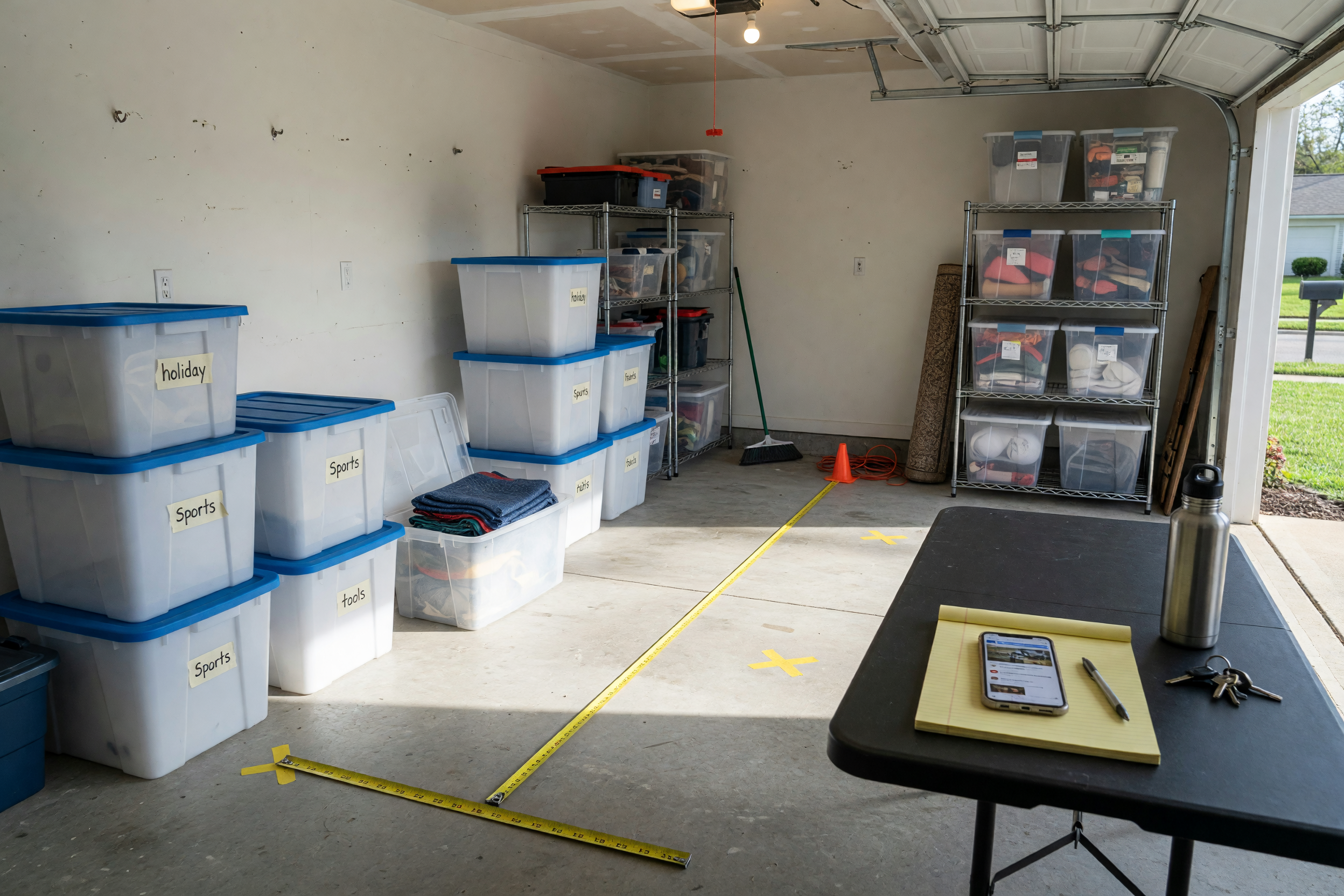
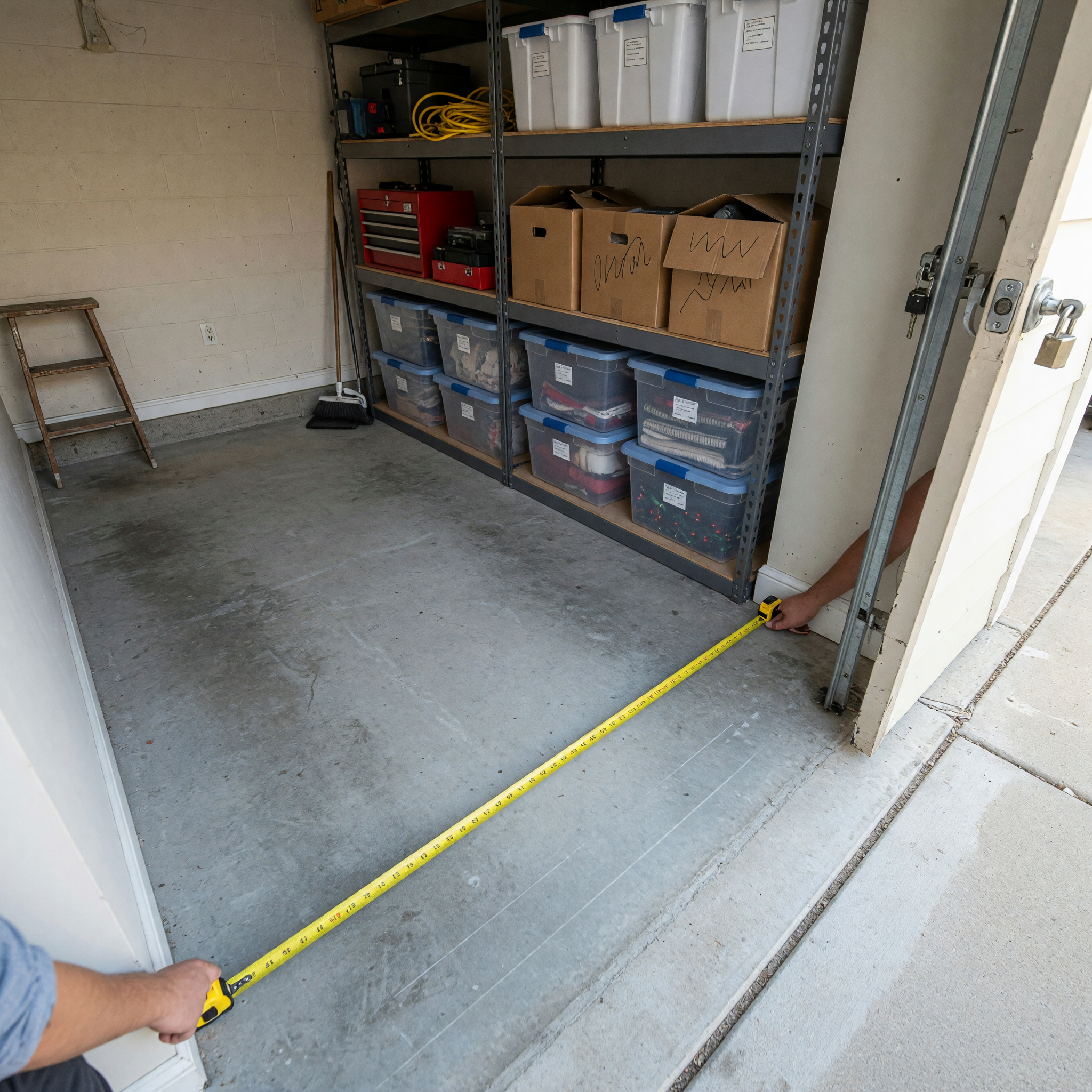
Size is the first trust detail. Measure the usable floor area, not the entire room. If shelves, a water heater, stairs, a support post, or your own belongings reduce the usable space, say so. Write dimensions in feet and add a plain-language comparison only when it is true: "about the size of a walk-in closet," "fits 20 to 30 medium boxes," or "fits a small sofa plus bins." Avoid exact capacity promises if you have not tested them.
Access is just as important as size. Say whether the renter can enter independently, must schedule with you, needs stairs, can use a driveway, can back up to a garage door, or must carry items through a side gate. A renter choosing between local storage options cares about move-in effort. "No stairs, driveway loading, appointment access on evenings and weekends" is stronger than "easy access."
Security should be specific but not reckless. Mention lockable doors, indoor space, gated entry, owner-occupied property, camera coverage where appropriate, or limited access. Do not publish alarm details, door codes, full addresses, or anything that weakens your own security. Direct contact is useful here: the public listing can prove the space is real while the exact location and entry process stay private until you have a serious renter.
Storage listing checklist
Use this checklist before publishing. It keeps the post useful for renters and filters out people whose items, schedule, or expectations do not fit your space.
| Detail | What to include | Example wording |
|---|---|---|
| Space type | Garage area, shed, basement room, closet, office, warehouse corner | Dry private garage section |
| Dimensions | Usable length, width, height, obstacles | 8 ft by 10 ft usable floor area |
| Best use | Boxes, bins, furniture, tools, seasonal items, inventory | Best for boxed household items |
| Not allowed | Food, chemicals, flammables, vehicles, illegal items, living use | No food, fuel, paint, or overnight use |
| Access | Appointment, independent entry, stairs, loading path, hours | Weekend access by appointment |
| Security | Lock, gated entry, indoor location, limited access | Locked garage on owner-occupied property |
| Term | Monthly price, deposit if any, notice period, start date | Month-to-month with 14 days notice |
| Photos | Wide shot, floor area, access path, door or lock detail | Four clear daylight photos |
| Message prompt | Ask for item type, amount, move-in date, access needs | Send item list and desired start date |
If you have the facts but the wording feels rough, draft the post in the marketplace listing template generator. It can turn measurements, rules, and access notes into copy that sounds specific instead of salesy.
Set price, term, and rules without overpromising
Private storage is easier to rent when the terms are simple. State the price, billing period, minimum term if any, deposit if any, notice period, and what the renter must do before moving items in. Avoid vague language like "cheap," "secure," or "flexible" unless the details prove it. A better line is: "Month-to-month rental, 14 days notice from either side, access by appointment, renter must provide a written item list before move-in."
Price depends on location, size, access, indoor versus outdoor conditions, climate control, loading convenience, and security. Do not claim your space is the cheapest or safest. Instead, make it easy to compare. If the space is smaller than a storage unit but closer to downtown apartments, say that. If it is a shed with limited access, price and describe it like limited-access storage, not a full-service facility.
Use rules to prevent uncomfortable conversations later. Common boundaries include no food, no perishables, no fuel, no paint, no chemicals, no firearms, no illegal items, no living or working in the space, no business deliveries unless approved, and no unannounced access. If you require bins instead of loose bags, say so. If items must be on pallets or shelves because the floor can get damp, say so before anyone moves in.
For broader housing-related discovery, connect the listing to the right area of the marketplace instead of hiding it in a general feed. Renters scanning housing and space listings are more likely to understand monthly access, move-in timing, and location constraints than someone browsing used items.
Photos and message prompts that reduce bad leads
Photos should prove the space is real, clean, and understandable. Take one wide photo of the storage area, one photo from the access path, one photo showing the floor and ceiling clearance, and one detail photo of the door, lock, shelf, gate, stairs, or loading route. Remove private documents, license plates, mail, family photos, tools with serial numbers, and anything that reveals sensitive address details.
Do not photograph other people's belongings unless you have permission. If the space is partly occupied by your own items, mark or describe the renter's area clearly. A photo with tape on the floor, empty shelves, or a clean boundary helps renters understand what they are actually renting.
End the listing with a message prompt that gets useful replies: "Please message with the type of items, approximate number of boxes or furniture pieces, desired move-in date, and how often you need access." This turns direct contact into a filter. You are not asking people to write an essay; you are asking for the four facts that determine whether the storage arrangement works.
If you want to post the rental through the general form instead of the category page, use a prefilled housing rental path like post a parking-storage rental. The cleaner the category and intent, the easier it is for local renters to find the supply you are adding.
For landlords posting a work-ready room instead of storage: office space for rent listing terms
If the space could work for a business tenant: commercial space for lease checklist
If the available space is outdoors rather than inside a garage, use this lot-rental checklist: list land for rent with access and utility details
FAQ
Can I rent out my garage for storage?
You can list a garage storage area if you control the space and your lease, HOA rules, insurance, and local rules allow it. Measure the usable area and state access, rules, and prohibited items before sharing the exact address.
What should I include in a storage space for rent listing?
Include the space type, dimensions, best uses, access hours, loading path, security details, monthly price, term, photos, prohibited items, and what the renter should send when they message.
Should I let renters access the space anytime?
Only if you can support that safely. Many private spaces work better with appointment access, especially at a home. If access is limited to evenings, weekends, or business hours, say that clearly in the listing.
What items should I prohibit in private storage?
Common prohibited items include food, perishables, fuel, paint, chemicals, firearms, illegal items, live animals, unregistered vehicles, and anything used for sleeping or working in the space.
Do I need to show my full address publicly?
No. Use a neighborhood, nearby cross street, or city area in the public listing. Share the exact address only after the renter explains what they want to store and confirms the terms fit.
How do I make a small storage space sound worth renting?
Be specific instead of overselling. A small closet, shed, or garage corner can still be useful if the dimensions, access, dryness, and best use are clear. The right renter may need exactly that size nearby.


Comments
Loading comments...
Checking sign-in status...